RSS Feed

Author Archives: ladywholivesdownthelane

Vancouver Heritage Foundation Laneway House Tour is October 24

Three years ago, DH and I and our designer, Laurel, took the Vancouver Heritage Foundation’s Laneway House Tour.  It wasn’t the first time we’d been inside a laneway home — we’d seen a couple of examples — but it was a real eye-opener as to the esthetics of the different builders.  Plus it showed us that we didn’t have to be bound by old-fashioned designs and expectations — we could truly have what we wanted in our home.

Two years ago, our unfinished laneway was part of the Tour — a real honour for us.  Unfortunately we weren’t able to make the tour last year — but we’ve been looking forward to seeing what the VHF have in store for 2015.

LanewayTour2015

This year those hard working people at the Vancouver Heritage Foundation promise fabulous examples of new laneway homes, showing a wide variety of design. Plus you can also see an infill home that was added to the property of a heritage home on the west side of the city over 20 years ago.

This tour is not just for people planning to build a laneway, it’s interesting for everyone who loves good design.  But it’s invaluable if you are looking for ideas to incorporate into your home. We had never seen a small window set into the backsplash between a counter and the upper shelves in the kitchen before we took the tour.  But we’ve got one now, and it makes the kitchen much brighter.  We loved the way open staircases allowed you to see onto the stairs and the lower storey — so our designer put that into our home.  After seeing how bright the upper floors were on the two-storey homes, we confirmed our wish to put our bedroom in the darker ground floor level.

Get your tickets now!  You won’t be able to get into those tasty homes without a valid ticket.  This is a tough tour to do by transit, if you want to see all the homes start right at 1 pm and drive between the homes — carpooling is a good alternative if you can find someone else who wants to take the tour.

See you on October 25!

Water pressure

faucet


The other day the water bill came to the big house on the property.  We split it 3 ways, with the main house paying for two thirds (home and basement suite) and us paying the remaining third for the laneway house.  The bill gave us three amounts:

$XX low season rate
$XX water metered A
$XX meter charge 25mm
and while none of us are sure what those numbers mean, we ARE sure that we are paying our fair share because both houses are metered.  All NEW houses (and those with substantial renos) are metered in Vancouver.  The rest pay a flat rate. The City of Vancouver talks about putting meters on all homes, as this recent story says.  Of course this story from 2013 says the same thing.  AND this one from 2011.  The cost of putting meters in all the homes would be very expensive.  But until government is prepared to go that route they will not convince people to conserve as we should. Counting all the new homes, the businesses and institutions, only 50% of water consumption in Vancouver is metered. And that will cost us more in the long run.
Because think about it….if we are all paying a flat rate, what incentive do I have to conserve?  Not wasting water is not going to bring me any monetary advantage.  And there’s always that feeling that it’s not going to have any effect on the big picture — especially when we’re sure that our neighbours are not doing their bit. Having a meter reminds us all that higher usage means higher payments.
Vancouver has plans to be the Greenest City in the world by 2020. Maybe that means green colour, as in well-watered lawns.  The plan does not include water meters on all residences and businesses.  Instead, they are hoping a stern talking to and short-term incentives will lead to conservation
incentives and programs Low-flow toilets, rain sensors for sprinkler systems, and water meters are some of the many technologies that can improve water efficiency in homes and businesses. This strategy includes actions such as incentive and retrofit programs to install these tools in new and existing buildings.
Even though water consumption is down over the past 10 years, this story in Friday’s Vancouver Sun shows — 40% in West Vancouver which has universal metering, 16% in Vancouver;
  Vancouver uses more water per capita than communities such as Surrey and Maple Ridge
In Richmond, BC, the plan is for ALL homes to have meters by 2018. Vernon, BC also has water meters on all their homes. Most major cities around the world have universal water metering.
Right now the Vancouver area is in the middle of an unusually dry summer. We didn’t have those customary heavy rains in June to replenish our reservoirs.  Plus the unusually dry winter meant that there was no snow pack on the local mountains to fill the reservoirs in the first place.    Water restrictions are currently in place (no watering your lawn!  No power washing!) but many experts feel that it’s too little and too late to avoid a serious water shortage by the end of the season.
In the long run it doesn’t matter so much about the amount of precipitation we get (Tofino, one of the wettest places on earth, suffers from periodic water shortages) as it does the amount we can store.  Currently we have adequate storage for the city if we maintain average precipitation and everyone conserves as best we can.  The city is expecting to grow significantly over the next 20 years.  Metering water is one way we have to monitor and control the amount we use as our community grows.

Where — and how — do you want to live

When DH and I began planning our laneway we started by looking around at what was familiar to us.   We had a pretty conventionally designed condo, two beds and two baths,  and we couldn’t get around the idea that we were going to be living in less than half the space we had.  We thought about what we would lose, not what we would gain.

We looked at how other people were downsizing and building laneways, we saw what we liked and what we didn’t like.  And gradually it dawned on us that we shouldn’t just look at how other people live, or how we USED to live, we should look forward, to how we WANTED to live.  We let our imaginations go a little.  We didn’t just want an average house that had been shrunk, we wanted a new plan for us that would lead to a whole new life.  We knew there would be sacrifices (Like “space”.  And “things”.) But in the end we had exactly what we wanted.

There was no way to imagine at the beginning of the journey how it would end. And how it would change our lives.

thumb

Among many other advantages our new life has given us is that we drive less and take transit more often. And we like it. When the car was available down a flight of stairs we used it all the time — whenever we went down town or out for dinner or over to the kids.  Even though transit was right there we didn’t even think about it, we had a car!  Why not use it?

But now we take transit all the time.  I take the 99 Express to work.  It takes a little more time than driving, but I read or knit, and there’s no problem getting a seat because I’m at the end of the line (both ends of the line).  We take transit down town, it’s less than half an hour and we don’t have to worry about parking.  We get down to Granville Island without going through the Hell that is finding parking on a sunny Saturday. If we want to take in a Night Market we can zip out to Richmond or take the Sea Bus to North Vancouver.  All in all Translink is a pretty good system.

So when Translink wanted to expand we were enthusiastically supportive.  Even when the Provincial Government said that the local governments would have to raise their share through a sales tax hike (.5%) we said yes.  But the Provincial Government wanted it put to a referendum; we said yes — but 62% of the region said no.

thumb2

I was pretty steamed. Although I could also understand it.  It’s the old problem of trying to see the end of the journey from where you are now (comfortably behind the wheel of your car).

Others were also frustrated.  Peter Ladner in Business in Vancouver pointed out it was a pretty dumb idea in the first place (or as he put it more elegantly “Determining complex funding and planning issues with a single yes-no vote is an abysmal surrender of political leadership.”) Follow the link, he points out other lessons learned through the referendum process. Hard, nasty lessons, but lessons all the same.

But it was a column by Peter McMartin that put all my inchoate rage into a coherent verbal form. Read the whole thing, please, but for me this is the key issue:

The questions pile up. But the most perceptive question was one I heard in a conversation with Gordon Price, director of Simon Fraser University’s City program. To him, the plebiscite asked a question much more philosophical than yea or nay to a transit tax.

“To me,” Price said, “it was an existential question.

“It asked Metro Vancouverites, ‘Who are we?’ ”

Read more: http://www.vancouversun.com/news/Pete+McMartin+real+Vancouver+emerges+from+ruins+plebiscite/11187386/story.html#ixzz3fF1TYKXt

I have to agree with Peter McMartin that Vancouver is currently nothing special.  We’re in a lovely natural setting.  But we’re not living up to our reputation as innovative and free-thinking nature-lovers.  We just can’t imagine our lives without cars.

I want you to do it — to imagine your life with a dependable transit system that can take you all over the Lower Mainland.  Cheaply.  Easily. No congestion. Freeways with smoothly-running traffic from Horseshoe Bay to Hope.   Doing your shopping by hopping on and off the Broadway Skytrain.  Taking the family to the beach or the park on the bus.  No parking problems.  Less pollution.

Or how about this?  Using a service like ZipCar or Car 2 Go in combination with Transit.  Giving up the ownership of a vehicle that sits parked 90% of the time for greater freedom of mobility. Answering the question of Who are we? with “we’re the people with vision, we ARE the future, we embrace change for the better and accept the inevitability of the end of the automotive age. We are part of that change.”

Otherwise those of us who use transit will be forced to use a less reliable form of transportation:

thumb1

Reduce, reuse, recycle — a house

In our neighbourhood – as in yours I’m sure – the old makes way for the new.  And it’s disappointing at best and heart-breaking at its worst to see fine old homes ripped down for cookie-cutter-mini mansions (in our neighbourhood) or mega-mansions (in richer neighbourhoods).  We had a moment’s worry when the homes on either side of our two-house compound were sold, but luck was with us, the new owners have renovated a bit and moved into the original structures.

Tearing down old houses creates waste and lots of it.  Each demolished home sends 50 tonnes of material to the landfill.  Often homes are ripped down with no thought of recycling the building materials.

But not in Gimli.  Gimli, Manitoba.  According to this story in the Interlake Enterprise newspaper, clever Melanie Casselman is recycling homes rescued from nearby Winnipeg and putting them on lots in Gimli.

Photo courtesy of Interlake Enterprise

Photo courtesy of Interlake Enterprise


It’s a great idea, and not just because it saves money for the developers (because they don’t have to pay for demolishing) and not just because it puts up instant homes in a growing community.  It’s a great idea because it perfectly embraces the idea that we don’t just throw things out.  We try to save as much as we can.

Well done, Melanie Casselman!  Bravo Gimli!

Full disclosure, Melanie Casselman is a distant cousin of my son-in-law.  Further disclosure, I went to college with a girl from Gimli, a natural Icelandic blond by name of Solvason.

It’s a small, small, smaller world

About a month ago, you might have seen a line-up of people waiting impatiently for an office to open in a local suburb.  No, not to snatch the Apple watch.  Not to put their names down for the Google self-driving car.  This crowd of near-rabid buyers was after their own piece of Metro area real estate — a condo in the new Evolve development– for less than $100,000.  This post is not going to be about how to get that space, it was gone within minutes of the doors opening to the sales office.

No, we’re going to talk about how a studio apartment can be big enough for one, or even two. Yes!  You can do it. Don’t listen to the people on TV who roll their eyes as they spout nonsense about how NO ONE should have to live in these eensy spaces.  For one thing, they’ve obviously never done it or they’d know it can be done — easily.  And also they are probably making a lot of money because, hey, they are TV stars, so can afford to live any way they want.

For those of us who choose to live in an exciting, busy, space-challenged city a small space is just what we need.  And want.

Now I could get into how you can design and build a super-duper space within the confines of a studio — and I will — but right now let’s look at this super-sweet 400 square foot space from Apartment Therapy to see how one woman manages to get the most out of every square inch without lifting a hammer or wielding a T-square. And, if it’s a rental, she can move out without leaving a mark to show she was there — a little patch and paint and she’s set to go.

Kay Rozynski is already lucky, because although her New York City apartment is only 400 square feet it is open and bright.  The living (i.e. non-bathroom) area is basically a large box with a very sunny balcony. Kay says she didn’t want to erect dividers because she wanted to maintain that airy flow.

StudioMay1


And the sun just pours in!  Kay has taken advantage of this brightness by keeping her walls a warm taupe — neutral but not boring.  Plus she has lots of reflective surfaces, mirrors, windows, stainless steel appliances, the white wardrobe, even the TV screen.  Everything bounces that lovely light around.

StudioMay2

And her major furnishings are all the same tone — a mid-range of greys and browns.  Nothing to make the eye stop as you scan the area.  Once again, a neutral backdrop to the accessories.

When Kay introduces colour, she keeps it to a couple of shades — yellow and orange, in the kitchen, blue/green by the bed, with the throw at the end of the bed matching the chair in the dining area and the one pillow on the sofa.  That watery aqua colour is repeated in a cushion and the throw on the sofa.  Your eye goes naturally from the aqua cushion on the sofa to the ones on the bed then up to the Moby Dick poster on the wall — also in ocean blue.  Very natural and soothing.

Kay has used area rugs in the same greys and taupes to separate the “bedroom” part of the suite from the “living room”


StudioMay3


In the Lilliputian kitchen area, Kay has painted one wall with chalkboard paint.  This gives her something to write on, of course, but it also visibly moves the wall back.  And check out those accessories — once again she keeps to ocean blue and yellow.


StudioMay4

To add a little rustic touch Kay has hung a yoke on the bulkhead that separates the kitchen from the rest of the living area, but once again it’s tonally in harmony with the cupboard and the butcher block counter, so it’s not jarring at all.  And it’s a clever contrast to the Eames chairs at her table.

StudioMay5

What are the lessons this little home has taught us?

  1. If you’ve got light, keep your windows as bare as possible so that it can flood in.
  2. Co-ordinate your colours so that the eye travels in a natural way from one part of the space to another.
  3. Unframed, graphically simple artwork can introduce the accessory colours without visual clutter
  4. Simple white lamp shades disappear into the wall — once again, no visual clutter
  5. You can use a lot of white in different textures to keep it light without bringing in the boring.

Check out the original post in Apartment Therapy.  What other features do you see in Kay’s apartment that you could borrow for yours?

A laneway neighbourhood?

Our Vancouver neighbourhood is in transition.  I may venture to say that ALL Vancouver neighbourhoods are in transition.  That is because the land beneath these 50, 60, 70-year old homes is worth more than the homes themselves.  So a developer can buy an old house for $700K, tear it down (and if you got it at that bargain price, the house must be in tear-down condition), and put up a monster home for less than $250 – $350K.  Then sell it for $1.299 million.

For instance this house:

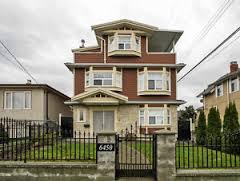
oldnew


is currently available at that price.  Check it out. Of course it has two suites for rental, so we’re attaining some kind of density.  But the house to the side indicates the size of house it replaced in its East Van neighbourhood, quite a difference.

Right now the house in our neck of the woods that we affectionately dubbed “the crack house” is currently undergoing such a transformation.  Workers swarm over it every day (even Easter Sunday) as the new structure rises before our eyes.  But what interests us is the large foundation they just poured on the lane.  It could turn out to be for a garage, which would add another $50K to the value of the finished house.  Or it could very well be for a laneway home, which would add another $350K.  I’m thinking it will be a laneway.

And it will be just one of many in our area.  Most are going up behind new builds, such as the one pictured above.  But many are being tucked behind existing homes.

We’ve just got the news that our neighbours are being evicted from their rental basement suite after the sale of the house.  For a few heart-stopping moments we worried that the new owners were going to tear down the mid-century building, but it turns out they are planning a house-wide reno on the two suites therein, and hope to build a laneway on the property.  I remember chatting with the former home owners while our laneway was being built, and they were quite interested.  But one thing definitely will stand in their way.  The house has a HUGE deck off the back.  Much larger than would be allowed if it had been built with a permit.  To build the laneway and still keep the needed 16 foot distance between the two homes, the deck must come down.  That might be a step they are willing to take.  If the reno is done with permits the deck may have to come down anyway.

Whatever may come, laneway homes are no longer a novelty in this neighbourhood, or anywhere in this city.  They are a viable partial solution to the shortage that is driving up the price of housing here and elsewhere.  Laneway homes are popular in Toronto, and have recently been allowed in Saskatoon and may soon hit Regina.

Could this be the Canadian way to achieve greater density?

Being part of the team — simple rules to success.

Now that you’ve found your designer and builder, and signed your contract (or at least looked it over and started negotiations), I guess you can just disappear like those HGTV families and come back when it’s all done! (Cue the OMGs!)

No.  That’s not how this is going to play out.

It gets worse before it gets better

It gets worse before it gets better

I’ve heard where people handed the keys to their decorator or builder and walked away (or stayed in a completely different city) while they worked their magic, but these people are either 1) very easy to please, or b) insane.

You have some obligations to the builder and to yourself to be around during the build.  And more.

1.) Be easy to reach.  Whether it’s asbestos in the heating, collapsing plumbing, knob and tube wiring, or a host of other surprises that won’t pop up until the walls come down, your builder will need to get hold of you.  Make sure you are accessible by cell phone or email so problems can be solved in a timely manner. What if you really are in another town?  Skype, email or phone.  And be prepared for a sizeable long distance bill.

2.) Make up your mind.  Don’t take weeks to pore over samples until you’ve made every decision.  Pick out the cupboards, plumbing features, flooring, lighting fixtures, moulding, door handles — and all the thousands of little decisions that you’ll have to make — early in the game.  These choices have to be made quite early on to make sure there are no hang-ups during the build.

3.) Be flexible.  It doesn’t matter how well you plot and plan, some things just won’t work out.  In our case it was bedside lamps we had to switch out partway through the build.  But it could be almost anything, countertop material that’s no longer available.  Flooring in exactly the right colour.  Then your builder will need to get hold of you quickly (see 1.) above) and get an alternate. But

4. Don’t change your mind.  Some things can be returned to the store.  But not walls.  Once you’ve signed off on the plans everything flows from that, the schedule, the budget, the workers themselves.  Changing your mind during the build can cause terrible delays; yes, it’s just a day or two of work, but that could mean the sub-trades are already on their next job and can only get back in their spare hours.  Those decisions should be made during the design stage.

4.) Get out of their way.  You may not have to actually leave the building — although for big renos that’s a darn good idea — but you should pack up your stuff and make sure all your shelves are cleared and your pictures and mirrors removed from the walls. Demo and rebuild can be rather seismic, you don’t want stuff crashing to the floor.  Your builder will put up plastic sheets where he/she can, to keep the mess contained, but it’s also a good idea to cover your furniture with dust sheets.

5.) Pay your bills on time.  You knew that.

6.) Leave a contingency fund.  There will be surprises — and not all of them good.  That contingency fund will come in very handy — and if you don’t spend it (although you will) you can take a nice vacation when all the hurly burly is done.


Get the most out of your designer — a four-step plan

designer

Step one:  Admit you need a designer.  

You may think you know exactly what kind of room/reno/addition you want.  And hey!  You can get some software for your computer to help you put together some plans.  So what do you need a designer for?  Well, do you know what size windows you can put in the room (housing by-laws have a window-to-wall ratio you must follow).  Or if you need an engineer to sign off on the removal of that load-bearing wall?  A designer knows.  Plus he/she can bring lots of great new ideas to the project that you would never think of.  So enter into your relationship with this person/team knowing that you’re doing the best thing for your future — and paying up front for a good design can save you many bucks later on.

Step two: communicate, communicate, communicate

Show the designers pictures of what you like to let them know your style and what kind of design you want.  Ask questions — don’t be afraid to question everything at any step of the way.  And let them know what you want in the big picture — not just what kind of dining room, but what you want to do with it, how often you entertain, how you envision the entire family gathered in the den.

Step three: money, honey

Let the designer know your budget at the beginning of the process.  Though you may have champagne tastes and a beer budget they may be able to provide you with some Chablis-grade alternatives.  And your designer will let you know if you can complete your entire renovation now or whether you’ll need to finish it over several stages — plus they can make sure that you’re not taking one step forward and two steps back when it comes time to continue to the next stage.

And remember to keep back at least 10% of your budget for contingencies.  I have honestly never heard of anyone who did not need that money before the project was over — no matter how precise their budget and plans were at the outset.

Step four: communicate some more

With each stage of the design process you will be defining exactly what you want and need.  Changes to the plans will cost much less than a change order at the building stage.  Plus!  Love the look of marble in your bathroom?  Knowing that at the design stage means you can look around for exactly what you want, find the best prices, and order it early in the build stage.  Knowing well in advance what kind of plumbing fixtures you want, choosing the right tile for your backsplash, having a firm idea of the flooring you want will all pay dividends during the build.

Another reason to hire a designer — you can relax, knowing that your project will be wonderful!

What to expect when you deal with a contractor

Congratulations!  You’ve found your contractor!  You are on your way to a better home!

Not exactly as shown

Not exactly as shown

What can you expect from your contractor? And what can they expect from you?

Contract.  A contract guarantees both parties know what is expected of them.  You get the assurance that the job will start on a certain date and will be finished by a certain date for an agreed-upon price.  There are several types of contracts, fixed-price, lump sum, time and materials, etc., plus various combinations of them.  Here’s an explanation of the different types and their advantages and disadvantages.  Depending on the size and complexity of your project, the contract can be very complicated or quite simple.  The important thing is that you HAVE a contract.  You should both know exactly what is being built and what is expected.  Read it, go over it line by line with your contractor, so you know exactly what you are getting.

The contract will also show that your builder has insurance, and will lay out the liability limits.

Permit.  If a contractor tells you they can do a job without a permit, think hard about hiring them.  If there will be any changes to the outline of the house (a deck, for instance), if there will be any changes to interior walls, plumbing, lighting,  make sure your contractor is doing drawings and pulling permits.  Yes, it costs you money.  Yes, it can be frustrating when the project is held up waiting for an inspector.  But permits are a guarantee that someone is watching your project.  Benevolently.  From above.

Deposit.  It’s customary to give your contractor 40% of the project fee up front. Then, when you receive the invoices for the work done (the scheduling of the invoices should be laid out in the contract), the invoice will indicate that 40% of the costs have been paid.  So if you get an invoice for $100, you will pay $60 of that, the remainder having been paid by the deposit.

Holdbacks.  These sound simple but are complicated. If your project costs more than $100,000 it’s mandatory for you to have a holdback account, where 10% of each payment you make to the builder is put aside in an account and held there until 55 days after the contract’s end.  This is to protect you — you can hold back that money if the job isn’t done to your specifications (thus “holdback” account).  It also protects the sub-contractors and suppliers because they can apply for some of that holdback money if the General Contractor didn’t pay them. It’s up to you and your contractor to include this in the contract, so talk it over with them.

Schedule.  Your contractor should indicate what job is done when.  The schedule has to have some flexibility built in, because there will be external forces at work to screw it up, whether it’s a storm that holds up deliveries or one of the aforementioned inspectors who’s sick that week.  But you should have a good estimate of who is supposed to show up when, and as the project nears completion you should be given a firm date.

Meetings.  The contract should set a schedule for meeting with the builder/contractor.  You should get together at the project once every two weeks to go over what’s been done and review any problems that have come up.

Good communication.  You should be able to reach your contractor between meetings to ask any questions you may have.  And they should be able to reach you! Problems may arise that have to have a quick answer.


Strategies for Coping with a Renovation

DD here again. We’ve been away from home for a few nights and the project at the “Big House” is underway.

For some reason, I underestimated just how stressful a renovation of this size is. Perhaps because we were able to stay in our home for the first phase, I’ve been caught off guard. So here are my top 5 coping strategies for surviving a renovation. Handy for me, too, seeing as we’ve got a few weeks to go yet:

1. Do not underestimate how stressful a renovation is!

Did I mention I’m a bit caught off guard by these feelings?

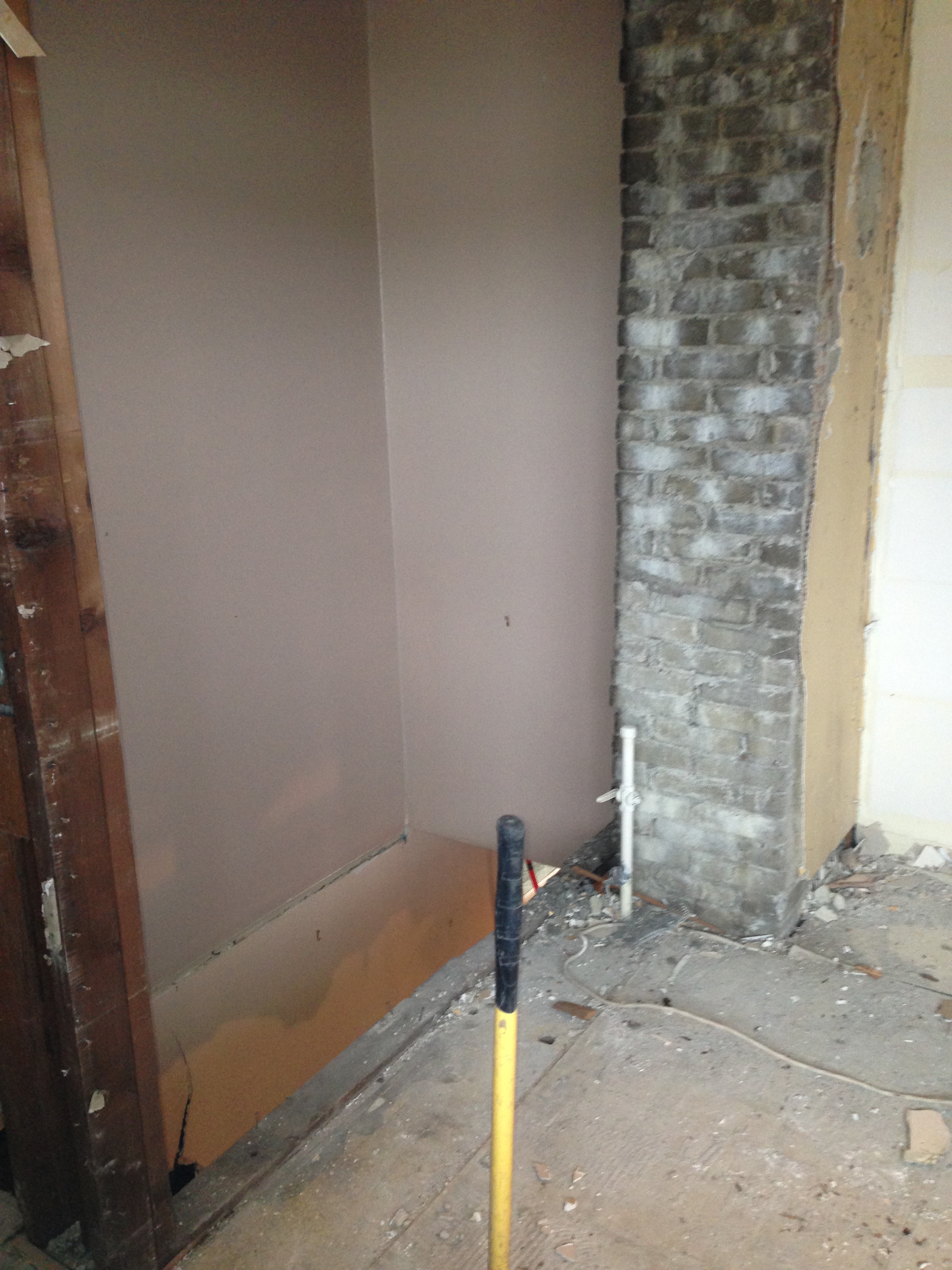
This dark photo (taken by a laneway dweller) is a hole where my kitchen was. Unexpected sadface took place when I opened it.

This dark photo (taken by a laneway dweller) is a hole where my kitchen was. Unexpected sadface took place when I saw it.

Because our reno was initially discussed for a March start, and we found ourselves with a January start, it was a bit of a whirlwind getting ready. Even without the accelerated pace, any family planning a significant reno will likely have to:

  • Find a new place to stay (we’ve squeezed into my in-laws’ condo in the suburbs), even if it’s just another portion of your existing home
  • Pack up the house, but with a fun twist (disclaimer: NOT FUN) … organizing what will be discarded, what will be stored and left unused, and what will come with you
  • Reschedule family events to sync up with the new location/being away – or plan for being without utilities (cloth diapering? yeah, let’s put that on hold)
  • Purchase items or pick out items for reno (fun at first, but it can wear you out)
  • Meet with the contractor and make big decisions about the future of your home quickly

I wasn’t prepared for how incredibly stressful this process would be. Over the holidays. With two small kids (4.5 years old and 4 months old). Thankfully, my mom lives in my backyard! Still, yowza.

2. Explain everything to the kids. Then explain again.

I have a charge ahead, think things through later approach, which means I often forget about the impacts of major life changes on the rest of the family. Don’t worry, they remind me!

My daughter misses home, and is acting out, with meltdowns a couple of times a day. And just today she turned to me and said “I miss our REAL house. Our yellow house. When can we go back to the yellow house?”

Knowing what I do now, I’d advise other parents to do a better job than we did of explaining the whole process to the kids. Try and share plans and show them materials. Show them pictures that depict what the after should look like.

Do not let your children see the house packed up, or the demo. This is something we did right, and thankfully there were no tears upon departure. We’ve also kept our daughter signed up at her daycare part-time, both to preserve the spot for when we get home, and to keep some consistency in her routine (despite the 1 hour commute, I’d say it’s worth it).

3. Dwell on the deficiencies.

Five days out of my house and I’m looking wistfully at pictures my old kitchen. So cute! So charming! So much like home. I’m … well, I’m homesick. I guess my daughter’s not the only one.

I’ve found that one of the best ways to combat this homesickness, and fear of change, is to dwell on what wasn’t working in the house before we left.

To help with this, I made a video of all the house’s shortcomings. You can view it here.

Smashy smashy! I used to make my coffee here. Now it's a giant hole. My primal brain is reeling.

Smashy smashy! I used to make my coffee here. Now it’s a giant hole. My primal brain is reeling.

And brace yourself! If you’re not home to see the demo, and your contractor (or family member) sends you photos, it can be a blow. It’s your home. There are holes smashed in it. Again, all for the best. But these things can really pack a punch.

4. Ignore the helpful comments/questions from family and friends. Instead, put them to work!

I will preface this by saying that my friends and family are AMAZING. Amazing. But even the best of intentions can lead to comments like:

  • Are you sure you want to sink all of that money into your house?
  • Why don’t you just fix the living room while you’re at it?
  • Why aren’t you taking out this wall?
  • Why aren’t you kicking the kitchen back? Just adding two feet would give you so much more space!
  • Huh, a checkerboard floor. I don’t think that’s going to age well. Why not just white?
  • Cool. A checkerboard floor. But why not just brown?

I had to quickly learn not to take these comments to heart and start second-guessing our plans.

On the other hand, my family has been incredibly helpful. My visiting aunt and uncle helped us throw a bunch of items into our attic and shift boxes around. And did I mention my mom lives in my backyard? When time was tight and we had to be packed and out, she watched both kids so we could get it done.

5. Treat yourself.

Whatever it is you need to do to look after yourself, do it. Reno time generally means time to tighten the purse strings. But don’t underestimate the power of a treat, a yoga class, a dinner out. Be kind to yourself – this is a major, major life event. If you’ve relocated somewhat far from home (as is our case), take the time to check out the local community centre, and ask around about great restaurants, bookstores, galleries … whatever might brighten your mood.

Next time I sign in, we’ll be well underway. For now, I’m going to dip into the Christmas chocolate.

My Pain, My Life, My Struggles, My Fight

Come walk with me, Down My Dark & Stormy Journey BUSINESS INQUIRIES & CONTACT EMAIL : GODSCHILD4048@GMAIL.COM

ANNOTATED AUDREY BLOG

Artist and Desert Dweller with Big City Style.

Im ashamed to die until i have won some victory for humanity.

Domenic Garisto / LIFE IS NOT A REHERSAL,SO LIVE IT..if you can't be the poet, be the poem..havau22.com

The Lady Who Lives Down the Lane

Lane Way Housing for the Nervous Novice

Apartment Therapy| Saving the world, one room at a time

Lane Way Housing for the Nervous Novice

Slightly Snug House

building a home that's not too big and not too small

Vancouverandy

Funny thoughts from a nut like me.

Small House Bliss

Small house designs with big impact

WeeHavyn

Lane Way Housing for the Nervous Novice