RSS Feed

Category Archives: Laneway House

Get the most out of your designer — a four-step plan

designer

Step one:  Admit you need a designer.  

You may think you know exactly what kind of room/reno/addition you want.  And hey!  You can get some software for your computer to help you put together some plans.  So what do you need a designer for?  Well, do you know what size windows you can put in the room (housing by-laws have a window-to-wall ratio you must follow).  Or if you need an engineer to sign off on the removal of that load-bearing wall?  A designer knows.  Plus he/she can bring lots of great new ideas to the project that you would never think of.  So enter into your relationship with this person/team knowing that you’re doing the best thing for your future — and paying up front for a good design can save you many bucks later on.

Step two: communicate, communicate, communicate

Show the designers pictures of what you like to let them know your style and what kind of design you want.  Ask questions — don’t be afraid to question everything at any step of the way.  And let them know what you want in the big picture — not just what kind of dining room, but what you want to do with it, how often you entertain, how you envision the entire family gathered in the den.

Step three: money, honey

Let the designer know your budget at the beginning of the process.  Though you may have champagne tastes and a beer budget they may be able to provide you with some Chablis-grade alternatives.  And your designer will let you know if you can complete your entire renovation now or whether you’ll need to finish it over several stages — plus they can make sure that you’re not taking one step forward and two steps back when it comes time to continue to the next stage.

And remember to keep back at least 10% of your budget for contingencies.  I have honestly never heard of anyone who did not need that money before the project was over — no matter how precise their budget and plans were at the outset.

Step four: communicate some more

With each stage of the design process you will be defining exactly what you want and need.  Changes to the plans will cost much less than a change order at the building stage.  Plus!  Love the look of marble in your bathroom?  Knowing that at the design stage means you can look around for exactly what you want, find the best prices, and order it early in the build stage.  Knowing well in advance what kind of plumbing fixtures you want, choosing the right tile for your backsplash, having a firm idea of the flooring you want will all pay dividends during the build.

Another reason to hire a designer — you can relax, knowing that your project will be wonderful!

What to expect when you deal with a contractor

Congratulations!  You’ve found your contractor!  You are on your way to a better home!

Not exactly as shown

Not exactly as shown

What can you expect from your contractor? And what can they expect from you?

Contract.  A contract guarantees both parties know what is expected of them.  You get the assurance that the job will start on a certain date and will be finished by a certain date for an agreed-upon price.  There are several types of contracts, fixed-price, lump sum, time and materials, etc., plus various combinations of them.  Here’s an explanation of the different types and their advantages and disadvantages.  Depending on the size and complexity of your project, the contract can be very complicated or quite simple.  The important thing is that you HAVE a contract.  You should both know exactly what is being built and what is expected.  Read it, go over it line by line with your contractor, so you know exactly what you are getting.

The contract will also show that your builder has insurance, and will lay out the liability limits.

Permit.  If a contractor tells you they can do a job without a permit, think hard about hiring them.  If there will be any changes to the outline of the house (a deck, for instance), if there will be any changes to interior walls, plumbing, lighting,  make sure your contractor is doing drawings and pulling permits.  Yes, it costs you money.  Yes, it can be frustrating when the project is held up waiting for an inspector.  But permits are a guarantee that someone is watching your project.  Benevolently.  From above.

Deposit.  It’s customary to give your contractor 40% of the project fee up front. Then, when you receive the invoices for the work done (the scheduling of the invoices should be laid out in the contract), the invoice will indicate that 40% of the costs have been paid.  So if you get an invoice for $100, you will pay $60 of that, the remainder having been paid by the deposit.

Holdbacks.  These sound simple but are complicated. If your project costs more than $100,000 it’s mandatory for you to have a holdback account, where 10% of each payment you make to the builder is put aside in an account and held there until 55 days after the contract’s end.  This is to protect you — you can hold back that money if the job isn’t done to your specifications (thus “holdback” account).  It also protects the sub-contractors and suppliers because they can apply for some of that holdback money if the General Contractor didn’t pay them. It’s up to you and your contractor to include this in the contract, so talk it over with them.

Schedule.  Your contractor should indicate what job is done when.  The schedule has to have some flexibility built in, because there will be external forces at work to screw it up, whether it’s a storm that holds up deliveries or one of the aforementioned inspectors who’s sick that week.  But you should have a good estimate of who is supposed to show up when, and as the project nears completion you should be given a firm date.

Meetings.  The contract should set a schedule for meeting with the builder/contractor.  You should get together at the project once every two weeks to go over what’s been done and review any problems that have come up.

Good communication.  You should be able to reach your contractor between meetings to ask any questions you may have.  And they should be able to reach you! Problems may arise that have to have a quick answer.


Strategies for Coping with a Renovation

DD here again. We’ve been away from home for a few nights and the project at the “Big House” is underway.

For some reason, I underestimated just how stressful a renovation of this size is. Perhaps because we were able to stay in our home for the first phase, I’ve been caught off guard. So here are my top 5 coping strategies for surviving a renovation. Handy for me, too, seeing as we’ve got a few weeks to go yet:

1. Do not underestimate how stressful a renovation is!

Did I mention I’m a bit caught off guard by these feelings?

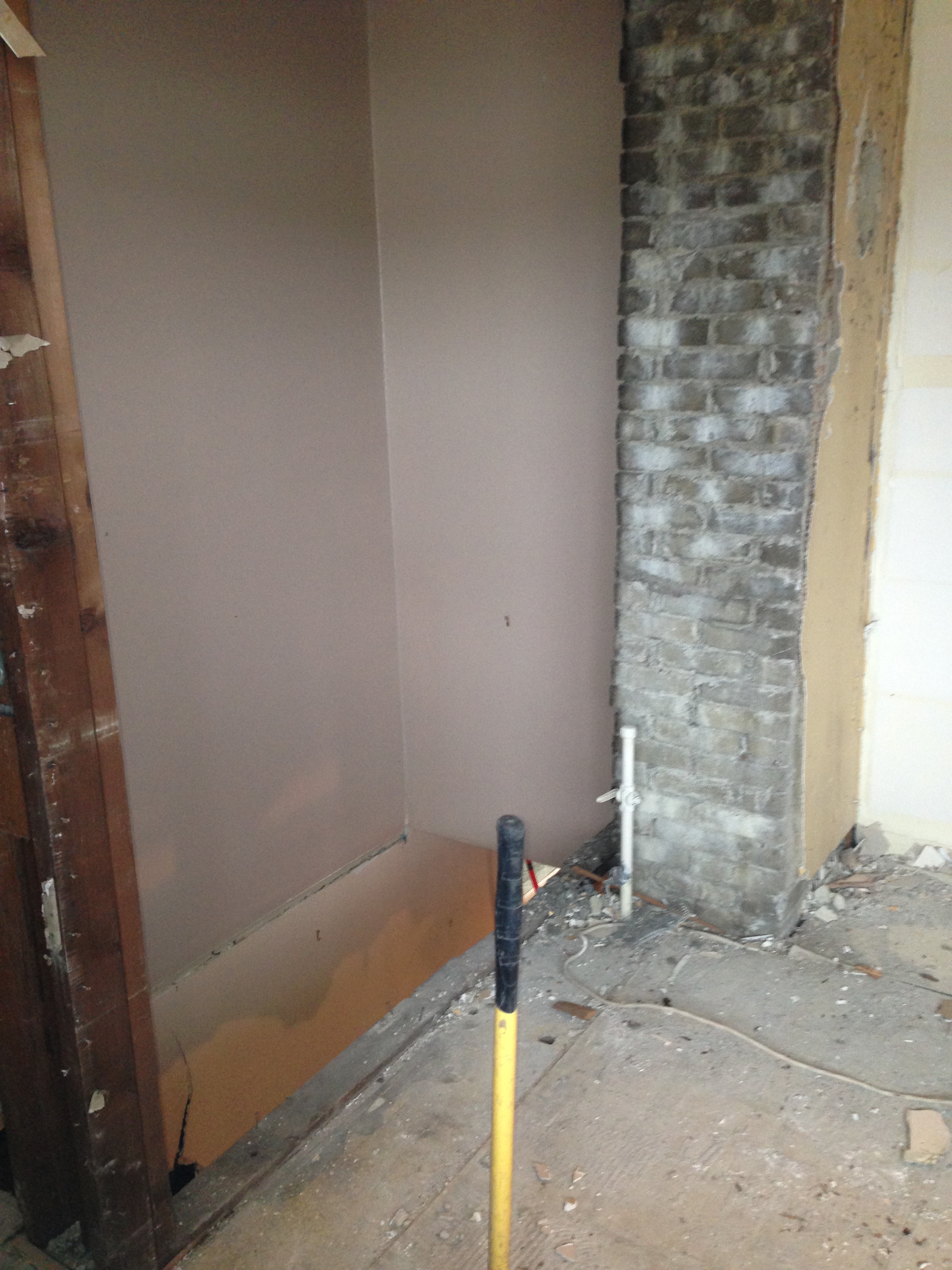
This dark photo (taken by a laneway dweller) is a hole where my kitchen was. Unexpected sadface took place when I opened it.

This dark photo (taken by a laneway dweller) is a hole where my kitchen was. Unexpected sadface took place when I saw it.

Because our reno was initially discussed for a March start, and we found ourselves with a January start, it was a bit of a whirlwind getting ready. Even without the accelerated pace, any family planning a significant reno will likely have to:

  • Find a new place to stay (we’ve squeezed into my in-laws’ condo in the suburbs), even if it’s just another portion of your existing home
  • Pack up the house, but with a fun twist (disclaimer: NOT FUN) … organizing what will be discarded, what will be stored and left unused, and what will come with you
  • Reschedule family events to sync up with the new location/being away – or plan for being without utilities (cloth diapering? yeah, let’s put that on hold)
  • Purchase items or pick out items for reno (fun at first, but it can wear you out)
  • Meet with the contractor and make big decisions about the future of your home quickly

I wasn’t prepared for how incredibly stressful this process would be. Over the holidays. With two small kids (4.5 years old and 4 months old). Thankfully, my mom lives in my backyard! Still, yowza.

2. Explain everything to the kids. Then explain again.

I have a charge ahead, think things through later approach, which means I often forget about the impacts of major life changes on the rest of the family. Don’t worry, they remind me!

My daughter misses home, and is acting out, with meltdowns a couple of times a day. And just today she turned to me and said “I miss our REAL house. Our yellow house. When can we go back to the yellow house?”

Knowing what I do now, I’d advise other parents to do a better job than we did of explaining the whole process to the kids. Try and share plans and show them materials. Show them pictures that depict what the after should look like.

Do not let your children see the house packed up, or the demo. This is something we did right, and thankfully there were no tears upon departure. We’ve also kept our daughter signed up at her daycare part-time, both to preserve the spot for when we get home, and to keep some consistency in her routine (despite the 1 hour commute, I’d say it’s worth it).

3. Dwell on the deficiencies.

Five days out of my house and I’m looking wistfully at pictures my old kitchen. So cute! So charming! So much like home. I’m … well, I’m homesick. I guess my daughter’s not the only one.

I’ve found that one of the best ways to combat this homesickness, and fear of change, is to dwell on what wasn’t working in the house before we left.

To help with this, I made a video of all the house’s shortcomings. You can view it here.

Smashy smashy! I used to make my coffee here. Now it's a giant hole. My primal brain is reeling.

Smashy smashy! I used to make my coffee here. Now it’s a giant hole. My primal brain is reeling.

And brace yourself! If you’re not home to see the demo, and your contractor (or family member) sends you photos, it can be a blow. It’s your home. There are holes smashed in it. Again, all for the best. But these things can really pack a punch.

4. Ignore the helpful comments/questions from family and friends. Instead, put them to work!

I will preface this by saying that my friends and family are AMAZING. Amazing. But even the best of intentions can lead to comments like:

  • Are you sure you want to sink all of that money into your house?
  • Why don’t you just fix the living room while you’re at it?
  • Why aren’t you taking out this wall?
  • Why aren’t you kicking the kitchen back? Just adding two feet would give you so much more space!
  • Huh, a checkerboard floor. I don’t think that’s going to age well. Why not just white?
  • Cool. A checkerboard floor. But why not just brown?

I had to quickly learn not to take these comments to heart and start second-guessing our plans.

On the other hand, my family has been incredibly helpful. My visiting aunt and uncle helped us throw a bunch of items into our attic and shift boxes around. And did I mention my mom lives in my backyard? When time was tight and we had to be packed and out, she watched both kids so we could get it done.

5. Treat yourself.

Whatever it is you need to do to look after yourself, do it. Reno time generally means time to tighten the purse strings. But don’t underestimate the power of a treat, a yoga class, a dinner out. Be kind to yourself – this is a major, major life event. If you’ve relocated somewhat far from home (as is our case), take the time to check out the local community centre, and ask around about great restaurants, bookstores, galleries … whatever might brighten your mood.

Next time I sign in, we’ll be well underway. For now, I’m going to dip into the Christmas chocolate.

Finding the help you need — contractor and designer

Congratulations!  You’ve decided that you will hire the help you need to renovate your living space.  Now you just have to find them.

build

This will probably take a few weeks (or even longer) so in the meantime be sure to browse the internet and save images of what you’ll want and need in your new space. A picture is worth a thousand words, particularly when those words are cornice, mansard, and French cleat.

In a small community you will only have the option of two or three companies.  But in a larger city…..

Don’t worry about whittling the list down just yet, just get lots of names.  Ask all your friends who have undergone renovations who their contractors are, and if they would hire them again (this helps you eliminate some of the bad eggs right away).  Go online and Google designers, builders, and design/build companies. Check out their websites — just because it’s not a snazzy site doesn’t mean they are not good contractors, but you can get a feeling about their work from what they have up at the site.

What if they don’t have a website?  Well, they are either very old-school and rely on word-of-mouth, or they are brand new to the business. Do you want to work with either of these types?

Go to the Houzz site (which you are probably visiting for reno ideas).  They can help you find local contractors/designers. 

Go to the Greater Vancouver Home Builders’ Association website.  Check out the Trusted Pros website for more names.

When you have a good list, run the candidates’ names through the Better Business Bureau website.  Again, not necessarily a deal-breaker, but membership is another sign the business is on a long-term professional basis.

Now comes the hard part.  Start phoning and emailing.  I recommend phoning over emailing.  If you can’t get an answer or a reply to your message how will you communicate during the build?

What vibes did you get about the company during the call?  Do they seem professional?  Are they short with you, or even rude?  Remember, you will be dealing with these folks for a long time — pleasant is what you are going for.  If they are a builder, can they recommend a designer?  If a designer, vice versa?  How soon can they begin to work on your project (no kidding, some of these people are tied up years in advance)?  Are they licensed?  Insured?  Ask for several references, preferrably some recent and some long-term.

This is where your list will be whittled down.

Make appointments with the two or three you really like.  If these are eliminated you can always go back to your list.  Do they arrive on time for your meeting?  Are they keen to do the work?  Are you comfortable with them?  Do you feel they are really LISTENING to you? Talk to them about the project.

Be sure and check the references.  Did the client like working with the contractor?  How did they handle problems that came up?  Were they easy to reach? Did they keep to the budget and the timeline?  Would they hire them again?

Look, really look at the bid when it arrives.  Does it cover the entire scope of the job?  They should also have some rough plans to show you — and give extra points if they have some ways to save you money, or how to improve the plans with a few of their own ideas.

We needed design services when we built our laneway home — more than what a contractor could provide.  So we went with a design/build company – Novell.  It worked out really well for us, and I think it’s a good idea for most people.

When the designer and the contractor have worked together before they know how each other work. And most importantly, if they have any differences YOU will not be caught in the middle.

And when the bids finally start coming in,  as this story from Apartment Therapy reminds us, remember: fast, cheap, good.  Pick two.  A good contractor can deliver fast and good, but at a premium.  Or affordable and good, but not on a tight schedule.  And no good contractor will promise fast and cheap — because you can’t get a quality job with those constraints.

DIY? Or hire a pro? Ask yourself these questions.

If, like me, you have been watching the season marathons at the DIY&HG stations, you are probably looking around your place and wanting to make a few changes.  (Unless, like me, you moved into a brand new custom-built place a year ago).

Don't try this at home, kids.

Don’t try this at home, kids.

And you may even have good ideas about what you want, and you’re feeling like maybe you can do it yourself.  How do you know if you should tackle the job by yourself and when to hire a contractor?

1. Have you done it before?  Yes, you helped your brother replace his toilet.  Sure, you repainted your summer house.  OK, you are good to go.  You know the scope of the job and you’re prepared for a realistic amount of work and mess.

2. Do you have to buy or rent new tools to perform the task?  If you’re putting in a new backsplash, for instance, scoring and clipping a few tiles to make that corner fit is something most handy homeowners can handle. Hiring a tile saw takes a little fix-it job to another step.  Drilling a hole in concrete to hold a bolt is one thing, hiring a pneumatic drill is another. Got a compound mitre saw?  It’s a pretty tricky thing to operate. There’s no hard-and-fast rule, but the more complex the tools, the more complex the job, and maybe it’s something you should leave to someone who has used those tools before.

3.  How much mess can you live with?  And for how long? I have friends who wanted a new ceiling ladder installed so they could have access to storage in their attic.  It wasn’t a big job, so a friend of a friend with considerable home reno experience said he would do it.  But he ran into problems.  And instead of asking my friends if they wanted their contractor to handle the now-larger job, he took it upon himself to do it.  Of course, he was working weekends and evenings, with the occasional afternoon work.  Short story long, six weeks later the ladder is still waiting to be installed and there’s a big ugly hole in their back bedroom ceiling.  When you DIY, you can be living with mess for weeks because the work is usually performed in someone’s spare time.

4. Does it matter if the job isn’t very well done?  Not a crazy question.  If you are having a complete kitchen reno in the next few years, just stick on some tiles on the floor and the walls and smarten the place up for a quick fix.  A cute mural on a wall that will be repainted when the child is a few years older doesn’t need to be Disney-approved.  A DIY slipcover on a sofa that will be tossed when your reno is done next year does not have to look perfect.

5. Does the pro who does the job need a license? Never do your own wiring.  Don’t do more than the simplest plumbing jobs yourself.  You are not only jeopardizing the future value to your home, you could be risking your life.

Now here’s something you may not have thought about

6. How much will the job cost? For larger jobs, you might want to borrow some money.  There’s a payoff to borrowing money for projects that will increase the value of your home (I’m talking about bathrooms and kitchens).  Not many lenders will let you walk away with their cash unless you have a professional doing the job.

7. What will it look like? Even if you are making minor design changes, I recommend hiring a designer.  Even after years of poring over design websites and magazines, I could never have found the creative solutions to our space problems that our designer did.  Unless you are an architect or a designer you just don’t have the knowledge to provide the best results.

Now we know whether or not we want to hire someone, I’ll have a few suggestions on finding the right person to help.

Five things I’ve learned in our first year of laneway living

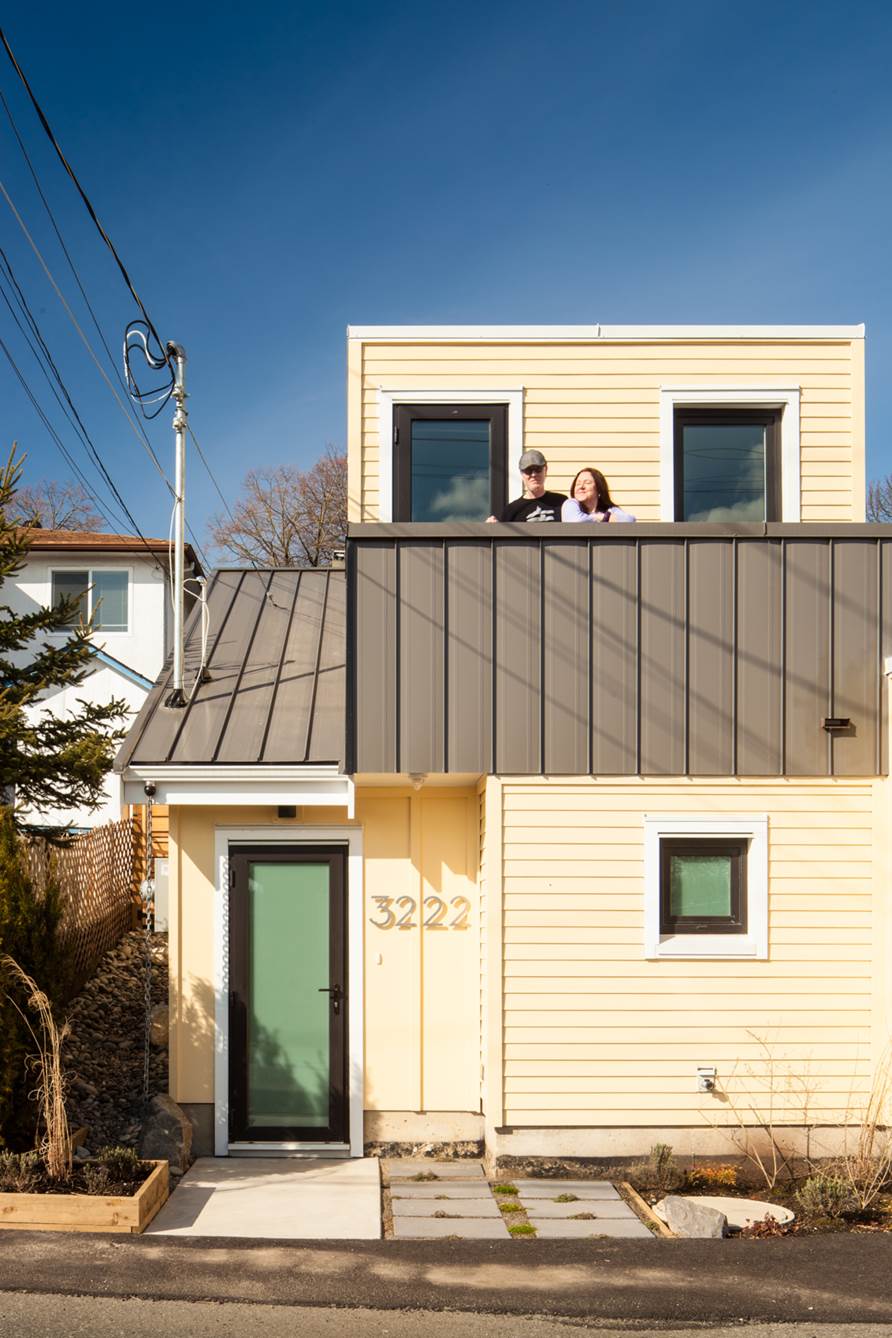
The beginning of December marked our first full year of laneway living.  We have completely settled in, are thrilled to be living so close to our kids, and are looking forward to the coming new year of life on the lane.

Our house is a very, very, very nice house

Our house is a very, very, very nice house

During this time we have learned some very important lessons — hard won sometimes — that I want to share:

1. We did not need all the stuff we had.

Ergo: You do not need all the stuff you have. This is the hardest lesson to learn and you will never really learn it until you downsize.  Because……..

2. You will never get rid of your extra stuff until you have to

Maybe you are looking around you now and thinking that you have too much stuff.  Nah, just kidding, you are not thinking that at all.  You’ve just ditched the Christmas decorations and your place has a nice, stripped down look.  No way could you ever live with less.  There’s a reason you bought everything you own, just as there’s a reason why people gave you stuff.

Gradually you will stop using that gadget, stop wearing those clothes, but YOU DON’T GET RID OF THEM.  Because you have the space to put them.  And you tell yourself (those fatal words), “I might need that”. And into the closet or the storage room they go – to be forgotten.

So you will never realize how little you can live with until you get rid of everything (or nearly so) and start afresh.

This is an incredibly difficult thing to do.  Please don’t think I’m going to get all obnoxious on you because we are still getting rid of stuff.  We have a storage locker full of stuff we don’t use.  How do I know we won’t need it in the future?  Because we haven’t needed it in the past year.  When I was unpacking kitchen boxes at move-in I put a large salad bowl and some platters into some of our precious, precious kitchen cupboard space. And there they sit, unused this whole year.  I have to get rid of them.  But I haven’t.  Because I don’t have to.

But now I want to unpack some of  our storage space stuff and will have to have room for that, and those unused items will have to go, go, go.

Baby steps, my friend, baby steps.

3. Design trumps size

Up at the DD and DSIL’s big house BIG plans are afoot.  The kitchen and bath are being stripped back to the studs and rebuilt, fixing many problems (more on this later).  The rooms will not be any larger, but will be much, much more efficient.  Because DESIGN.

Ask anyone who lives in a mobile home or a houseboat — or even a small condo.  You can find storage room that you never dreamed of. Space for your shoes in your staircase. A lift-up bed for linens and more.  A half-height mechanical room off the deck with room for our Christmas decorations.

So if you are thinking living in a small house is just taking your current space and shrinking it, disavow yourself of this notion.  You can get your designer and builder to put in much more storage per square foot than you currently have.

4. Living outside of your house has its rewards

We used to spend a lot of time cleaning and primping our former place.  Two full bedrooms, two baths, plus a living room and two halls to vacuum.  Lots of open shelving to dust.

But now we have lots of time to spare after our clean-up routines.  Time to take walks.  Get on the Skytrain and go. Get out to the gym.  We are looking forward to some travel this year.  We’re getting lots of exercise and having fun.

5. A small home IS all you need

While the laneway was being built we used to drop by and watch the progress.  At every step, from the concrete pour for the foundation to the finishing touches on the moulding, we told ourselves that the place was going to be soooooo small.  It was too late to turn back, but we were worried that our home would be constricting and claustrophobic.

But we were wrong.

It’s cozy.  It’s comfortable.  It’s bright and cheery. When the rainy weather stops us from go out for a walk we are happy spending the day indoors — there’s space where we can each hideaway and do our own thing.

PS: The financial situation is pretty good, too

We consider ourselves pretty lucky that we found the laneway solution to living in a too-expensive home too far from family.  Every month we are just a little bit farther ahead financially, rather than the other way around.  We save on power, water, gas living in such a small, energy efficient home.  We buy fewer things (that we would end up not using anyway) because everything we bring into the place has to earn its space.

It’s win all the way.

I’ll have a small Christmas, thanks.

Holiday-Cartoon-Slideshow03-690


Thank you, New Yorker magazine!

The word came down from on high this year:  just one small gift is expected for our granddaughter.  And keep away from anything pink and plastic.  (“On high” is the main house where our little darling resides, and her mother gave us the word).

Speaking as a grandparent, it’s easy and fun for us to stroll the aisles at the toy store, picking out expensive and adorable toys to give DGD.  And it’s wonderful to watch her little face light up as she rips off the wrapping.

But then what?

We’ve seen it many times.  Scenes around the Christmas tree where the parents (or more usually, the grandparents) have bought out the store, wrapped them up and given a mountain of gifts to children barely able to say their address. The tykes are overwhelmed with the amount of toys.  They don’t know which they want to play with first, and which will be discarded or broken within a month.

I’ve heard the excuses “We don’t have the chance to spend more time with the kids so we want to make sure they remember us.” “I never had a lot of toys when I was a kid, and my grand-kids will never want for any!” Or the ridiculous “But all their friends have them, I don’t want them to feel deprived!”

No, no, no, and no.

You may be giving objects, but you are teaching them all the wrong lessons.

It’s hard to find data on the effect of too many Christmas presents on the young mind.  Not a lot of parents want to sign up for lab tests to determine that they are, indeed, ruining their children’s lives.  All we can do is look back on the presents we received when we were children.

Remember them?  I bet you don’t.  Oh, maybe that one year you got the exact present you wanted.  But all the other Christmases?  I’m betting you remember that game of snap you played with your grandmother; building a tower with your Dad with that Erector set; singing the old songs with the old folks, someone at the piano and the rest gathered around. I remember the smell of new books, not the books themselves. (I love books.)

We recall those goofy traditions, like everyone sitting around the tree in their pyjamas (no opening presents until Mom and Dad have their coffees in their hands) or taking a walk around the neighbourhood while the turkey roasts.

Build your own traditions.   Make your own memories.  The nicest things we get at Christmas don’t come from stores.

Away in a laneway, no room for a tree

I wrote about our first Christmas in the laneway house just one year ago.  Now I’ve had a whole year to think about decorating our little space and I’ve found lots of ideas on what to do when you JUST DON’T HAVE ROOM for a traditional Christmas trees. I started with the ideas I found last year, and searched the internet (with a little help from Apartment Therapy and Houzz).

Don’t think that you have to give up the idea of having live greens inside.  You can drop by a tree lot late in the day and ask if you can have some of the lower branches they’ve trimmed off the trees.  Have an idea how long the branches should be to fit into your container so you can ask them to take off a couple of inches for a perfect fit.  It doesn’t have to be big to be striking:

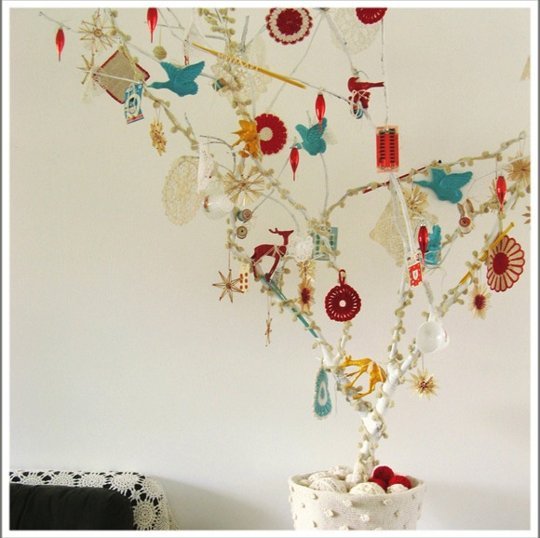
treeOr you can use just pretty sticks and put some ornaments on them.

branches

But these ideas need a little corner of a table or  floor to display them.  And if you don’t have that little space to spare I can certainly feel your pain.

Take a look at your walls — you can finesse a Christmas tree by using some of that vertical space. (Maybe take down some of your current artwork for a real change).

Here’s a do-it-yourself tree that can look as zippy and modern or as sweet and old fashioned as you like, depending on what papers you choose.  This one is made of paint chips — but you could use regular coloured paper or even Christmas wrap.

paper


Or use tissue paper to make this clever fringe tree:

fringe


You can also make this cute and modern string tree with the kids.  Hang ornaments or Christmas cards (or a combination of both). It’s put up with Command transparent hooks so no damage to your wall.

stringIn fact there’s no end to the ideas on how you can put a tree directly on a wall.

Use lights (and Command hooks) to make a tree:

light1

Or just place anything, ornaments or cards or a combination, in a roughly triangular shape:

cards

How about putting some decorations  in your windows.  Use the existing curtain rod, or put a spring loaded rod within the window area.

WindowDecorations

Or just hang a nice grouping with bright ribbon:

window

Still can’t find the room?  Look up!  Here are the instructions to put together this striking mobile — put it over your table for a lovely centrepiece that won’t take up any table space or block the person on the other side.

Mobile

Do you have a balcony or deck?  Or even a little yard?  Put your tree outside.  We do:

XmasNightTree XmasTree2013

It sits just outside our sitting area window so we can enjoy it from the comfort of our couch without it crowding us at all. I’m thinking about painting the lights cord white to hide it better.

We used an artificial tree, you could use a live tree or even a living tree in a pot.  Or a tomato cage:

tomatocage

A couple of these on your balcony would really make a show!


If less is more, is more less?

This week everyone is crazeeeee about the whole “Black Friday” thing.  Every time I turn on the TV or open a newspaper, the advertising is exhorting me to buy, Buy, BUY!  Stock up for Christmas, get a great deal of a new piece of equipment, spoil myself and my loved ones.

XmasSale


Some people even cross the border to bring back loot.  (BTW, this article says that many retailers actually put up their regular prices before the end of November so they can drop them for Black Friday.  Be diligent, check and compare.)

Living in a little house has completely turned this season around for us.  Not only do we not want anything, we have no where to put it if we got it.  So don’t give us a new TV, or even a new remote.  We have too much stuff as it is.  Last year we didn’t exchange gifts between the adults of the family, and we’ll do the same thing again this year.  Instead we’ll get together with loved ones, have a nice Christmas dinner, and we’ll visit back and forth during the holidays.  It’s low-key.  We’ll decorate our homes, bake some cookies.  Take a little time to unwind and appreciate what we have.

So before you buy into the whole “buying” thing, think about what you really need and what makes you happy.  It’s not stuff, I’ll wager.  You’d probably be just as happy if you took the money you use to buy gifts and just gave it away to charity.  Happier, even.

Remember, you probably don’t need more of anything.  In his book, Billionaires: Reflections on the Upper Crust by Darrell M. West  , he points out that rich people aren’t happier than poor people, they are often more miserable. Because what they really want is “more”.

In this review of the book, Michael Lewis says

Not long ago an enterprising professor at the Harvard Business School named Mike Norton persuaded a big investment bank to let him survey the bank’s rich clients….In a forthcoming paper, Norton and his colleagues track the effects of getting money on the happiness of people who already have a lot of it: a rich person getting even richer experiences zero gain in happiness.

And Lewis goes on to say

something in the world has changed—or is changing. And I think it is: there is a growing awareness that the yawning gap between rich and poor is no longer a matter of simple justice but also the enemy of economic success and human happiness. It’s not just bad for the poor. It’s also bad for the rich. It’s funny, when you think about it, how many rich people don’t know this.

So don`t look for happiness in the next gadget or knickknack or fooforall.  You probably have more than enough.  (I know I“m chockablock with fooforalls.)

This is the time to say no to more consumerism.

There’s been some backlash to the blatant mass consumerism of the Black Friday event. Adbusters, a Vancouver-based not-for-profit magazine, often promotes their “Buy Nothing Day” on the same day as Black Friday, said Katherine White, a Sauder School of Business professor in consumer insights, prosocial consumption, and sustainability

Read more: http://www.vancouversun.com/life/Retailers+often+inflate+prices+before+Black+Friday+discounts+Vancity+report/10409658/story.html#ixzz3K7TQBZgu

BCNPHA spells relief to renters

For someone who sticks their nose into all kinds of housing, it’s incredible to me that I just recently learned of the BCNPHA — The British Columbia Non-Profit Housing Association.

As I learned from their website

The BC Non-Profit Housing Association provides leadership and support to members in creating and supporting a high standard of affordable housing throughout British Columbia.

BCNPHA members are primarily non-profit housing providers. Other members include individuals and organizations who care about affordable housing.

If you are interested in providing or living in non-profit housing, these are the folks for you. They offer training and help at each stage.

I heard about them in correlation with the Rental Housing Index.  This is a very comprehensive index that shows you the affordability of rental housing for each area throughout the province:

BCNPHA1

And within each area you’ll find a table showing the cost

The affordability for each level of income

BCHPHA2

which shows that

in Greater Vancouver, a total of 47,410 renter households are living in conditions that are too small for their household size and composition

And the bedroom shortfall

BCNPHA4

which shows that

Greater Vancouver would need at least 63,480 more bedrooms to house all renters suitably.

Even at the highest income level, $71,583 +, renters might not find accommodation suitable for their needs.

We just had a civic election where the term “housing affordability” was tossed around by all sides.These figures from the BCNPHA show just what that term means in hard figures.

When people have to spend over half their income on housing, and even the most affluent renters can’t always get what they need, there is truly need to work on this issue — immediately

My Pain, My Life, My Struggles, My Fight

Come walk with me, Down My Dark & Stormy Journey BUSINESS INQUIRIES & CONTACT EMAIL : GODSCHILD4048@GMAIL.COM

ANNOTATED AUDREY BLOG

Artist and Desert Dweller with Big City Style.

Im ashamed to die until i have won some victory for humanity.

Domenic Garisto / LIFE IS NOT A REHERSAL,SO LIVE IT..if you can't be the poet, be the poem..havau22.com

The Lady Who Lives Down the Lane

Lane Way Housing for the Nervous Novice

Apartment Therapy| Saving the world, one room at a time

Lane Way Housing for the Nervous Novice

Slightly Snug House

building a home that's not too big and not too small

Vancouverandy

Funny thoughts from a nut like me.

Small House Bliss

Small house designs with big impact

WeeHavyn

Lane Way Housing for the Nervous Novice