RSS Feed

Category Archives: Minimalism

What’s keeping in the kitchen?

Does anyone else wonder where the money goes for their food?

Yum!

Yum!

We hardly ever eat out.  We love to eat — and cook — and we make our own dinners almost every night (we went out twice in the past month — one anniversary and one reunion dinner with family).  We don’t order out.  We don’t bring home take-out.  So where does the money go?  I wonder……not worry……just wonder.

So when I saw a post on Houzz about 6 Tips From a Nearly Zero Waste Home. I was on it like a shot.  Let’s stop the waste!  Rule #1:

Then I heard that needle across the record noise.

You see my problem?  We don’t eat chips (just don’t care for them).  We don’t use K-Cups (it makes us anxious that we have any waste from our coffee making — even compostable  filters and grounds). No tetra paks except for some stock now and again.  We actually make our own cereal mixes.  Few crackers.  We’re exterior-walls-of-the-super-market shoppers.  PLUS!  No room for bringing home and storing huge packs of ANYTHING!  Costco is not on our list of favourite stores. We just can’t stock up for the zombie apocalypse.

What else can we do to minimize our food bill?  Reduce waste.  Over to Life Edited for tips on creating a smaller footprint in the kitchen.

Rule #1:

  1. Buy only what you need. This is a pretty obvious one, but try to buy the food and the quantities you know you’ll consume from one shopping trip to another. It’s okay to have an empty fridge before you go shopping. If feasible in your area, make more frequent, smaller shopping trips.

That’s a bit more like it.  We live up the hill from a Superstore.  DH likes to take a nice walk every day.  It’s a match (of purposes) made in heaven.  Following the rest of the rules, we compost — Vancouver has a great composting program.  We don’t hoard food until it’s spoiled — our tiny fridge and freezer means we’re faced with our leftovers whenever we dip in for a cold one or an ice cube.  We use up our leftovers.  What to do to reduce our food bill?

**sigh**

One place I would really like to reduce our waste is with food storage.  I rely on plastic wrap.  I use it to keep my lunch from drying out, I wrap my cut onions in it, and put over dishes of leftovers.

Can someone please invent a biodegradable plastic wrap?

Thanks!

Teensy tinyness — taking it even smaller

I was chatting with an acquaintance the other day, who knowing how fanatical keen I am on small houses, told me that he and his wife are planning on building a tiny house. Not small — tiny.  One of the houses that fit snugly into the Tiny House Movement, at under 120 square feet.

Rustic Exterior by Other Metro Architects & Designers Tumbleweed Tiny House Company

Currently they are renting a nice condo in Vancouver.  The tiny house (on wheels) would sit on his in-law’s property out in the Fraser Valley, and would serve as their quarters as they help her parents renovate their home. If the home is then sold, they would just roll the home onto some recreational property, or onto a corner of the subdivided property. Or they might just decide to move out there and stay.

It’s the perfect solution to their current dilemma, although presently they are not planning to live full-time in the home.

But others do.

Dee Williams has lived for 10 years in just 84 square feet. It’s an accomplishment, to be sure, one worthy of having a book written about her experience.

Like this one.  Which she wrote.
Williams used to live in a much bigger house.  With a big mortgage and big heating bills.  But a life crisis made her realize what was really important — and she turned her life around and put it into a tiny house.
She realized what her true priorities are.
Time has become her most valued and abundant possession. “I have time to notice my natural environment and take a breath through the seasons, to puzzle over the way that nature is throwing itself at me and the community. I live in one of the most beautiful places on the planet. If you’re working all the time, sitting inside, you miss a lot of it. I feel lucky and blessed that I’ve been able to pay attention to it.” 

Dee’s story has been told here in Houzz, and here.  And she’s given a TED Talk on it.

It’s a big story (about a tiny house).

Tiny houses come in a surprising variety of designs.  This couple has a luxuriant 240 square feet in a space no wider than 8 1/2 feet and no taller than 13 1/2 feet.

Contemporary Exterior by Sebastopol Architects & Designers The Tiny Project


What makes tiny houses so liveable?

The blog Tiny House Talk has some suggestions to get the most spaciousness (if not space) in your tiny home.

Some of them are fairly apparent, such as combining your living room and your bedroom to avoid partitioning already small areas even further.  But some I would never think of, like

Keep the space uncluttered above waist height. Anything above waist height that projects into the living space will make the space feel that much smaller. That means kitchen base cabinets are not a problem, but upper cabinets might be. Limit cabinets, shelves, or anything else that intrudes into this space.

This one is a given

Use light colors to create a spacious feeling. Light colors make a space seem bigger, while dark colors make a space seem smaller. Choose white or light-colored finishes for the ceiling and walls. (The floor color is less important for this purpose).

In most of the tiny houses I have seen have seen the ceiling and walls are all the same light colour, so your eye travels from the walls up to the gabled roof without interruption.

And of course

Open up to the outdoors. In addition to windows, think of creative ways that doors or even whole sliding walls could allow you to open your house up. (Check out the Virginia Tech LumenHaus for one elegant example). With a porch, deck, and a whole landscape outside, your tiny space won’t feel at all claustrophobic.

I know that just having our deck outside the upper floor of our laneway makes the entire storey seem larger.

As the author at Tiny House Talk points out

There’s no doubt about it—downsizing and simplifying your life to fit in a tiny home is a very difficult thing to do. And you certainly will want some storage space, partitions, and so on. But beware of the “big house mentality” in which a room can be packed with cabinets, bookshelves, and furniture and still feel spacious. In a tiny house, it can’t. Restraint, and a little bit of good design, will go a long way towards making your small space feel plenty comfortable.

And as DH has pointed out several times, Good Design Trumps Space.

Getting around with an ELF

I get around most of the time by transit — I don’t like to drive (and DH does not like me to drive his vintage auto) and I don’t like to ride a bicycle. In the rain.  Uphill. And I’m not ready for a motorized wheelchair, although my Dad loved tearing around the streets of Nelson on his Rascal.

I work too far away to ride a bike to my job, and if I want to go shopping there is a strict limit on how much I could carry home.

But what if there were another way of getting around?

Meet the ELF

elf-2

It’s a trike, so it’s more stable than a bike.  It can hold a lot of cargo (up to 350 lbs, according to Life Edited). It’s got an electric motor so you don’t have to pedal all the time.  It’s solar powered.

And it’s so darned cute!

Check out the website for Organic Transit — the people who make this adorable little transport.  It’s a great idea, maybe a game-changer for traffic-congested cities.

I don’t see me driving down the main byways of Vancouver in one of these — and riding a bike or a trike on the sidewalk is not allowed.

But if they can knock down the price from five grand American, if they can get a few communities to adopt them, I think we have a fighting chance to replace cars for zipping around the immediate neighbourhood. After all, if half of all car trips in the US are three miles or less, this could revolutionize how we get around.  With our aging population (and rainy weather), bikes are not always feasible.

The ELF could be the answer.

But isn’t that what I said about the SEGWAY?

No new (stuff) is good news

Last week we went through our belongings in our storage locker and renewed our pledge to live with less.  It just makes sense.

But how do you resist the lure of retail?  After all, temptation is all around us — we see new and shiny things (or in my case, old and patinaed things); advertising is everywhere reminding us that we NEED NEW STUFF.

At this point it's mostly toys anyway, isn't it?

At this point it’s mostly toys anyway, isn’t it?

In the nick of time comes two articles from Apartment Therapy to help strengthen our resolve to fill up our lives with useless items.

First of all, avoid the idea that you are missing out on a bargain if you don’t buy that particular shirt or shoes or chatchka.

1. Avoid high pressure sales tactics.

We’ve all done it, gone into a shop for one thing and felt the pressure from the sales staff to get more.  Hey, it’s their job to sell you stuff.  But it’s not a personal rejection if you don’t submit to their wiles.  It’s your job to stick to your original plan.

Don’t have an original plan? Well,

2. Keep a list

You should always be aware of what you need, and what you buy frequently.  If you don’t keep a list in your head you may find yourself prey to the next item.

3. Avoid impulse buys.

You’ve got a shopping cart (in real life or online). Why not just slip in a couple of things that are on sale but are not exactly what you need RIGHT NOW?  Don’t do it.  You will regret that expensive impulse when you get the items home.  You know you will.  And if you bought it on sale you may not be able to return it.

4. Check the measurements and read the product info and reviews.

One of the great advantages of shopping online is being able to read the product reviews.  Those have saved me from many a foolish expenditure.  In a retail store be sure to check out the size on the package or you’ll come home with sheets that won’t fit your extra-thick queen mattress.

5. Eliminate temptation.

When we were stocking the laneway I subscribed to several on-line shopping services.  They were great when I knew I needed one white duvet and two sets of white queen sheets.  I was able to compare and was quite happy with the deals I got by waiting and checking often.

But I don’t need them any more.  There will come a time when I have to replace the sheets/towels, and I’ll subscribe again.  But right now I do not want to see a supermarket of attractive items coming through my inbox and tempting me to purchase them.

Maybe you know you have to buy a new shirt or blouse in an exact colour.  Find a sample of that colour and carry it with you to the stores.  It’s a reminder that you need THAT particular item and nothing else.

Yesterday DH and I took a little walk along Main Street, looking for a particular item.  I had a fabric swatch of the cushion covers I am making and we needed a little tray in a matching tone to sit on our ottoman and serve as a coffee table.  We whisked through second hand stores and thrift shops, zipping through in minutes because we knew exactly what we were looking for.  (We found it, BTW in the Vancouver General Thrift Shop for 50 cents).

So we’ve safely navigated the swamp of retail stores as far as impulse buying goes — what about the danger of (dun dun DUNNNNNN) Stocking up.

We can’t do it here.  We just don’t have the room for a giant case of paper towels or toothpaste.  So this article in Apartment Therapy speaks to us in the dulcet tones of truth. When you have limited room and are not expecting the apocalypse, store it at the store. What could be standing in your way?

Roadblock 1: Buy more, save more

You can save money on large quantities of things like paper and laundry products.  But we know well how much storage costs — we are paying for a storage locker.  How foolish it would be to use our in-home storage for bathroom tissue rather than bringing our good crystal home from that expensive lock-up.

Roadblock 2: Convenience

We have to go to the grocery at least every other day — our little fridge doesn’t hold very much.  And that is fine with us, we are close to 3 major grocery stores, two of which offer clothing, housewares, and yes, small appliances.  So stocking up on the bulky stuff just does not make sense when we’ll be back buying milk tomorrow.

Roadblock 3: You Might Run Out 

Once again, see Roadblock 2 above.  We are close to the store.  Running out means literally running out — the stores are open early and close late.  Plus we keep an on-going list of what we need.  We usually buy replacements for our dishwasher detergent or toothpaste just before we run out — and of course our neighbours can always help us out.

I think it’s a good idea to borrow a concept from our Zen teachers, but instead of mindful meditation we practice mindful spending.

5 ways the laneway life is changing us for the better

We’ve been living in our laneway for over three months now, time for the first inventory of how living here has changed our lives.  The differences are subtle, but telling.

Hmmmmmmmmm.......

Hmmmmmmmmm…….

I feel more in control of the changes in my life these days.  I’ve always been aware that I couldn’t complain about my job or my home because as an adult I had made every decision that had landed me where I am.  Of course those were always restricted by the available options, but it was my choices that had determined where and how I lived.

So I like to keep track of how these decisions have steered my life in slightly different directions. Since moving into our laneway,

1.  I know more about what’s going on. I never used to watch the news.  In the morning I was busy in the kitchen and bathroom getting ready for work.  In the evening I was busy making dinner in the kitchen.  Then I was in bed before the late night news.  But now I watch the news while I prepare breakfast and dinner — I’m paying more attention to it. Whether that’s better for my peace of mind or not, it’s probably much better for me.

2.  I like shopping again. I don’t buy as much stuff.  That was going to be a given.  Our cupboards and closets are full.  But I am pleasantly surprised how much more fun it is to go shopping.  For one thing I will not buy anything that is not exactly what I want and need.  You must have been poking around a store and thought “I could probably use one of those” or “I need something like that” then you get it home and put it away and forget about it because it’s not exactly what you needed, it’s just sort of what you needed.  No more of that.  If it’s not exactly what I need right now, I won’t buy it.

3. I enjoy mornings more.  In our condo the clothes closets and dressers were in our bedroom.  I get up earlier than DH, so I had to get everything ready the night before so I wouldn’t disturb him rooting around for the clothes I needed.  The door to the ensuite where I performed my morning toilette opened so that any light would shine right on his sleeping face.  Small things, I know, but now when I get ready in the mornings I can shut off the closet and bathroom with a sliding door, creating a little dressing area for myself (this isn’t a lucky fluke, BTW, our designer created this for us). That gives me a lot more options when I dress.

Plus the light pours into our upstairs even when the day is grey.  It makes it much easier to get up and go. That means the whole day gets off to a good start.

4. We are eating better.  I used to make up meal plans at the beginning of each month.  It meant we were not duplicating meals but it also meant we were getting into a rut.  We would do a big shop on the weekend because we had a big fridge and lots of cupboard space.  But now we have a tiny fridge we can’t fill it up with food we are not going to eat right away.  So we shop every day, luckily we are right down the street from three major grocery markets, and we are trying out new foods.  Polenta.  Kale.  Quinoa. Radiccio. Plus we don’t throw food out because there is no room for leftovers to become science experiments, they are used up within a few days. DH is anticipating grilling season (and his brand new natural gas barbecue).

5. I worry less.  Because there’s less for me to worry about.  It’s very odd.  The less I have, the happier I am or at least the greater my sense of satisfaction. Of course I don’t worry about our laneway home because everything is brand new, so I am not concerned about things breaking down. And since it was built specifically for our needs everything is right where we want it all the time. But experts at Baylor University have found that materialists — people who have to have things to be “happy” are less happy than other people because they have no gratitude. I am grateful every day for our home and our new life and that gives me a sense of satisfaction and, yes, happiness.

13 Reasons Why Smaller Is Better

Many years ago I was walking down a residential street here in Vancouver with a much younger friend of mine.  We were both looking at the houses, stating our preferences.  I was rather surprised to learn that she wanted a big house.  Not just big, not just huge, a monster house. The kind of house that takes up most of the lot, that overwhelms the space.
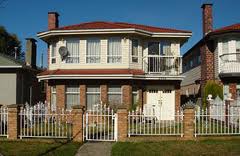
MonsterHouse

Know what I mean?

She said she wasn’t planning a large family, or to live in a multi-generation situation.  She just liked big houses.

I thought she was out of her mind.  I still do.  Smaller houses are best.

There, I’ve said it.  And I am prepared to back it up.

Northern Homesteader got me started with 12 Reasons to Live in a Smaller House – other than money.  Here’s her list, with my comments.

1. A small house is cozy

In a big house you have to find your cozy spots, create them with an overstuffed chair or a window seat.  But a small house is all cozy corners and intimate spaces.

2. A small house is warmer in the winter

It takes less than 10 minutes for our house to get warm on a cold morning.  The radiant heat works beautifully, and there are no cold corners.  In fact the laneway house is so energy-efficient that we turn down the heat to 16(C) in the afternoon so it doesn’t get uncomfortably hot.

3. A small house is easier to decorate

Even if you are going for a bohemian style with every flat surface covered in pictures and knick-knacks, decorating a small house takes less time and energy.  Even painting a room takes less time.  And you’ll need fewer cushions, fewer paintings, and fewer area rugs.  So if you want to completely change the look you can do it over a weekend.

4. A small house is faster to clean

Our former condo was only 1100 square feet, but it had two full baths and miles of carpeting.  To clean it up used to take us most of Saturday.  Now we can be out of here in less than an hour, with every surface sparkling and every floor damp-mopped.

5. A small house builds relationships

It’s funny, when you have a big home, how little time you spend in the same room as another person.  You might drift through the kitchen while your husband makes dinner to grab a glass of wine before you go back to watching the news in the front room, but you don’t actually have that much face time.  But in our laneway, I can be in the “sitting room” doing the crossword while DH is making dinner, and we are sharing and chatting, and sometimes watching the news together.  Yet when we want some private time there is always a little corner where we can be alone.

6. A small house inspires ideas and creativity

In our condo we had storage space galore.  Closets stuffed with clothes we didn’t need any more, an entire storage room just for stuff, 50% of which we didn’t use.  But now we have to find storage in every nook and cranny.  The space under the stairs.  the space in the stairs. And since more of our stuff is on display we have to find ways to make it attractive.  There’s a reason I keep watching those decorating shows.

7. A small house prevents clutter

We used to have a pile of papers in the kitchen.  Also one in the front hall.  And one in each bedroom.  No more!  I keep a (lovely) basket where I put all the papers that come into the house.  Once a week I go through it and toss what we don’t need and file what we do.  Bills and bank statements I get online so there’s less paper coming in. Clutter makes a small house look very messy.  It also makes a large house look very messy, but there’s more places to hide it.

8. A small house feels securer

When DH is out I know I just have to lock the two doors and this place is a fortress.  No dark corners or iffy locks.

9. A small house helps to live simple

Maybe that’s not your goal.  Maybe you look for ways to complicate your life.  But buying less, cleaning less, fussing less is what I want.

10. A small house is freeing

I thought it was funny when I read this — because that is exactly how I feel!  Less stuff makes you feel freer.  It’s part of 9., but it’s more than that, too.

11. A small house encourages more time outdoors

Last week I was feeling a bit closed-in.  You can feel that in a large space, too, but I knew what I needed, a brisk walk to the store.  Our small fridge means we buy less, and shop more often.  So we get out every day.

12. A small house takes up less space

The blogger at Northern Homestead loves her garden space.  And she’s not going to sacrifice it to gain more housing square footage.  We like the garden space we share with the main house — their back yard is actually bigger than it was before we built the laneway here because there was a big concrete slab where the house sits.

Twelve good reasons to have a small house, but I’ve thought of a 13th.

13. Smaller ecological footprint

Building the house took fewer resources than building a large house.  That’s a good enough reason to build small.  But running it takes fewer resources, too.  Heating, cooking, running the washer and dryer all take less energy than a larger house with large appliances uses.  If we want to be responsible energy consumers that is one more reason to live in a small house.

Knock, knock. Who’s there? And how many?

I ran across another great article on Life Edited, this time on household size.

All along I have touted laneway homes as a good method to increase the densification of neighbourhoods without changing their character.  These houses, by nature of their small size, will only house one or two people each.  What about the housing density of the rest of the neighbourhood?

Not this kind of housing density.

Not this kind of housing density.

We tend to frame the density issue in terms of housing size, because it’s easy to understand that big homes, as a rule, reduce overall density. But there is something else, just as important as housing size, that must be factored in to understand how density works, and that is household size.

The article quotes a paper in the online journal Population and Environment.  Looking at the population/housing ratio in the past 400 years,

the number of households grew faster than population size in every country and every time period. These findings suggest accommodating housing may continue to pose one of the greatest environmental challenges of the twenty-first century because the impacts of increased housing present a threat to sustainability even when population growth slows.

There are fewer people being born per capita, true, but

Progress made in curbing population growth, however, has not translated into reducing human
consumption of natural resources and impact on the environment.

Yikes!  Why?  Of course there are lots of reasons, and it’s not just because people are building larger homes (McMansions) for their smaller families.  People are also moving out of the family home at an earlier age.  The trend during the recent economic downturn for people to move back in with their parents after college is an anomaly, and probably will not be continued after the economy picks up again.  Also elderly people stay in their own homes longer rather than moving in with their families.  Plus they remain in their old family homes longer rather than moving to smaller ones.  There are other factors as well

The rising incidence of divorce also encourages increased household numbers. In the United
States, 15 % of all households had divorced heads in 2000 …. Although remarriage is common, the relatively high percentage of divorced households persists, and divorced households are 27–41 % smaller than married households

And that means?

From a more simplistic perspective, declining household sizes, from over 5 to approximately 2.5, will mean approximately twice as many houses will be needed per capita in any areas of the world yet to undergo the shift in household size.

Assuming that each of the additional households occupies a 210 m2 house (the average US
house size in 2002) (National Association of Home Builders 2004), then an additional
185,800 km2 of housing area would be required. This estimate may be conservative because land
area for household-related infrastructure (e.g., roads, yards, and retail) can require 2–4 times as
much land as the actual land used for the home …. Each of those houses would demand more household products and have lower efficiency of resource use per person because fewer people share goods and services in smaller households.

That’s why urban sprawl — taking more land to build more houses — will not solve all the problem.

One small caveat by Life Edited shows a glimmer of light in the tunnel of doom:

As a small space design blog, we’d be remiss if we didn’t mention that the amount of sprawl (i.e. the 72K sq miles) they calculate is based on a house size of 2509 sq ft–McMansions for all.

So smaller houses will help the problem well into the future.  And they give us a couple of options,

  1. Let things remain the same. Encroach on undeveloped lands and deplete all natural resources until the planet’s homeostatic environmental mechanisms are irrevocably destroyed.

  2. Reverse demographic shifts away from industrialization, the desire for privacy, divorce and so forth.

  3. Rethink housing. Adjust housing style to meet demographic shifts. Have smaller, more efficient houses with shared amenities. Creatively subdivide existing housing. Mitigate sprawl by keeping density high, even outside of major metropolises, permitting walk/bike/public transportation-friendly living.

That last choice seems the best to me.

Five Reasons Why Family Day Really Was “Family” Day

Monday, February 10, 2014 was the very first Family Day here in British Columbia.  I really wanted this day to be something I could plan and everyone could enjoy. With everyone so busy I didn’t want to add to their plates by saying “Entertain Me!”  I wanted everyone to just show up and have a good time. You may think that has nothing to do with laneway living, but actually it fit in perfectly with our new way of life.

1. It’s all about “Experience”

We won’t be buying much new stuff.  And for everything we bring into the laneway, we have to take something out .  Instead of stuff, we want to spend our time and energy on having new experiences.  And that means

2. Getting Out of the House

In the past I may have been tempted to just make a nice dinner and have our family (two kids, two kids-in-law, one grandchild) over and then we would sit around and eat and then everyone would get up and go.  But we don’t have room for that anymore, and though we will certainly be sharing lots of communal meals, the small size of our place means that if we are planning an event we will need to be outside of the laneway.  That could mean out in the back yard at a barbecue, but in the winter it usually means inside somewhere else (the weather is so iffy, it was supposed to snow but instead it rained buckets).

3. Finding Family Things to Do

The fact that it was Family Day gave me a bit of a kick in the pants.  I haven’t thought much about entertaining children (well, child) for a while.  Plus I wanted something everyone would enjoy, so it had to be more than visiting McDonald’s or dragging the little darling around Science World (she’s a bit young to take it all in).  I just poked around the internet and found Family Day activities at Burnaby Village Museum.  The museum would be closed, but the Carousel would still be open, and they would have fun things for little kids. It’s close to everyone, and not too expensive.  We started off with brunch at a restaurant, then went straight to the museum, and “Carousel, Carousel!” (Only not in that Logan’s Run way).

4. Unplugging

I admit that I like sitting and watching Disney movies with the little girl on the TV or computer.  But for this I wanted a more….analog experience.  Going out and doing real things in the real “meat world”.  Touching and holding hands and walking and playing with plastic frogs.  Riding a real carousel horse (twice).

Whee

5. Building memories

It doesn’t take too many family dinners until the memories all melt together.  Especially since we usually do the same dishes for special occasions.  And that’s good.  It’s so nice to look back on all those Christmas dinners at Grandma’s and the Angel Food cake your Mom always made for your birthdays.

For this Family Day I thought I would be building memories for the little girl — her first ride on a real carousel.  But of course, I was really building memories for myself.

This memory especially

Whee2

Organizing? Or ?

We are still in the process of a) getting rid of stuff, and b) finding places for the stuff that we need.  We want to downsize our rented storage space this month with the goal firmly in place of getting to the point where we don’t need any exterior storage space at all.

So I am doing my part by sitting down with a cup of coffee and my laptop and perusing stories on organizing.  Thanks to Apartment Therapy for giving me “101 Organizational Helpers” with “stylish storage options”  and tips like

Even when your contents are stored and labeled, it means nothing if they’re not accessible. Stacking a group of boxes and storing them on wheels is a great way to utilize the back corner of a closet. When you need a particular box, out rolls your storage cart for easy access.

That is a good idea.  Also

consider repurposing a few things from the kitchen to help you straighten up your sleeping space. Silverware and ice cube trays can be used to sort jewelry and dresser drawers,

But then I ran across another article that reminded me of what it is all about.

Life Edited asked the musical question “Is Organization A Sham?

The article quotes The Minimalists Joshua Fields Millburn and Ryan Nicodemus from their book “Everything That Remains” 

Discussing how to get rid of our stuff answers only the what side of the equation, but not the why; the action, but not the purpose; the how-to, but not the significantly more important why-to. In other words, the what is relatively easy. We all know instinctually how to declutter–how to get “organized.” But that’s just one part of the larger issue. Instead of “get organized,” I’ve decided I need to start thinking of organizing as a dirty word, a sneaky little profanity who keeps us from really simplifying our lives.

You see, our televisions would have us believe there’s a battle being fought on the consumption continuum, a battle between messy hoarders on one side and spruce organizers on the other. And from our couches it’s hard to see who’s winning. I’d like to posit, however, that these two sides are actually working together, colluding to achieve the same thing: the accumulation of more stuff. One side–the hoarders–does so overtly, leaving everything out in the open, making them easy targets to sneer at. Face it, we all laugh and point and say “I’m sure glad my house doesn’t look like that,” every time we see them on TV. But the other side–the sneaky organizers–are the more covert, more systematic, when it comes to the accumulation of stuff. Truthfully, most organizing is nothing more than well-planned hoarding.

Who among us has not glanced at one of those hoarding shows, shocked and yet fascinated, like staring into the abyss that our lives could spiral into if we weren’t ever vigilant.  Those hoarders, those poor, pathetic people, don’t think they are hoarding.  They know that they might need that thing, that old magazine with that article, that pair of shoes that just needs new soles, that pot that might come in handy.

All around us we see constant reminders that we NEED MORE STUFF.  The answer is not to find more places, more attractive containers and more efficient ways to hang onto it.

It’s important to see that the final goal is not to find places for everything we own, it’s to get rid of everything that doesn’t fit into our lives any more.  That will give us more time and energy to concentrate on what is really important.

The growing housing market? Or the housing growing market?

I’m sure you have a friend who quit smoking and then turned into the world’s biggest anti-smoking fanatic.  Sometimes I feel I’m turning into THAT PERSON about living in a smaller space — I love it and it’s such an improvement in our lives.  Let me proselytize a bit, I’ll probably calm down in 20 or 30 years.

Now that I’m a confirmed believer that small is the new black (should I get that on a T-shirt?  No, maybe not) I am on the lookout for stories that others are joining the movement, buying and building smaller houses.  There’s the Tiny House Movement and for a while it looked like housing in the US was getting smaller.

The median size of new homes built for sale peaked in 2007 at 2,295 square feet, then fell to 2,159 two years later, after the housing crisis hit.

But it looks like that trend is over — in fact

the appetite for ever-larger homes has returned: In 2012, new homes reached a new peak of 2,384 square feet and, according to the National Association of Home Builders, some 41 percent of new homes had four or more bedrooms, up from 34 percent in 2009.

Those quotes are from a story in the New York Times about how the recession-led reduction in the size of new homes was just a blip on the radar screen.

“The housing market is being driven by the move-up buyer, the luxury buyer,” said Brad Hunter, chief economist and director of consulting atMetrostudy. “And those who have strong incomes, secure jobs, their stock portfolio is doing well — they are able to buy whatever they want. And what they are buying is larger houses.”

The New York Times is also the paper that tells of the jobless recovery and the shrinking middle class, so I’m guessing these mega-houses are out of the question for most of the population.  But some people feel they are entitled to buy huge homes.

Maybe it’s sour grapes.  But this seems out of line to me.

This six-bedroom house, which has six full and three half bathrooms, measures about 9,000 square feet, including the basement. … added a wall of windows to the basement and furnished it with a pool table, a media room, a wet bar, a home office and a suite for their youngest daughter to use when she was home from college. …

That’s right, this 9K square foot home is for two people.  Sure it has everything they ever wanted in a home, but did it really take 9,000 square feet to indulge their every whim?

Media rooms, sunrooms and in-law suites can be added to standard models. Some customers are even opting for a so-called dirty kitchen, a separate galley off the main kitchen that is used to prep food. It keeps the dirty work of cooking hidden so it doesn’t sully the increasingly large kitchens that have morphed into granite-slathered family gathering spots.

It’s not just schadenfreude to think that these people will very soon become used to living in such, let me say it, excessive luxury.  It’s human nature to forget the joy of possessing something new and shiny, and to want something newer and shinier.  It’s called the Law of Wealth’s Diminishing Returns.  The reality of maintaining that huge house, vacuuming and dusting all those extra rooms, mowing those acres of lawn will take over and you’ll find that the property owns you, not the other way around.

And let me tell you something you probably already knew.  When you have more space your stuff expands to fill it.  There’s some kind of law of physics that explains it, but to put it in layman’s terms you have something, it wears out, but you keep it because you think you might use it sometime, it cost you something to buy, and YOU HAVE THE ROOM TO STORE IT.  So you do. And your stuff increases exponentially.

And lets not forget the cost of those homes.  There’s the larger mortgage which is easily absorbed when it’s 1 or 1.5% but could really get ugly if the rates go up even as high as 7%.  (I’ve seen rates as high as 12% but then I’m a little old lady).

And the enormous amount of power and resources it takes to build and run a home of that size.  It doesn’t help that your refrigerator runs on less p0wer if you have three of them.

This is not likely to become a big problem in our neck of the woods.  For one thing the costs of these homes is quite modest when compared to Vancouver prices.

Affluent buyers have been flocking to real estate, according to the Mortgage Bankers Association, with applications for home loans of $625,000 to $729,000 up 56.7 percent from August 2012 to August 2013. Mortgageapplications for more than $729,000 were up 41 percent.

As I say, this is still a relatively small market.  This “trend” won’t ever have the devastating effect on the subprime mortgage crisis did.  But it still makes me uncomfortable.

I don’t understand why people can’t be happy in less space – happier than they would be in a large house.  With more money to spend on travel and fun experiences.

My Pain, My Life, My Struggles, My Fight

Come walk with me, Down My Dark & Stormy Journey BUSINESS INQUIRIES & CONTACT EMAIL : GODSCHILD4048@GMAIL.COM

ANNOTATED AUDREY BLOG

Artist and Desert Dweller with Big City Style.

Im ashamed to die until i have won some victory for humanity.

Domenic Garisto / LIFE IS NOT A REHERSAL,SO LIVE IT..if you can't be the poet, be the poem..havau22.com

The Lady Who Lives Down the Lane

Lane Way Housing for the Nervous Novice

Apartment Therapy| Saving the world, one room at a time

Lane Way Housing for the Nervous Novice

Slightly Snug House

building a home that's not too big and not too small

Vancouverandy

Funny thoughts from a nut like me.

Small House Bliss

Small house designs with big impact

WeeHavyn

Lane Way Housing for the Nervous Novice