RSS Feed

Tag Archives: Lane Home

City Hall confidential

This isn’t confidential at all, of course.  I just wanted a really dramatic headline for this post.

I’d never been to Vancouver City Hall before DH and I attended the public hearing on June 11. But I wanted to have my say about laneway homes, I wanted to be sure there was at least one voice who didn’t have a dog in the fight.  It’s one thing to have the developers there — and I was sure they would do a good job.  But I just wanted to be a “Jane Citizen” showing support for laneways knowing that we would not be affected either way.
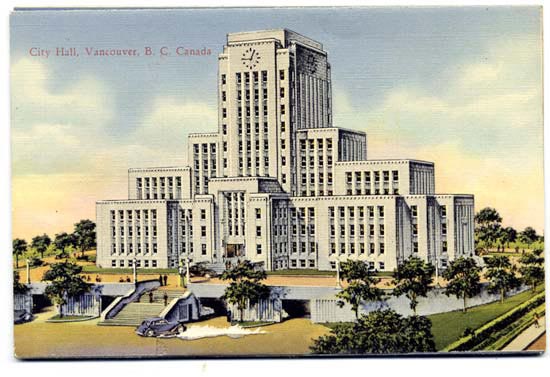
vancouver-city-hall-1930s

There were two items on the agenda.  First there was a discussion of the Regional Context Statement, our contribution to the Regional Growth Strategy that will be shaping our communities in the next few years.  Since this was my first public hearing, there were two things that really stood out for me

  1. The Vancouver City Council is made up of people who are really on the ball, and
  2. Most people do not listen

Although it was explained that there was no new information in the council’s contribution to the Metro Vancouver report, that is was all about giving the baseline information so people could move forward, speaker after speaker insisted that this was all new information, and their neighbourhood/community/back yard would be adversely affected by the report, and HOW DARE THEY submit this report without their input.

I guess I must expect that average people with a full head of steam about something are going to be sitting rehearsing their five minutes at the podium, and won’t be listening to the replies that all the previous speakers were getting.  But I, a neutral by-stander at the beginning of the process, was 147% in favour of council’s acceptance of the amendment by the end.

Thanks, fellow citizens!  You made council look very good!

Also — what is with the hate-on that people have with Translink?  I’m saving a post about the NIMBYism we encountered throughout the evening for later, but wow.

We got to the part of the evening where we were discussing the amendments affecting laneway homes. The city gave their presentation, which you can see here.  SPOILER ALERT!  These amendments were accepted. (Yay Us!)

I was 8th in the line-up to speak.  First was Jake Fry of Smallworks, who did a very good job presenting the “pro” argument, as did the representative of LaneFab.  A couple of people spoke about their lane homes.  I spoke about how building our laneway is helping keep our family truly together.

There were some arguments against the laneways (see what people opposed wrote to City Hall here).  They were basically:

  1. I don’t like laneways
  2. No one should have them.

Most of the problems people were speaking about were with parking (laneway dwellers using their in-home garages as living or storage rooms so they have to park on the street) and the heights of the 1.5 storey laneways causing loss of sunlight and privacy in their yards.

Since both of these problems are addressed (and hopefully solved) with the new amendments, those arguments didn’t seem to be helpful to the process.

All in all this was a very valuable experience for me.  I actually walked away from the meeting (taking Translink home with DH) feeling much more confident in the transparency of the processes the City uses to decide issues, and in the City Council itself.

And now there will be more laneways!  Huzzah!

A guaranty of quality

I was on the Home Discovery Show this morning for a chat with Ian and Steve.  Their other guest this morning was Mike Holmes.

Yes, that Mike Holmes.

Mike Holmes changes people’s lives by going into their homes after bad building practices or crappy renovating have ruined them, and he makes them right again. He’s a hero to these people.  He respects good work, and he is constantly frustrated when he sees shoddy construction.

But what is to say we’re not going to have a badly constructed laneway home?  Sure, we can see a building going up, but how do we know it’s being built to withstand the weather? To not leak or creak or (shudder) reek?  So we can look forward to years in a well-built home that will need minimal maintenance and will never have to call upon someone like Mike Holmes to fix catastrophic problems.

Well, first of all we trust our builder, Novell.  Angelito and Laurel had our confidence right from the start.  They are a part of the Renomark Renovator Program, a member of the Greater Vancouver HomeBuilders’ Association, and are rated A+ in the Better Business Bureau Business Review. And we’ve seen how they work — always keeping the worksite tidy, using good materials.  Plus we talk with them all the time, in addition to our every-other-week meetings, we can call or email them anytime if we have questions.

And we have another reason to feel confident that our home will be solidly built.

Like all BC residents, we have the Homeowner Protection Office, a branch of BC Housing.  And that means we have Home Warranty Insurance on our new home; we are

covered by mandatory, third-party home warranty insurance. As a minimum, this coverage includes 2 years on labour and materials (some limits apply), 5 years on the building envelope and 10 years on structure. It’s the strongest construction defect insurance in Canada.

The HPO’s Guide to Home Warranty Insurance in British Columbia is a 24-page comprehensive guide to what you can expect in the way of protection.

The 2 year labour and materials coverage includes

defects in materials and labour supplied for the electrical, plumbing, heating, ventilation and air conditioning delivery systems, as well as for the exterior cladding, caulking, windows and doors

The 5 year building envelope coverage includes

the components that separate the indoors from the outdoors, including the exterior walls, foundation, roof, windows and doors.

And the 10 year structural coverage includes

defects in materials and labour that result in the failure of a load-bearing part of the new home, and for any defect that causes structural damage that materially and adversely affects the use of the new home for residential occupancy.

Novell has purchased insurance through a company called Pacific Protected for our build.

I recommend that anyone who is building or renovating (or if you are interested in the process) go to the HPO site and explore.  They have guides for every stage of the build so you can see for yourself if each aspect is being built properly.

On this week’s Home Discovery Show it’s me — and Mike Holmes!

Not together, unfortunately, but I’m sure you will all be ready to ask the questions I would.

The Lady will be visiting with Ian and Steve on the Home Discovery Show on CKNW, chatting about the newest developments in the laneway build, and why I am not worried about the quality of the building process.

By the way, tomorrow’s show will repeat on the Corus Radio Network across Canada next Saturday.

Day 29

We have just started week 4 of the build, and we met with Laurel and Angelito, our designer and builder yesterday to talk about the new developments.

First of all:
Week4.1Ta dah!  We have foundation walls.  It’s kind of interesting how the forms were built — first of all they put up the outside of the forms on top of the footings, with horizontal pins running through them.

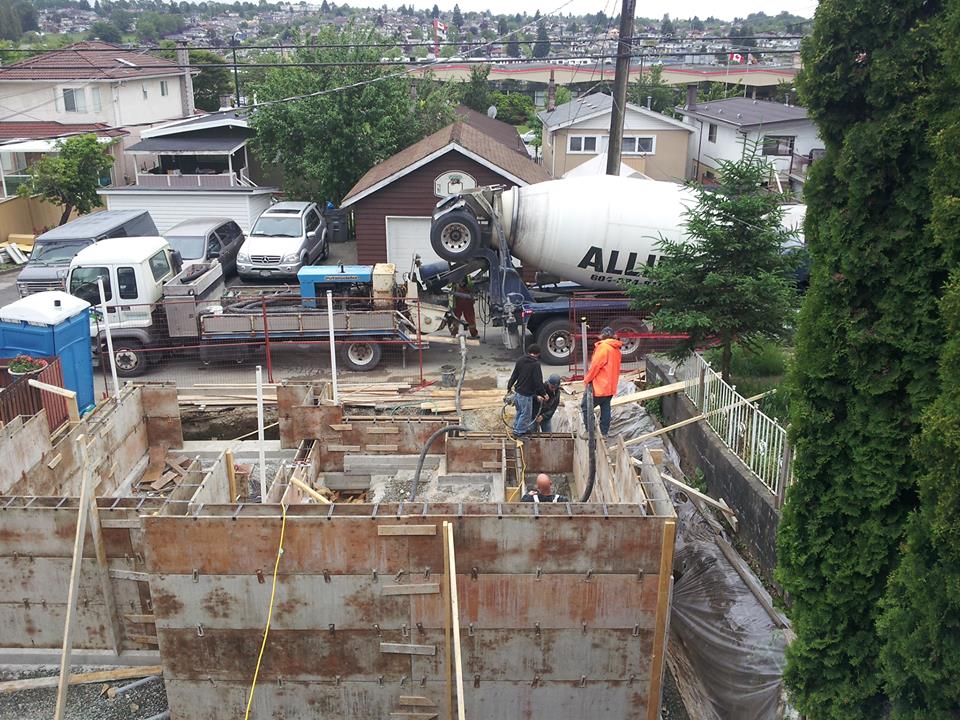
Day23Then the inside walls were attached with wedges attached to the pins.  Then the concrete was poured — in the rain.

ConcretePourThen the forms were removed and we have foundation walls!

ConcretePour2

Ang showed us the features: — those vertical white pipes are set into the foundation for drainage of the flat roof.  They will divert the rainwater from the living roof down into the separate rainwater drainage system the city has running in conjunction with the sewage system.

There’s a connection already in place for the electrical power for the main house and the laneway. Right now the power is connected to the main house by a  big cable running diagonally across the yard.  We really don’t notice it — it’s necessary and ubiquitous.  But the new power connection will be directly to the laneway house, then down under it and underground to the main house.  That big cable will be gone.

Those square holes in the foundation are for plumbing connections.

Next the foundation will be sprayed with tar and will have dimpled membrane attached for waterproofing.

Ang expects to start framing soon.  They will be following a TJI layout from the engineers.  TJI is a type of joist — very strong.

Needless to say we are pretty chuffed about the way the build is going.  Nice and smooth, with no ugly surprises.  Let’s keep our fingers crossed about that!


Another view of the laneway situation from way down south — five reasons to embrace laneways

James Bacon of Bacon’s Rebellion has also written a blog post on the Wall Street Journal story — and he sums up the laneway situation quite eloquently.

Be sure to read the whole story, but briefly, his points are:

First, while accessory units may increase the population density of a neighborhood by today’s standards, they reverse a decades-long trend of de-densification….increasing numbers of accessory units allow urban neighborhoods to return to population densities for which they were originally designed. Why would cities support regulations to halt a healthy evolution?

Second, allowing homeowners to convert idle space (in the case of basement and garage apartments) or add new space (in the case of laneway houses) creates a revenue stream from the property.

Third, accessory units provide an alternative to institutionalizing the elderly in extended living facilities and nursing homes.

Fourth, there is a question of property rights. Conservatives believe in an expanded definition of property rights

Fifth, accessory units are fiscally efficient. They embed new housing in an existing urban fabric of streets, sidewalks, water, sewer and utilities.

I’m pretty sure James and I would not see eye to eye on many political issues, but on the concept of densification in our cities and laneway homes we have found common ground.

From the Wall Street Journal – laneway homes as urban development trend

The Wall Street Journal has been paying attention to the small home trend.  And, clever capitalists as they are, they have put the article behind a paywall.  Scamps.
Video interview with article author, Conor Dougherty.

But writer Conor Dougherty seems to be quite impressed with our laneway homes.

Ajay Kumar built a $300,000, Moroccan-themed cottage that sits in his backyard and will soon be occupied by his parents.

Mr. Kumar’s “laneway house” is part of a broader plan that encourages Vancouver homeowners to add rental units in their basements, attics and backyards. The hope is to reduce sky-high housing costs and increase population density throughout the city—including the single-family-home neighborhoods like Mr. Kumar’s that surround the city’s towering downtown.

…….

During the past two decades, Vancouver’s main approach to add housing has been to go up, constructing scores of downtown condo towers. Recently the city has started rezoning arterial streets to allow more compact row houses.

The city took a step toward increasing density in single-family neighborhoods in the 1980s, when it first allowed basement suites. Since 2009, it has reduced the amount of time it takes to get a permit for basement apartments and permitted laneway homes like Mr. Kumar’s throughout the city.

The article also acknowledges that not everyone is crazy about the idea.

A dozen blocks away, Ronald Hatch also lives next to a laneway home, and he hates it. Mr. Hatch, 73, a retired literature professor, says the two-story home shades his backyard, reducing his raspberry crop.

I can see his point.  I know I would hate it if I had someone build a home that overlooked a formerly open back yard.  But you don’t have to build a laneway to get that effect.  Who has not seen huge, behemoth homes taking up more space vertically and horizontally in these older neighbourhoods?  The zoning is in place.

Getting more people into the city can be done in a number of ways.  You can build more smaller homes or fewer large ones, or some kind of combination of the two.

I’m prejudiced of course, but I prefer the charm of the laneway homes to the giant houses that can take over a neighbourhood.

12 Reasons Why You’ll Be Happier in a Smaller Home

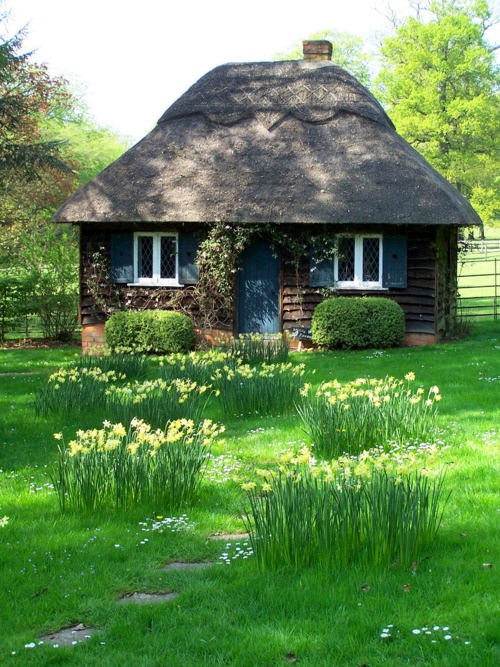
thatchedCottage

For us it wasn’t a choice — we knew we HAD to live smaller or lose too much.

But lots of people do make the choice to live smaller — and the Becoming Minimalist blog has 12 good reasons to do so:

The first 3 we are already discovering in our small rental space:

  • Easier to maintain. Anyone who has owned a house knows the amount of time, energy, and effort to maintain it. All things being equal, a smaller home requires less of your time, energy, and effort to accomplish that task.
  • Less time spent cleaning. And that should be reason enough…
  • Less expensive. Smaller homes are less expensive to purchase and less expensive to keep (insurance, taxes, heating, cooling, electricity, etc.)

Read the whole post — and the comments –– for the complete story.

Speaking of blogs — I use a reader to skim through the blogs I subscribe to.  And for a few years I was quite happy to include dozens of decorating blogs.  It interests me and inspires me to see what other people are doing.

But no more.  As part of the minimal life we are working to lead, I unsubscribed from most of the decorating blogs.  It will soon be clear which ones I still follow.

New Laneway proposals, you know, proposed

Jake Fry and the folks at SmallWorks were kind enough to send along the new regulations and guidelines that Vancouver City Council is considering.

Like us, Jake sees this as part of the evolution of laneway living in the city.

The regulations will be discussed at a Public Hearing on Tuesday, June 11, at 6 pm at Vancouver City Hall.

According to Smallworks, the proposed changes are:

Increasing the permitted floor area to .16 times the lot area, to a
maximum of 900 square feet;

Allowing an additional 40 square feet for storage space (either for
closet space or a separate storage room, e.g. for bike storage);
Increasing the permitted footprint of a one storey home by allowing it
to extend into the rear yard up to 6 feet so that all floor area can
be built at grade;

Continuing to require a 16 foot separation between a LWH and the main
house to maintain backyard open space;

Limiting the height of one storey units to the maximum allowed for a
garage (12 to 15 feet depending on roof form);

Allowing a 2 foot side yard on one side;

Allowing a 5 percent increase in site coverage (area that buildings
can occupy on a site) to a maximum of 45 percent.

DH and I are planning to attend the meeting — it looks like a great way to learn more about our city and its processes, plus connect with other laneway lovers.


Building on solid footings

It’s like a Hobbit house.  That is, its feet are larger than one expects.

The footings for the laneway house are now poured concrete, not just forms.

They are solid concrete — a sound foundation for our new home. Poured in the pouring rain.

Footings20130527

Footings.2_20130527


The rebar sticking out of the footings shows where the walls will go for our main floor.

Downsizing the hard way

We are in our rental place, and the cleaners have gone through our condo until it sparkles.

The move went quite smoothly, seeing that DH and I have not moved in 13 years and had forgotten what a horrendous job it is and were not truly prepared for the discomfort and the shock.  It’s rather like childbirth in that way.

We are learning our lessons, and hopefully when we move (for the last time ever!) into the laneway, we can use those to ease us into our new life and our new lifestyle.

Lesson One: We have too much stuff.  I know, I know, we have been tossing and donating things for months.  But we brought too much stuff with us — even after stopping at the storage space to drop things off en route.  Since the rental is approximately the size of the laneway, it’s plain we have been delusional about how much we can keep.

There is nothing like trying to stuff two full bedroom closets and one hallway closet into one bedroom closet to make you realize that you have been holding on to things that do not fit, do not flatter, and you will never wear/use again.  Seriously, give it up.  As we speak bags are being prepared to take to Sally Ann (after we dropped a half-van-full of stuff there yesterday).

We are committed to our new lifestyle — but the transition is going to take some time and a lot of effort. And it’s also plain that we will have to rid ouselves of most of the stuff in the storage space if we are ever going to be truly free of our belongings.

My Pain, My Life, My Struggles, My Fight

Come walk with me, Down My Dark & Stormy Journey BUSINESS INQUIRIES & CONTACT EMAIL : GODSCHILD4048@GMAIL.COM

ANNOTATED AUDREY BLOG

Artist and Desert Dweller with Big City Style.

Im ashamed to die until i have won some victory for humanity.

Domenic Garisto / LIFE IS NOT A REHERSAL,SO LIVE IT..if you can't be the poet, be the poem..havau22.com

The Lady Who Lives Down the Lane

Lane Way Housing for the Nervous Novice

Apartment Therapy| Saving the world, one room at a time

Lane Way Housing for the Nervous Novice

Slightly Snug House

building a home that's not too big and not too small

Vancouverandy

Funny thoughts from a nut like me.

Small House Bliss

Small house designs with big impact

WeeHavyn

Lane Way Housing for the Nervous Novice