RSS Feed

Tag Archives: Laneway House

Densification comes to small cities

Meadow Lake is a city located in north west Saskatchewan, Canada about 246 kilometers north east of Lloydminster and 156 kilometers north of North Battleford.

So, out of the main hustle and bustle, then.

And it looks like a lovely place.  Lots of amenities, and tons of fresh air and open spaces. An up-and-coming place, with people moving there all the time.

The city government also sees the cost of its own growth. According to this story in the local publication, the Meadow Lake Progress,

If Meadow Lake hopes to live up to its title as a ‘city’ and become a real urban centre, it needs to look at alternative forms of housing.

As it stands, the city faces a shortage not just of affordable housing, but of purpose-built rental units in general. Ask any young professional what the rental situation is like here and they will lament on the challenges on finding a decent apartment. Basement suites are more common, but self-contained rental units are rare and as a result are priced at a premium.

But they are doing something about it. By calling for densification through laneway and coach homes.

Many municipalities are only now learning the true cost of urban sprawl, as long commutes increase emissions, congest city streets and put further strain on our infrastructure.

But there is a way to embrace alternative housing and increase the density in our residential neighbourhoods while still meeting fire, safety and accessibility standards. Council should put their heads together and figure out the best way how.

Of course, I am a fan of densification in residential areas — and it’s good to see that others are seeing the value in it.

Laneway House pilot project proposed for Regina, Saskatchewan

We think of the prairies as wide open spaces, with lots of room to build.

But Regina, Saskatchewan is seeing the benefit of housing densification within its cityboundaries.

From the civic website:

The City of Regina is considering a zoning change that would allow for the development of 11 laneway homes on a single block in the Greens on Gardiner. Currently laneway housing or any secondary suite not attached to a single family home is not permitted.

This pilot project relates to two goals in the City’s Comprehensive Housing Strategy, which is currently under consideration: “Foster the Creation of Secondary Suites” and to “Develop and promote prototypes and pilot initiatives of innovative housing forms.”

Looks like laneway homes are the way of the future in many urban areas.

An overview

All last week I’ve been home from work with a pinched nerve in my back.  Ugh. Also OW! I’m taking a prescription that will help alleviate the nerve pain, but it takes 2 weeks to work, so in the meantime I’m relying on my old standbys, extra-strength Advil and whining.

However I have been rising from my bed of pain and inconvenience to do the exercises my physiotherapist assigned me, and to pack some boxes of things we are putting into deep storage — the storage space we have rented to put things we won’t need for our temporary home during the build phase.  These things include three decorative teapots, some of the dozens of mugs we have managed to accumulate, “plain” martini glasses we bought for our yearly martini parties (from the dollar store, cheaper than renting!), a set of lager glasses (drink from the bottle!), and flower vases (no frou-frous at the temporary place!).

Then yesterday, DH picked up the van he had reserved from ZipCars and doing all the (literally) heavy lifting, managed to fill the entire thing and then regurgitate its contents into the storage space.  I stood by and gave him the benefit of my opinion.  We also made a stop at the bike repair shop where he is getting his old, classic bike reconditioned, and some side trips to the transfer station, then to some recycling depots when we found the transfer station would not take old tires or old paint (who knew?).

And now our condo storage space is empty and ready for more packed boxes.

We thought it would take two hours, it took four. Luckily, DH was able to extend the reservation on the van on the spot with his cell phone.  Also unlock and lock the van with his cell phone.

When DH was using his cell phone to unlock the van, he stood beside the van, the signal travelled up to a satellite, then back down to the van he was standing beside.  It’s funny to think of that.

But that made me think of this:

VancouverHadfieldIt’s a picture of Vancouver, taken from the ISS by our own Canadian satellite jockey, Chris Hadfield.  I joked to a friend that I could see my house — but you know, I can!  It’s easy to pick out which main streets are which, and work out approximately where our building is.

Cubbies and crannies make cozy comfort

We are currently packing/winnowing our belongings for our move to our temporary home–and putting some things away for “deep storage” — only to be opened once we are in our laneway home.  Christmas decorations; vases; my collection of insulators(yep, you heard right, insulators); my “good” dishes and crystal; you know, stuff you only use once in a while.

But why keep them at all?  If you only use them once in a while, or if they are not useful (i.e. insulators), why keep them?

Because they hold meaning for me.

In our new place, we will have very limited storage for clothes — one closet shared by two people.  We are hoping to have some shelves to store some things like jewellery, hats and accessories, but for the most part the closet will be the total of our clothes storage.  This is not such a big deal to me.  I am not that interested in clothes. And shoes?  I was able to clear out half my shoe cupboard because I discovered four pairs of identical low-heeled black pumps, and near-duplicates of every other pair of shoes I own.  A small closet will be fine for me.

On the other hand, the metrosexual I married loves clothes.  He also dresses carefully, takes excellent care of his clothes and shoes, accessorizes thoughtfully.  He will cringe when it comes to sharing a closet.  And he will find a way to store everything he really wants to keep.

That’s the point I am trying to make.  You get rid of a lot of things, but you will find a way to keep everything you really love.

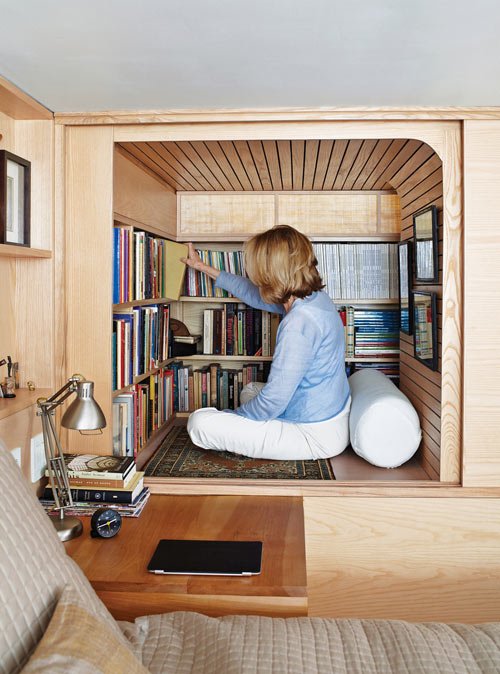
Like in this apartment.

Books1

Just 240 square feet, you’ll see art on the walls and books every where.  Even in a little cubby library off the lofted bedroom.

Books2Adorable, non?  And almost magical, in a Narnian kind of way.

What is it you couldn’t give up? Not in a “one minute to leave a burning building” situation, but where you could only take the most precious of your belongings?


A neighbourhood of small homes?

It’s my dream that someday our little laneway will nestle in a neighbourhood of similar homes….up and down the lane.  It’s also my dream that until that happens, our fellow laneway owners will gather together in a “virtual” neighbourhood online, and I hope that any lane dwellers will get in touch with me to see if that can come about.

However, there is already a neighbourhood of homes of 500 to 800 square feet each — in Toronto.

According to this story from Spacing (thanks for the link, Colleen!)

Craven Road was once known as Erie Terrace, but before that, these lots that now house tiny buildings were attached to the back of properties on Ashdale Avenue — properties that used to extend back from the road over 140 feet. Ridout says those who lived in the houses gave people materials to build places at the back of their lots. When there was a dispute over whose land belonged to whom around 1910, the City stepped in, expropriated the land, and created a tiny road between the houses on Ashdale and the rear lots.

These homes remain, and are being cared for by their owners.

craven3-600x401

They are charmers, aren’t they?  And the homes that are being built in the neighbourhood continue the style and grace of the originals.

Another common trait of the road is construction. Many people who have moved into tiny houses on the tiny street have decided to tear down their houses completely and start over from the ground up. With small lots, there isn’t a lot of room for expansion, but some architects have taken it upon themselves as a personal challenge to create the most innovative, modern, desirable designs despite the restrictions. Other people simply choose to add another floor on top of their house.

But the thing that makes this neighbourhood truly stand out is the sense of community among its inhabitants.

 The one thing that hasn’t changed about the neighbourhood is that some strange force exists between the people who live on Craven Road, holding them together, as though the fact they all live in similar sized houses makes them more than just neighbours, but instant friends. The term “Tiny House Society” has even been thrown around, effectively making everyone on Craven members of the exclusive group. The voices of people saying hello and speaking with one another is common background music while walking down the street.

I’m not sure how a virtual neighbourhood would work….we couldn’t make it exclusive — no passwords or secret handshakes — but friendly and open.

Any idea on where to start?

Another visit with the Home Discovery Show

Yesterday I was happy to talk again to Ian and Steve at the Home Discovery Show on CKNW and the Corus radio network.  We chatted about where we are in the process.

And where are we in the process?  Well the city wants to see a report on the soil stability by a geo-technical engineer, plus we need to have an architect sign off on the plans to make sure the structure can support the living roof.  PLUS it turns out that the height allowance for laneways is calculated differently than the height allowance for the average build (a calculation difference that is not mentioned in the literature and is so arcane that it cannot be described over the phone).  So it was back to the drawing board for our designer at Novell to lop a foot off the top floor (good-bye 9 foot ceilings).

But all that is done, so we are looking forward to having the plans accepted. Soon.

Meanwhile, back at the ranch, the demo has started on the basement, and the front and side yards were ripped apart for the new water supply.

That’s all going smoothly.  When they ripped out the basement rooms they found no moisture (yeah!) but they did find a little bit of asbestos in the tape holding the heating conduits together.  So that means calling in the experts, taping off parts of the basement, and taking out the asbestos safely in a process called abatement.

One step forward, half-a-step back.

Ian brought up an interesting point:  a lot of families fall apart over these little projects. But we’re all looking forward to this so much, we honestly have not had any differences at all.  Sure, we were crushed when we found out we couldn’t have a spiral staircase in the laneway (they need at least 12 feet clearance, which is basically the whole house).  And we still haven’t decided which yellow is yellow enough for the exterior, without being too yellow.  But these are just subjects for discussion, not points of disagreement.

Everybody just gets along.  And I think the compromise process is so smooth we don’t really notice it.

Right now we are looking for a place to rent.  We would love that to be in East Vancouver, so we can get used to our new neighbourhood, establish which Starbucks is “ours”, plot out our trips to our new grocery store, etc.  So if you hear of anything in the area around Rupert and Broadway, let us know.

We’re already packing for it.

Teeny homes with charm

While modern homes may be getting smaller, they still have a ways to go before they are as small as the homes our great-grandparents lived in. If they came from the old country, they were likely living in cottages or row houses.  I remember seeing the little row house where my great-grandparents lived, as gardeners and servants to the neighbouring estate.  Three up and three down — and they raised six kids!

And many were even smaller.

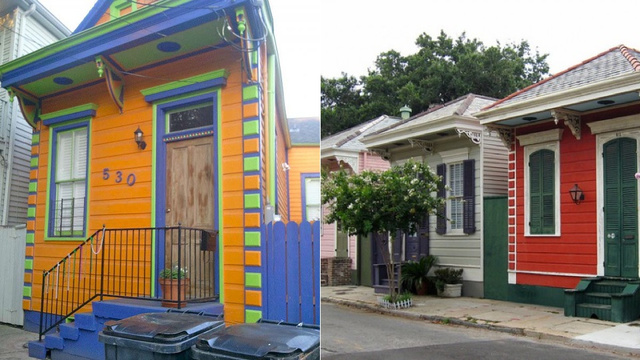
Even when they moved to North America, our families lived in little houses (at least in the cities).

NOLAThanks to Gizmodo for that picture of houses in New Orleans.

And of more pictures of adorable little homes.

By building our home smaller, we’re not just embracing the future, we are saluting the past!


Why is it so hard to find a place to rent in Vancouver?

So our condo has sold.  Yeah!  Also Argh!  Now I have to find another place to live for about six months while our adorable laneway home is being built.

The rental situation around Vancouver is pretty dire.  We will be OK for three very good reasons:  we have over two months until we have to move to find a place; we don’t have to find the apartment-of-our-dreams, just someplace temporary (and who can’t put up with a cramped/stuffy/ugly place for six months?); and this is the time of year when University students give up their apartments and move home for the summer, freeing up some prime spots.

Plus we are going to bug all our friends to help us find a place.

But we are hindered by the fact that there just aren’t enough rental options in our town.  And it turns out that some of those condos that could be rented are sitting empty.

A few years ago, some friends of ours downsized out of their house and bought a beeyutiful condo high in a building right on Coal Harbour here in Vancouver.  The view was spectacular, walls of floor-to-ceiling windows looking east up Indian Arm.  But they sold after they’d been there a couple of years and moved to a neighbourhood on Vancouver Island.  Because the condo building was practically empty.  Sure, there was no one using the pool when you wanted to do your morning laps.  And you never had to wait for an elevator.  But it was creepy to know that you were the only occupied apartment on the entire floor.

So it looks like people want to own property downtown — they just don’t want to live there.  Which is silly because it’s a lovely spot.

CoalHarbour

In this story on her blog, Frances Bula explains the problem.

Now you might think, well, what’s the problem?  These people are paying taxes, what difference does it make whether or not they live there more than a couple of weeks a year?

For one, it makes a difference to the businesses around the empty buildings.

In Coal Harbour, where up to one in four condos is empty in the tower-dominated waterfront neighbourhood between Stanley Park and the downtown convention centre, the scattered shops in the area often struggle to stay in business. By contrast, the West End, which has a low rate of empty residential units, is bounded by three streets – Davie, Denman, and Robson – that are packed with busy small shops and restaurants.

Those little shops are what keeps a neighbourhood vibrant. And if those home-owners were here, they’d be spending money and helping the local economy grow.  Which they are not.

Also

Housing analyst Tsur Somerville, director of UBC’s Centre for Urban Economics and Real Estate, said the data he has seen also indicate that Vancouver built more housing in the 2006-2011 period than the number of new households that were added to the city’s ranks.

That means investors. There’s nothing wrong with that, as long as those units are occupied, said Mr. Somerville, also on the panel.

“The problem is vacant units since that’s demand for real estate without housing people.”

Since the subprime-mortgage-led housing collapse in the US, it’s become obvious that housing as investment can be a volatile commodity — just like any other investment — ruled by supply and demand.  Do we really want to encourage a situation where thousands of units suddenly come on the market because Vancouver no longer seems like a great place to stay? Or because the economic situation in the investors’ home country, thousands of miles from here, determines whether or not those properties go on the market?

The housing market around here is weird enough without any more problems.

And in the meantime — does anybody know about a place to rent?

Follow my blog with Bloglovin

Mid-century modern inspiration

Man oh madman, I love mid-century modern decor.  Uncluttered, sleek, lots of natural light and wood.

I don’t have to tell you that’s what I want in our new place.

Over at Small House Bliss, Frank and Mili have a great story on the historic Hailey Residence in the Hollywood Hills.  Go to their blog for the full story (BTW, are you following their blog? because it is a never-ending cornucopia of great small-house ideas). But here is a shot that is truly inspiring:

richard-neutra-hailey-residence-dining-to-den-via-smallhouseblissLook at the light, the style — the space they’ve put into a small area, without sacrificing that clean aesthetic

I dream of sipping my pre-prandial martini in a room with that much style packed into a tiny space.


Vancouver Architects like Laneways

Whenever I tell anyone we are going to build a laneway home, the reaction is overwhelmingly positive.  It seems that everyone can see the advantage to living smaller, to living closer to family (“but not too close!”) and to the increased density in neighbourhoods.

This story in the Globe and Mail outlines why laneway homes are becoming so popular in our city, and not just with the home-owners and the builders.

G&Mstory

Vancouver architects are supporting the idea, too.

Typical is this comment from architect Shelley Craig

“Anything that increases density and allows for more equitable distribution of units on a lot,” she says, “will be welcome.”

The new laws will create more interesting, socially and environmentally sustainable neighbourhoods, she contends, and will “instantly double or triple the number of families and/or dwelling units in large swathes of single-family zoned neighbourhoods in the city.”

They will keep neighbourhoods “young and affordable,” she maintains, with increased floor area allowing for larger units and “different family situations to be accommodated.”

And in East Vancouver,

Tej Singh of Simplex Home Design sees it as a more sustainable solution to intergenerational living.

The architectural technologist whose company builds single-family homes in Vancouver and India, as well as some laneway housing here, notes that traditionally South Asian families prefer larger footprint, multistorey dwellings where different generations can live together.

But since the new proposal was announced, he says, several clients with pre-existing plans for single-family homes called to switch from parking garages to laneway homes.

In addition to being a smaller footprint and creating a more pleasing streetscape, laneway housing, he notes, offers privacy. “Families can live together – just not necessarily under one roof.”

I mentioned before that our plans have been greeted with enthusiasm by the reviewers at City Hall, who welcome the fresh ideas. Shelley Craig has a good idea to encourage more innovative design

“The city should consider staging a design competition for the most innovative green design of a laneway home,” she muses.

My Pain, My Life, My Struggles, My Fight

Come walk with me, Down My Dark & Stormy Journey BUSINESS INQUIRIES & CONTACT EMAIL : GODSCHILD4048@GMAIL.COM

ANNOTATED AUDREY BLOG

Artist and Desert Dweller with Big City Style.

Im ashamed to die until i have won some victory for humanity.

Domenic Garisto / LIFE IS NOT A REHERSAL,SO LIVE IT..if you can't be the poet, be the poem..havau22.com

The Lady Who Lives Down the Lane

Lane Way Housing for the Nervous Novice

Apartment Therapy| Saving the world, one room at a time

Lane Way Housing for the Nervous Novice

Slightly Snug House

building a home that's not too big and not too small

Vancouverandy

Funny thoughts from a nut like me.

Small House Bliss

Small house designs with big impact

WeeHavyn

Lane Way Housing for the Nervous Novice