RSS Feed

Tag Archives: Laneway House

Decluttering — getting rid of roadblocks

Let’s make it clear that decluttering your home and your lives is a process. A journey rather than a destination.  Because you will never be able to say “I don’t need to declutter any more!” — it just ain’t going to happen. And I cannot claim to be an expert.  I used to be one of the worst clutter-ers in history, not exactly a shoe-box full of single socks away from a reality show, but pretty bad. And the reasons were clear.  As this article from Houzz points out, I had the wrong attitude towards it. clutter1 The clutter never got as bad as that picture.  In fact if you visited our condo you wouldn’t have seen it.  It was all packed away in storage rooms, in cupboards and in closets.  One of the main reasons we don’t have clutter any more is THERE IS NO WHERE TO PUT IT. But there was still too much stuff in our house.  And the barriers to getting rid of it were many:

1. “It’s a family heirloom.”

I had a pile of tablecloths that had been given to me by my mother.  Plus a pile that I had purchased through the decades to match occasions and several sets of dinnerware.  We were moving into a laneway with no table.  The tableclothes were useless.  But I still felt bad about giving the tableclothes away, even though I hardly ever used them (we’re more placemat people) and I was giving them to my kids.  I wanted to ask the kids to please hold on to them — after all, they are heirlooms.  But eventually I realized that I had to give them away with no strings attached.  When that box left my linen closet a heavy weight left my life.  It was the start of the journey to rid myself of things I didn’t need anymore.

2. “It was a gift.”

Do you have a drawer of items that were given to you but you just can’t use?  I had a cupboard full of them.  Mugs.  Picture frames.  Ugly picture frames.  Vases that could hold two dozen long-stemmed roses (when was I ever going to get those?)  All gifts, and therefore sacred.  But if I could give my kids “stuff” with no strings attached, surely I could remove the same condition from my belongings.  You gave it to me and I enjoyed it for a while, but now it has to go.

3. “I may need it someday.”

Just as there are clothes that don’t fit our bodies any more, there are things that don’t fit our lifestyle.  We have to recognize that.  And though everyone’s standards for “useless clutter” are different, if you haven’t used it in the last year it’s not likely you will ever use it again.  And if you need it, really need it again, maybe you can borrow it from a friend, rent it, or even buy a newer model.  I have to admit that I kept things around that I thought I could use someday only to find when that day arose that they weren’t really what I needed for the job after all.

4. “I paid a lot of money for it.”

The article suggests that when you are getting rid of things, don’t bother selling them, just give them away.  Have you ever had a piano?  It’s the perfect example.  I’m not talking about a Steinway, just an ordinary upright piano that your kids took lessons on.  When you got it you paid hundreds, even thousands for it.  But they are so hard to get rid of when you don’t need them anymore.  When, for instance, you move to a condo and realize that there’s no one in the household who plays the darn thing and even if they would it’s too loud to have in a condo.  Then you have a three-hundred pound albatross.  So give it away.  Also sofas — if they are expensive they won’t fit anyone else’s decor. If they are cheap the recipient won’t want to pay for them.  Dining room sets.  Hutches.  If you don’t want it — give it away. Sure, there may be a twinge when you think of how much you paid, but you got the use of it. Our possessions are really only rented, anyway, aren’t they?

More on de-cluttering to come.
Clutter – what is it?

I’ve been thinking more about the mechanics of keeping our place tidy and clean, so I was shocked when I saw the headline on Lifehacker:

Keeping Some Clutter May Be More Valuable For Lower-Income Households

Wait, what???? How can clutter be valuable?

The idea seems a bit counterintuitive (particularly if you account for storage space), but it actually makes sense. “Clutter” is typically seen as junk. Crap you don’t need. However, the less money you have, the less you can afford to replace that old stuff you might-but-probably-don’t need.

This idea can manifest itself in a number of ways, including hanging on to old furniture, clothes that don’t fit anymore, or a pile of chargers and cables.(emphasis mine)

I consider ourselves to be upper-lower-income.  And we do hold on to stuff — but only to stuff we will probably need. And that certainly includes a pile of chargers and cables.

For instance, we each just got brand-new Kindles.  My old one is cacked — that’s been tossed.  But what about the charging cord?  It fits my new Kindle.  I can still use it.  So the new ones could get put away and we could just use the old one, but why not take it to work and leave it there?  Or put it into my purse with my spare cell phone charger so I’ll always be able to charge it?

But I won’t throw it out.

Or how about head-phones?  When I got my new phone it came with ear-buds.  So I took my old set and put them away.  Sure enough, when my new ear-buds gave out I could pull out the old set and use them.

Broken stuff gets turfed.  But I cannot call a baggy full of chargers and cables “clutter”.

What’s “clutter” to you?

Keeping it clean — old school

Yes, the laneway house is kept tidy.  Two adults, two indoor cats, all working together to keep it clean and habitable.  Who couldn’t manage that?

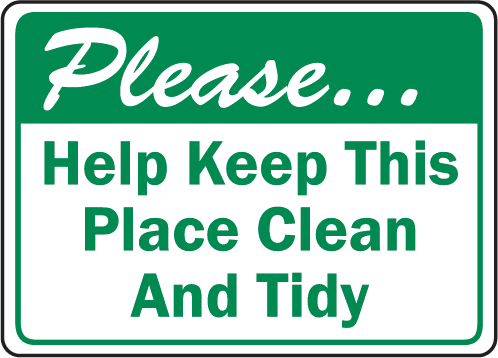
TidySign

OK, we don’t get any medals.  And I have to admit a couple of corners (in the storage space beneath the stairs for example) that are not as well-organized as I would like.  But let’s get into the WABAK machine and see how I learned how to keep a house tidy, back in the days before the internet.

Back in a time I like to call….the 60s.

My mother worked hard to keep our home clean and tidy.  And my sister and myself had chores to do every week to help her.  We had to dust and vacuum the living room, do dishes, iron our clothes, the usual things our friends did.  But the worst was the Saturday morning bedroom cleaning routine.  DS and I would retire to our bedrooms, and after an hour she would emerge, her bed made, her desk organized, her dresser dusted, her floor mopped.  I could hear her leaving for an afternoon with her buds while I closed the book I had been reading and did a quick zip around the room to pass inspection.  I didn’t mean to procrastinate.  I just got side-tracked.

That habit followed me.  I knew I had to do the minimum amount of housework to keep the place looking habitable, and I wasn’t dirty, I just kept putting off the stuff that was “too much bother”.

You can get away with stuff like that when you are part of a two-job couple.  But when you are a stay-at-home Mom, it’s part of your job to keep the house clean.  And I just found it overwhelming. I thought that you were or you weren’t a tidy person, that was it.  There was no way out of the mess.

Then one day, I think I was watching Mike Douglas while I ironed, I saw two sisters, Pam and Peggy.  They called themselves the SLOB Sisters.  And they were just like me! Sidetracked Home Executives.

Their book gave me a system.  And it worked.  I didn’t have to be “naturally tidy”, I just followed the system. Big tasks were carried out once a month, with smaller ones done daily or weekly.  There were even jobs that you only needed to do once a year.  Everything was scheduled.  So simple.

I used their system religiously while the children were small.  It fell apart (a bit) when I went back to work.  But there are still things I do that I learned under the SLOB Sisters’ tutelage.

There are other books, other systems.  But if you are feeling completely overwhelmed by housework, I am here to tell you that there is a way out.  And you can do it.

Keeping it clean – laneway style!

Saturday we were able to get out to a local Farmer’s Market.  There’s something so nice about walking around and paying twice what you would in a grocery store for food that tastes four times as good.  The market is nearly within walking distance but I was recuperating from a weird inner-ear-vertigo thing so we took transit.  Keepin’ it green, people!

FarmersMarket

The reason we could get out and spend a couple of hours doing something that normally we spend 15 minutes on is because our place is so easy to keep tidy.  I’ve said before that we can get the whole place looking visitor-tidy in 15 minutes.  For our regular Saturday morning clean-up, we take an hour to get the place vacuumed, washed, tidied, plus sheets changed and washed and bathroom deep-cleaned.  So we were able to take the time to get to a market that closes at 2 pm and wander around for a while and really enjoy the experience.

I used to be quite untidy (more on that later) but when DH and I first began co-habitating, I knew I would have to change.  It’s difficult for a naturally untidy person to become more organized and tidy — but it’s impossible for someone who is obsessively tidy to loosen up.  I’ve tried it — DH just cannot be untidy.  Of course he’s never lived with small children while holding down a full-time job — I find that can have quite the effect on the formerly obsessive.

We also keep things tidy by avoiding the 7 ways of making house cleaning harder than it has to be.   Thanks to Apartment Therapy for alerting me to things the naturally neat already know — it’s a good refresher for we less-organized folk.

We clean as we go.  When I come home from work, I hang my coat in the closet, put away my keys et al in the handy stair-case drawer, and take off my shoes (another tip) and put them away.  That way the entry level doesn’t have to be tidied — it stays that way. Dishes are rinsed and put into the dishwasher as soon as we’re finished eating — pots and pans as soon as we’re finished with them. The stove is wiped as soon as it is cool from cooking, the shower is wiped down while it is damp.

We use our spaces for the activities they were designed for.  Yes, my office is my laptop, but once work is done it’s put away in a handy cupboard.  You won’t find a dirty plate in our bedroom or in the office area.  We eat at our counter upstairs.

We keep dirt out.  We take off our shoes when we come into the house.  We make sure we don’t drag dirty stuff through the house — and we have indoor cats (not dogs).  We didn’t get them because they are tidier, but they are.

We use the proper tools we need for the job. Can you imagine?  I used to own a scrub brush.  I have no idea what I used it for, but it was stored with the other cleaning supplies.  No room for that anymore!  We have a broom we use most of the time, and a built-in vacuum for once-a-week cleaning.  A damp mop takes care of the floor and a swish with a swiffer dusts all the shelves.

We’re efficient — we clean from the top down, one room at a time.  Plus we have a regularly scheduled time to clean. And we keep it fun by listening to our music podcasts while we clean.

We never thought about how we keep up with the cleaning — DH just designed the system organically and I follow the leader.  But I have come up with a number 8 for the list.

Don’t bring stuff into the house.  I get our bills by email, and they are filed as pdfs on our computer.  I do the same with bank statements.  We get one magazine a month.  One newspaper a day (then it’s right into the recycling bin).  We both have hobbies we enjoy but guess what — we work on one project at a time, and never have to store any half-finished knit sweaters while I just whip up that scarf.  I pick up the mail and bring it back to the house on a trajectory that takes me right by the recycling bin, so that junk mail gets tossed before it enters the door.

But what’s that you say?  I am living in a house that was custom-designed to my needs?  I don’t have small children? I live with a neatnik?  What can I know of keeping a “real life” house clean?

I feel your stabby pointing fingers.  And the answer is “lots”.  I was once one of you.  A single mother of two with a full-time job.  And although I eventually relaxed my standards (to slightly above “slovenly”) I did for a time keep everything nice and tidy.  And I will tell you how.

Small summer homes

We’ve found we are getting out and about much more this summer — and I know why.  It’s because we’re living in such a small house.  We used to spend most of our Saturdays cleaning up our two-bedroom, two-bathroom carpeted home.  Then would come a weekly shop. But now our cleaning routine is over in less than an hour, and since our fridge can’t hold a week’s worth of groceries we’ve replaced the big shopping trips with smaller, more frequent ones. So now we have a lot more time on our weekends and we’re spending it outside; at the summer festivals around town, free concerts, events in local parks, farmers’ markets. That’s a lot different than my childhood weekends, when the whole family headed up to beautiful Christina Lake and the cabin our Dad built on the water. Christina I often think of those days and wish I could have another cottage on a lake or tucked into the woods, just a small one of course! Thanks to Tiny House Talk for giving me some ideas. If we wanted to try it on a temporary basis, we could rent one of these Tiny Houses available for vacations. Like this adorable gingerbread house in a grove. small-cottage-in-washington-600x400   It’s right in our neighbourhood.  If we wanted to go a little farther we could stay in this fairy-tale cottage in Austria. small-Austrian-cottage   But if we wanted to build our own vacation home, why not put up a pre-fab dome house? lexa-dome-tiny-home-600x416   It’s got lots of charm, and a doable floor plan. lexa_26_ft_dia_540_sq_ft_1_floor_2 I can just see it sitting beside a pond, or nestled into a copse of trees.  The dome roof would be great for the heavy snows we get in the local mountains. As sweet as this pre-fab is, and as convenient, we might want to go completely Hobbit! In New Zealand, someone has built a home out of earth. Earth-dome They have big plans for making it larger.  For more information, see this:

Got cool? Five ways we’re keeping cool this summer

For a while we toyed with the idea of getting Air Conditioning for our laneway home.  But we decided no for two reasons (well, three if you include the cost).

  1. It’s not in keeping with our goal of using less energy.
  2. It only gets super hot in Vancouver for a couple of days a year, and we could work around it.

The living roof actually helps quite a bit.  The plants keep the hot sun from hitting and heating our roof, which makes it a bit cooler inside.  Plus the moisture in the planting medium evaporates during the hot part of the day, which cools it off a bit, too.

Now summer is here and we are finding ways to keep our home as comfortable as possible.

Ice

Number 1 is to keep the sun from heating up the interior.  We love it when the morning sun pours into our upper storey where our kitchen and sitting room are.  And the cats love the warm sunny spots on the floor and the furniture.  But that heat sticks around all day.  So we keep our blinds closed on the windows facing East until the sun moves around to the South, then we open the eastern blinds and close the southern blinds*.  That way the furnishings and interior finishes don’t heat up in the first place.

Number 2 is to create some cross-breezes.  The home is designed with windows on all four sides that can open up and catch any breeze available.  Right now we only have screens on the tilt-and-turn windows, so can’t take full advantage of the windows that open out — but we’re getting screens for those windows soon.  We crack them open an inch or so but the bugs want to get in and the cats want to get out so we’ll have to wait for the screens to really open them wide.

Number 3 is fans.  We have two fans going all the time just moving the air around in the bedroom and the studio/den downstairs.  When the sun goes down and the air is cooler outside we turn on the bathroom and the stove fans and keep the windows open to pull that air inside.  If it gets really hot we can soak fabrics (T-shirts are the perfect size) in water and put them over the standing fans to spread cool air throughout the rooms.

Number 4 is not bringing more heat into the place with our cooking.  Luckily we both love salads and cold soups and DH loves to grill on his new natural-gas fuelled barbecue so we are keeping the cooking to a minimum.

Number 5 is drinking cool drinks.  That may seem a little obvious, but it’s so easy to become dehydrated in the heat.  The other day I was sitting in a nice breeze at the kitchen counter, quite comfortable, and I looked over at the thermostat to see what temperature it was.  88F!  31C!  I didn’t notice the heat because I was so comfortable.  But I was sweating like crazy, the water evaporating as soon as it got to my skin.  I needed cool water and lots of it.

And here’s a bonus:  Take cool showers.  Take two or three if you want, but I always take one just before bed to cool me off and make it much easier to drift off to sleep.

*(I know about Copernicus and the whole heliocentrism thing  but it’s easier to say the sun moves rather than the earth moves.)

Any hints on how to keep cool without AC?  Spill!

Learning the lessons of house ownership

You know how when you come home from vacation and you just can’t get into the groove again?  How you don’t want to sit in an office on a lovely summer afternoon but would rather be on a beach or in a garden with a cool glass at your side and a good book in your hand?

Since my return from jolly old Britain it is taking a bit to kick start the old work ethic.

But I haven’t just been sitting around!

First, a little background.

Before DH and I moved into our laneway we owned a condo.  And before that we were renters.  And it doesn’t take long to forget how much work it takes to keep a place in good shape when those problems are taken care of by strata boards and landlords. But now we are happy to embrace the work that will keep our house looking great — and we are also happy to lend our time and our sturdy arms to the folks in the main house when they want to spruce up their place (especially since we’re looking at it a lot of the time).

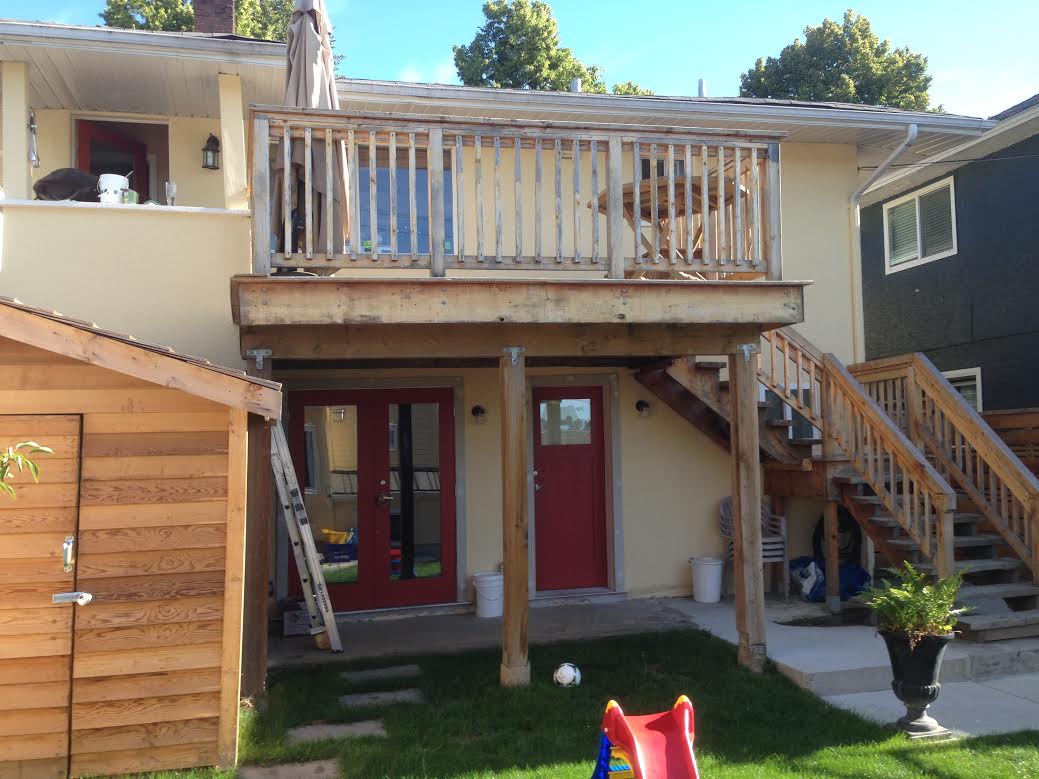
DD and DSIL are proud homeowners, and they like to keep their place looking good.  The first thing they did when they moved in about six years ago was to replace the rickety back stairs with a nice deck.  They hired a contractor and took out the permits and did the deed properly.  But they were badly advised when it came to the finish on the wood.  It was a kind of varnish that cracked and peeled almost immediately.

So they tried to remove it with a nasty chemical.  And by sanding.  And by sanding again.  But it still didn’t look that great.

DeckBefore

On Canada Day we all got out with various sanding methods and went at it one more time.  We took off as much of the surface as we could.  Then we ate barbecued chicken and drank beer because — hey!  Canada Day, eh?

Then last afternoon/evening we all gathered again to stain said deck.  Bad weather had kept us from doing it last weekend, we needed time to put on two coats with a drying time between, but both coats had to be applied within a 24 hour period.  So we started in the late afternoon, and stained and stained and stained and stained.  Then we broke for dinner.  Then we repeated the process.  And I’ve got to say it looks a lot better:

DeckAfter

The stain will also be used on those posts beneath the deck, on the table and benches you see, and on the fence and the roof of the shed.  So I see a lot of staining in my future.  But it makes a huge difference in the appearance of the deck.

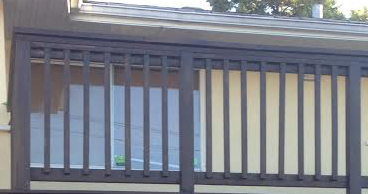
The railing before:

DeckBeforeInset

The railing after:

DeckAfterInset

Makes me want to get out the paint brushes and start on the fence, but I will hold back until my muscles recover.

Staining is hard work!  But the nice surprise for me was to find that it’s all water-based now and clean up was a breeze.

Heritage homes — lovely and livable

We were very, very lucky on our trip to the United Kingdom, not just in the fabulous weather, but because we could stay with our lovely relatives — and they live in lovely homes.

It’s rare to be able to step foot inside one actual home when visiting a foreign country, and we were able to see lots of them.  We also toured some “stately homes” with the rest of the tourists, but it was the privilege of sitting and taking tea in a real Georgian sitting room, or sleeping in a true Edwardian bedroom, or enjoying the garden of an old English cottage that made the trip even more special.

The first home we stayed in was that of our first-cousin-once-removed in Edinburgh.  Naomi’s was the oldest home we stayed in, built before 1800.  The building had once been a brewery with the bottom two floors for commerce and the third floor, where Naomi’s flat is located, made into a comfortable home for the proprietors.  At one point the one apartment was made into 3, sometime in the 19th century, but it’s been re-converted to one unit.  So some of the features were changed plus a modern kitchen and bathroom were added.  But a lot of the original Georgian decor remains.

NOutside2

Here’s me standing outside the front door to the building.  The stairs are located just behind this wall, stone stairs to the third floor, then concrete ones up to the more-recently modernized fourth floor.  Naomi’s is on the third floor.

NOTE:  We were staying in a private home.  The place wasn’t staged for photographs, it was set up for living (and Naomi lives a very active life).  So I won’t be showing whole rooms, just snippets of the features that made the rooms truly Georgian.

Here’s a Googled photo that illustrates what you can expect to see in a Georgian Room.

GeorgianRoom

The Georgian builders and decorators revered symmetry, so the fireplace is centred on one wall.  The windows are very wide and high, coming within inches of the ceiling and set deep into the thick walls.  The panels at each side of the windows are actually shutters which can be closed over the windows at night (although most homes don’t use the shutters any more and have draperies instead).

All the rooms are beautifully proportioned, with high ceilings and a feeling of spaciousness.

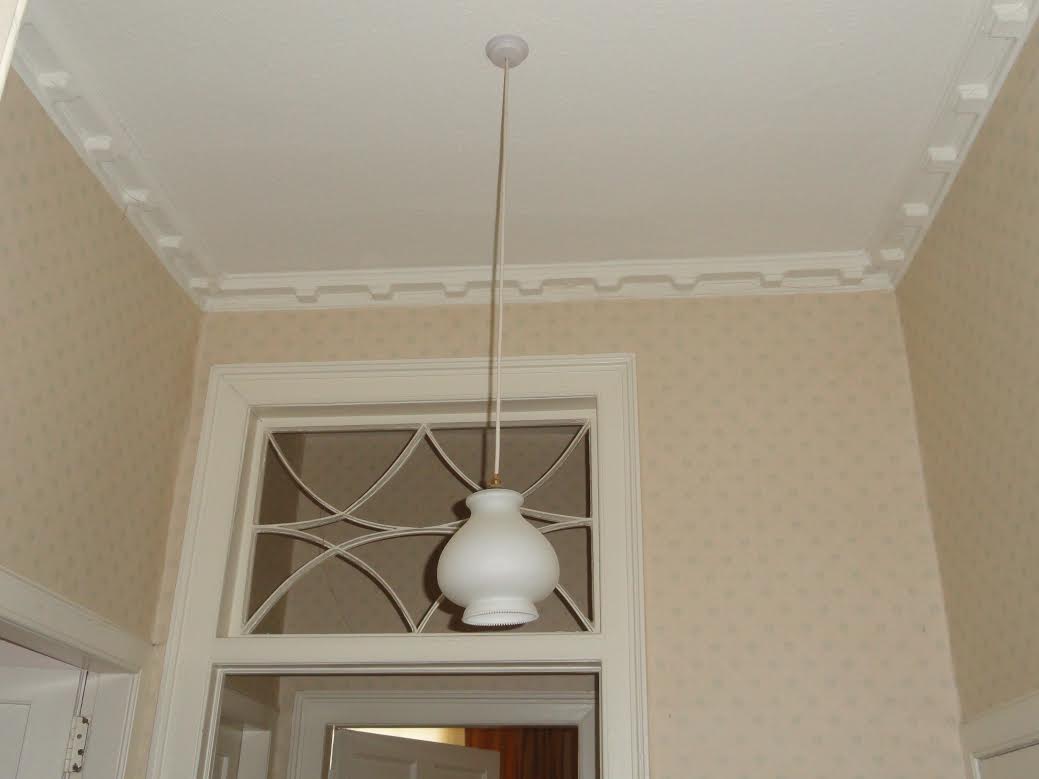
Naomi’s apartment is split very nicely by a wide corridor, with transoms above the doors allowing some light in from the rooms on either side. Since the flat takes up the whole of the third floor, she has windows on three sides and a lot of light flooding in.

NTransom

Here’s one of the transoms — a work of art by itself.  And the beautiful plaster crown moulding along the top of the walls.  The Georgians also tried to bring sculpture into their homes, and that is reflected in the ornate plasterwork you see here on this arch in the apartment.

Arch2


Imagine living in all this beauty all the time!  We were so lucky to spend just a few days in this wonderful Georgian home.

We’re getting some Apartment Therapy! We’re Small and Cool!

Do you read Apartment Therapy?  Well, then, stop reading this, go to the site, and subscribe.  We’ll wait.

Well, when I saw that they were accepting nominations for their annual “Small, Cool 2014” feature — I knew I had to enter.

And we’re in!


Visit us!  Click on the Favourite Button (please).

We could win….bragging rights! and fame ‘n’ stuff.


Leaky condos part III – a problem risen from the dead

I’ve told you about our experience with leaky condos.  And how the leaky condo catastrophe came about.  But the question now is “Why is this a problem NOW?”

LeakyCondo2

It’s ba-ack!

Because until now, strata councils who run condominium buildings could avoid submitting depreciation reports.  As this story in the Vancouver Sun succinctly puts it:

Lax maintenance has been a long-standing issue for stratas, according to Tony Gioventu, executive director of the Condominium Homeowners Association of B.C., “hence the evolution of the introduction of depreciation reports.”

The province made a depreciation report a requirement of the Strata Property Act in 2011. It contains a detailed assessment of a condo building’s condition, and a schedule for when major components, including its exterior, would need repair.

“Depreciation reports are forcing strata corporations to acknowledge what they have, and forcing them into planning (for repairs),” Gioventu said in an interview.

The requirement was enacted in 2011, but wasn’t put in force until last December to give B.C.’s 30,000 strata corporations time to commission the reports.

When we left our condominium last year the strata council was preparing to create a depreciation report.  It would cost time and trouble, and of course, money, but they knew what the report would say — that the building was well-maintained and had undergone rain screening in 2000, that it had a new roof and would last for many years.

Many, many condo buildings were updated and repaired and will, with proper maintenance, provide safe and comfortable housing for decades to come. And depreciation reports are necessary for all condo buildings, regardless of whether they have had leaks or were repaired and kept up.  It provides a good background on the building, and if you are hoping to sell your condo it is a great asset to show the prospective buyers and their mortgage provider.

According to this story from Daphne Bramham in the Vancouver Sun,

By Dec. 14, 2013, strata corporations must have 30-year depreciation plans that indicate when major infrastructure will need to be replaced, what the maintenance schedules are and the expected cost of each item. The plans must be updated every three years so that owners and potential buyers will have a realistic glimpse of what lies ahead.

So it appears that the problem is solved.  Those condo building who have not kept up their regular (or emergency) repairs will quickly fix everything, and the home owners and future buyers will be sure that the building is sound.

Nope.  Not quite that easy.  There are several reasons why this is a crisis for some condominium owners.

1. Playing by the old rules

When you live in a strata building you pay maintenance fees every month.  These pay for the general upkeep of the building, the shared costs for the gardening, garbage, etc.  But a portion of those fees go into a contingency fund — money set aside for big expenses.  Repairing the garage.  Replacing the boiler.  Stuff that comes up once in a while that you really can’t budget for.  But until 2009 there was a restriction on how large a contingency fund could be.  So even if you convinced the owners to pay an extra, say, $300 a month in maintenance fees to pay for a new roof that would be needed in 20 years (and good luck with that), you simply weren’t allowed to.  So to pay for these really big repairs you need a special assessment.

2. The 3/4 rule

You need three-quarters of the owners of the suites in any strata corporation to agree to any special assessments.  In our old strata building, these special assessments passed rather easily.  A new roof costs this much.  Your share is this much.  Vote.  And we all agreed that we wanted the building to be maintained and we voted yes.  Then we coughed up our share.  I thought that was the way all stratas were run.  But it’s not.  There were 14 suites in our building.  If just four owners voted against the assessment we would not have gotten a new roof.  We were lucky that everyone was on the same side in this issue.  That there were no internal feuds that played out, that people had enough money to contribute.

But if you lived in a strata where people did not want to fix the whole building, where they tried to patch up little problems that turned into big problems, or where they just could not afford to pay those large assessments, your day of reckoning is at hand.

3. The money

At one time, leaky condo strata corporations could avail themselves of an interest-free loan run through the B.C. Homeowner Protection Office.  That program ended in 2009 after 11 years.  So if your problems didn’t show up until after then, or you couldn’t convince your neighbours that they needed to fix the entire building, you will have to find another way to finance that big, big repair bill.  Now.  Before the depreciation report.

4. The market

The insane Vancouver housing market applies to all condo owners — not just those in Coal Harbour luxury penthouses.  For what it costs to move into a two-bedroom 25-year-old condo in the area you could have a very nice detached home in Edmonton or Saskatoon.  So that often means people in those 25-year-old condos are already paying hefty mortgage payments, plus their monthly maintenance payments.  Some people are on fixed incomes, retired or on disability.   They simply cannot afford the extra costs those repairs would require.   And all these people will be quite hooped, one way or another.

They have to repair their homes, but can’t afford to repair their homes, but can’t sell their un-repaired homes and move anywhere else.

So there you have it.  A problem we thought had just gone away was hiding, like that nasty piece of mould on the inside of a wall, just waiting to spread and eat up your life savings.


My Pain, My Life, My Struggles, My Fight

Come walk with me, Down My Dark & Stormy Journey BUSINESS INQUIRIES & CONTACT EMAIL : GODSCHILD4048@GMAIL.COM

ANNOTATED AUDREY BLOG

Artist and Desert Dweller with Big City Style.

Im ashamed to die until i have won some victory for humanity.

Domenic Garisto / LIFE IS NOT A REHERSAL,SO LIVE IT..if you can't be the poet, be the poem..havau22.com

The Lady Who Lives Down the Lane

Lane Way Housing for the Nervous Novice

Apartment Therapy| Saving the world, one room at a time

Lane Way Housing for the Nervous Novice

Slightly Snug House

building a home that's not too big and not too small

Vancouverandy

Funny thoughts from a nut like me.

Small House Bliss

Small house designs with big impact

WeeHavyn

Lane Way Housing for the Nervous Novice