RSS Feed

Category Archives: Housing

Living small on the West Coast

It’s not surprising that Vancouver might embrace the small-living model.  Pressed on three sides by water — the Fraser River and the harbour — there’s no place to go but deeper, making more homes in less space.

Reliance Properties has won praise for its innovative makeover of the historic Burns Building in our city’s Downtown Eastside.

The suites, which range in size from 226 to 291 square feet, go for an average of $850 per month, including cable and internet.

Yes, in Vancouver, $850 a month is quite a reasonable price to pay for less than 300 square feet.

And they’re cute, too!
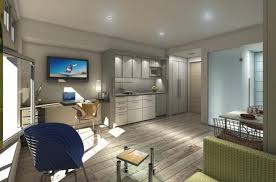
BurnsBlock

The surprising thing for me is that there’s a movement in our neighbouring suburb of Surrey for microsuites.  Surrey is huge, with lots of wide open spaces.  But homes here are still out of most people’s budget.  To increase affordability even more than density, Surrey is selling suites for prices even people earning $17 an hour can purchase.

With prices as low as $109,900, the project is designed for first-time home buyers lacking the income to afford the traditional larger home.

Once again, there’s no sacrifice of style in these units.

BALANCEClosedBed

No doubt about it in my mind — small has a place everywhere.
State of the address

We have permits!

And all it costs us is $18.232.88 for the city permits and the hookups to those little things that make life worth living, electricity, gas, sewage et al.  And another $1,303.48 for the DCL.  What is a DCL, you ask?  As did we.  A DCL is a Development Cost Levy. That is what it is.

To put it simply, it is part of the cost of doing business with the city, and so pay it, take your permits and go away. It’s a good idea, it pays for some good stuff, but it was a bit of a surprise.  We are, however, thankful we are not building in an area that needs a layered DCL.

And we are thankful we have permits!  And a new address – 3222 East 8th. It sings! It rolls off the tongue, does it not?  Three-two-two-two!  Thirty-two, twenty-two!  Three thousand, two hundred and twenty-two!

We are moving forward, for the mere cost of $19, 535.56!  Thank you, City of Vancouver!

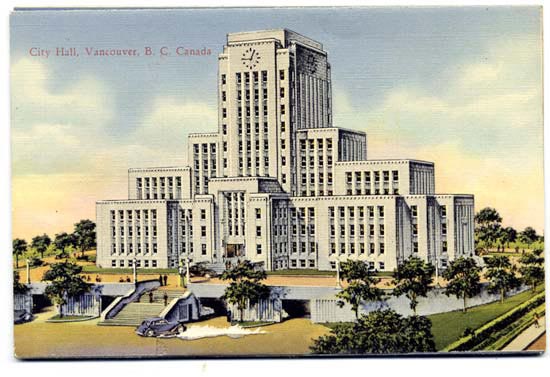
vancouver-city-hall-1930s


And thanks to our builder/designer who held our hands through the process.  And thanks to Ryan at the City of Vancouver, who really likes the design of our laneway home!

Bless you, City of Vancouver, and all who sail in you.

We have permits!

High land costs down under mean the end of cottages

I believe you know I am a supporter of living small.  I was just in a neighbourhood a few weeks ago that had undergone a change in the other direction.

I remembered a neighbourhood close to our new house that had been primarily small bungalows that had been constructed in the late forties.  The entire area had been built for returning soldiers after World War II, and had been street after street of similarly designed homes of 1000 to 1500 square foot size.

BungalowI’m a boomer, and when I was small we lived in a house much like this — maybe you remember homes like this — two bedrooms on top (your Dad probably put another in the basement when you and your siblings outgrew the one bedroom). One bathroom for the whole family.  An eat-in kitchen or a tiny dining room.

But when I saw the neighbourhood again recently, I had to look for these old bungalows — they had been replaced by McMansions.  I felt a real sense of loss. But I understood why.  If you visit the site Crack Shack or Mansion, play the game to see if modest bungalows like the one above are dilapidated shacks or worth the price of a mansion in another city.  Who am I kidding — a dilapidated shack in Vancouver IS worth the price of a mansion almost anywhere else.  Because it’s all about the price of the property.

I can understand why someone who buys one of these homes would tear it down, and for another $300K or $400K, build a huge home that dominates the lot and leaves no yard to speak of (or play in).

And Vancouver is certainly not the only city to “suffer” from this.  Even Down Under,  the land crunch is being felt.  In this article we learn that Sydney, Australia is seeing their bungalows (or “cottages” disappearing).   And the reason is

Bob Schwartz, chief economist of Pitney Bowes Software, which did the analysis, said two- and three-bedroom houses were becoming ”too small” for the Sydney housing market.

”Those types of houses are in decline because they are simply not the best use of space,” he said. ”The small cottage just can’t cut it with high land prices.”

I am hoping that the option of increasing the living space in the home by building laneway homes will slow or stop this trend.  As nice as these large houses look, it doesn’t increase the densification of the neighbourhoods, and it completely changes their character.


An overview

All last week I’ve been home from work with a pinched nerve in my back.  Ugh. Also OW! I’m taking a prescription that will help alleviate the nerve pain, but it takes 2 weeks to work, so in the meantime I’m relying on my old standbys, extra-strength Advil and whining.

However I have been rising from my bed of pain and inconvenience to do the exercises my physiotherapist assigned me, and to pack some boxes of things we are putting into deep storage — the storage space we have rented to put things we won’t need for our temporary home during the build phase.  These things include three decorative teapots, some of the dozens of mugs we have managed to accumulate, “plain” martini glasses we bought for our yearly martini parties (from the dollar store, cheaper than renting!), a set of lager glasses (drink from the bottle!), and flower vases (no frou-frous at the temporary place!).

Then yesterday, DH picked up the van he had reserved from ZipCars and doing all the (literally) heavy lifting, managed to fill the entire thing and then regurgitate its contents into the storage space.  I stood by and gave him the benefit of my opinion.  We also made a stop at the bike repair shop where he is getting his old, classic bike reconditioned, and some side trips to the transfer station, then to some recycling depots when we found the transfer station would not take old tires or old paint (who knew?).

And now our condo storage space is empty and ready for more packed boxes.

We thought it would take two hours, it took four. Luckily, DH was able to extend the reservation on the van on the spot with his cell phone.  Also unlock and lock the van with his cell phone.

When DH was using his cell phone to unlock the van, he stood beside the van, the signal travelled up to a satellite, then back down to the van he was standing beside.  It’s funny to think of that.

But that made me think of this:

VancouverHadfieldIt’s a picture of Vancouver, taken from the ISS by our own Canadian satellite jockey, Chris Hadfield.  I joked to a friend that I could see my house — but you know, I can!  It’s easy to pick out which main streets are which, and work out approximately where our building is.

Cubbies and crannies make cozy comfort

We are currently packing/winnowing our belongings for our move to our temporary home–and putting some things away for “deep storage” — only to be opened once we are in our laneway home.  Christmas decorations; vases; my collection of insulators(yep, you heard right, insulators); my “good” dishes and crystal; you know, stuff you only use once in a while.

But why keep them at all?  If you only use them once in a while, or if they are not useful (i.e. insulators), why keep them?

Because they hold meaning for me.

In our new place, we will have very limited storage for clothes — one closet shared by two people.  We are hoping to have some shelves to store some things like jewellery, hats and accessories, but for the most part the closet will be the total of our clothes storage.  This is not such a big deal to me.  I am not that interested in clothes. And shoes?  I was able to clear out half my shoe cupboard because I discovered four pairs of identical low-heeled black pumps, and near-duplicates of every other pair of shoes I own.  A small closet will be fine for me.

On the other hand, the metrosexual I married loves clothes.  He also dresses carefully, takes excellent care of his clothes and shoes, accessorizes thoughtfully.  He will cringe when it comes to sharing a closet.  And he will find a way to store everything he really wants to keep.

That’s the point I am trying to make.  You get rid of a lot of things, but you will find a way to keep everything you really love.

Like in this apartment.

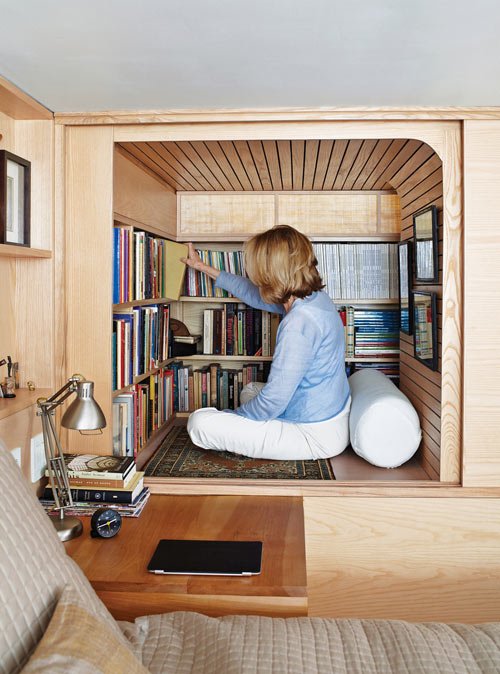
Books1

Just 240 square feet, you’ll see art on the walls and books every where.  Even in a little cubby library off the lofted bedroom.

Books2Adorable, non?  And almost magical, in a Narnian kind of way.

What is it you couldn’t give up? Not in a “one minute to leave a burning building” situation, but where you could only take the most precious of your belongings?


A neighbourhood of small homes?

It’s my dream that someday our little laneway will nestle in a neighbourhood of similar homes….up and down the lane.  It’s also my dream that until that happens, our fellow laneway owners will gather together in a “virtual” neighbourhood online, and I hope that any lane dwellers will get in touch with me to see if that can come about.

However, there is already a neighbourhood of homes of 500 to 800 square feet each — in Toronto.

According to this story from Spacing (thanks for the link, Colleen!)

Craven Road was once known as Erie Terrace, but before that, these lots that now house tiny buildings were attached to the back of properties on Ashdale Avenue — properties that used to extend back from the road over 140 feet. Ridout says those who lived in the houses gave people materials to build places at the back of their lots. When there was a dispute over whose land belonged to whom around 1910, the City stepped in, expropriated the land, and created a tiny road between the houses on Ashdale and the rear lots.

These homes remain, and are being cared for by their owners.

craven3-600x401

They are charmers, aren’t they?  And the homes that are being built in the neighbourhood continue the style and grace of the originals.

Another common trait of the road is construction. Many people who have moved into tiny houses on the tiny street have decided to tear down their houses completely and start over from the ground up. With small lots, there isn’t a lot of room for expansion, but some architects have taken it upon themselves as a personal challenge to create the most innovative, modern, desirable designs despite the restrictions. Other people simply choose to add another floor on top of their house.

But the thing that makes this neighbourhood truly stand out is the sense of community among its inhabitants.

 The one thing that hasn’t changed about the neighbourhood is that some strange force exists between the people who live on Craven Road, holding them together, as though the fact they all live in similar sized houses makes them more than just neighbours, but instant friends. The term “Tiny House Society” has even been thrown around, effectively making everyone on Craven members of the exclusive group. The voices of people saying hello and speaking with one another is common background music while walking down the street.

I’m not sure how a virtual neighbourhood would work….we couldn’t make it exclusive — no passwords or secret handshakes — but friendly and open.

Any idea on where to start?

Another visit with the Home Discovery Show

Yesterday I was happy to talk again to Ian and Steve at the Home Discovery Show on CKNW and the Corus radio network.  We chatted about where we are in the process.

And where are we in the process?  Well the city wants to see a report on the soil stability by a geo-technical engineer, plus we need to have an architect sign off on the plans to make sure the structure can support the living roof.  PLUS it turns out that the height allowance for laneways is calculated differently than the height allowance for the average build (a calculation difference that is not mentioned in the literature and is so arcane that it cannot be described over the phone).  So it was back to the drawing board for our designer at Novell to lop a foot off the top floor (good-bye 9 foot ceilings).

But all that is done, so we are looking forward to having the plans accepted. Soon.

Meanwhile, back at the ranch, the demo has started on the basement, and the front and side yards were ripped apart for the new water supply.

That’s all going smoothly.  When they ripped out the basement rooms they found no moisture (yeah!) but they did find a little bit of asbestos in the tape holding the heating conduits together.  So that means calling in the experts, taping off parts of the basement, and taking out the asbestos safely in a process called abatement.

One step forward, half-a-step back.

Ian brought up an interesting point:  a lot of families fall apart over these little projects. But we’re all looking forward to this so much, we honestly have not had any differences at all.  Sure, we were crushed when we found out we couldn’t have a spiral staircase in the laneway (they need at least 12 feet clearance, which is basically the whole house).  And we still haven’t decided which yellow is yellow enough for the exterior, without being too yellow.  But these are just subjects for discussion, not points of disagreement.

Everybody just gets along.  And I think the compromise process is so smooth we don’t really notice it.

Right now we are looking for a place to rent.  We would love that to be in East Vancouver, so we can get used to our new neighbourhood, establish which Starbucks is “ours”, plot out our trips to our new grocery store, etc.  So if you hear of anything in the area around Rupert and Broadway, let us know.

We’re already packing for it.

The skinny on a West Coast Urban Longhouse

Pam Chilton is a residential building designer and owner of Zimba Design. Recently, a home design of hers won a B.C. Wood Design Award for innovative use of wood in the construction of a home in North Vancouver.

But I don’t think that was the most interesting part of the this handsome little house.  The “Urban Longhouse” is only 15 feet wide — and those are the exterior dimensions!

UrbanLonghouseExt


The use of wood plus up-to-the-minute construction techniques allowed them to make the home stylish and comfortable, and it is great to see how they managed to match the ambience of the neighbourhood — embracing both modern and traditional designs.

The trick was building the home on a lot that was just 25 feet wide.

Inside the use of natural materials was continued — as were the clean lines.

UrbanLonghouseInt


Read Pam Chilton’s article in BC Living to get the whole story.

Once again, the strict parameters of the design lead to creativity and innovation.  Well done, and congratulations not just to Zimba Design, but to the lucky home owners who can enjoy this house!

Teeny homes with charm

While modern homes may be getting smaller, they still have a ways to go before they are as small as the homes our great-grandparents lived in. If they came from the old country, they were likely living in cottages or row houses.  I remember seeing the little row house where my great-grandparents lived, as gardeners and servants to the neighbouring estate.  Three up and three down — and they raised six kids!

And many were even smaller.

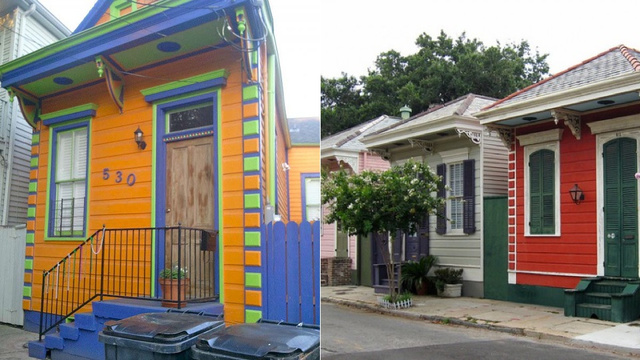
Even when they moved to North America, our families lived in little houses (at least in the cities).

NOLAThanks to Gizmodo for that picture of houses in New Orleans.

And of more pictures of adorable little homes.

By building our home smaller, we’re not just embracing the future, we are saluting the past!


440 square feet in Brooklyn

By now you may have noted my interest in other people’s small spaces — and more importantly, what they’ve done with them.

Brooklyn2

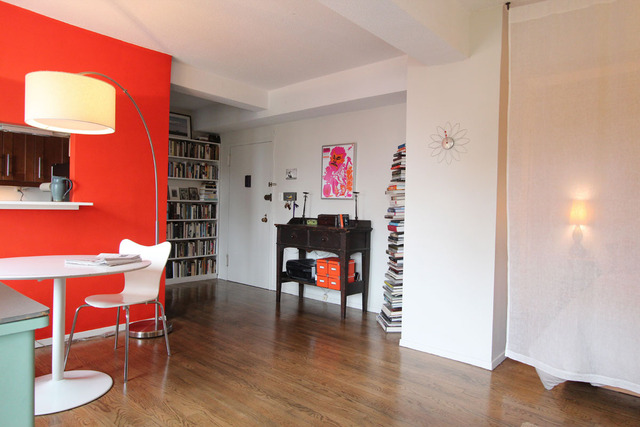
This story on Apartment Therapy is about a small apartment in Brooklyn, New York, that still manages to feel (in the words of the article) “comfortable and roomy”.

That bold shot of colour emphasizes the other white walls.  If they’d tried to put it elsewhere it would have made the “choppiness” of the other walls very obvious.  But now, everything flows. And keeping the curtain that blocks off the bedroom area of this studio the same colour as the walls adds to that flow.

In this shot, you see that the main room only has two smallish windows, 

Brooklyn3

But it still feels light and airy.

Read the article and see all the rooms in this home.  It’s a good lesson in living with less.

My Pain, My Life, My Struggles, My Fight

Come walk with me, Down My Dark & Stormy Journey BUSINESS INQUIRIES & CONTACT EMAIL : GODSCHILD4048@GMAIL.COM

ANNOTATED AUDREY BLOG

Artist and Desert Dweller with Big City Style.

Im ashamed to die until i have won some victory for humanity.

Domenic Garisto / LIFE IS NOT A REHERSAL,SO LIVE IT..if you can't be the poet, be the poem..havau22.com

The Lady Who Lives Down the Lane

Lane Way Housing for the Nervous Novice

Apartment Therapy| Saving the world, one room at a time

Lane Way Housing for the Nervous Novice

Slightly Snug House

building a home that's not too big and not too small

Vancouverandy

Funny thoughts from a nut like me.

Small House Bliss

Small house designs with big impact

WeeHavyn

Lane Way Housing for the Nervous Novice