RSS Feed

Category Archives: Housing

Wabi Sabi? Wabi I’ve got, Sabi, not so much

I’ve been reading, and following several blogs, about minimalism.  And if you do that, you will soon run across the term “wabi sabi”.  At first I thought that people were just fascinated with Japanese horseradish.  But no.  Wabi sabi is a Japanese term, to be sure, but it actually refers to an emotional state, a state of living, and of course a style of decorating.

According to the font of all knowledge, Wikipedia, wabi sabi can mean

 Japanese world view or aesthetic centered on the acceptance of transience and imperfection. The aesthetic is sometimes described as one of beauty that is “imperfect, impermanent, and incomplete”

Black_Raku_Tea_Bowl

But some also translate it as

Wabi sabi is a state of consciousness. Its beauty hidden in the aesthetic or feeling experienced between you and something in the world.

or, according to others, it’s

wabi sabi is about the perfection of impermanence and imperfection.

or even

 Wabi (which means “humble and unmaterialistic”), Sabi (which means, “the bloom of time”), is a Japanese mindset based on the spiritual concepts of Zen Buddhism

OK, so the Japanese have a word for it, and we are trying to each find our own definition that conveys the spirit of the way of life that reflects and realizes beauty, serenity, and balance.

But one thing everyone agrees on.  Wabi sabi means living a clean, uncluttered life.  Loving and respecting nature in all its complexity. Being mindful of one’s surroundings.  Caring for one’s belongings, now matter how few they may be.  Appreciating quality over quanitity.

Simplifying your life.

And that’s what I’m after.  So I will try to follow the tenets of wabi sabi.

To live small, avoid living big

A newspaper article caught my eye yesterday.  From the Globe and Mail, it says

A liberation creed for consumers: Think small

Those of us who are treading the path to less and fewer can hardly be surprised that writer Rob Carrick has noticed the “living small” movement and espouses it.

Let’s get a few things straight about the Think Small philosophy of spending.

It’s not about self-denial, extreme frugality, going back to nature, reducing your carbon footprint, veganism, communism, adopting a monastic lifestyle or otherwise preventing you from having all the toys you want.

Think Small is a liberation creed for consumers. Buy smaller homes and cars and spend the money you save on other things.

It appears Mr. Carrick is writing a series of articles about the movement.  The week before he wrote about the joy of spending less on cars.

Now here is what surprises me.  The Globe and Mail, like most media in Canada (this blog and CBC radio are the exception) makes its money entirely through advertising.  Advertising makes its money by convincing people that they should buy things they don’t need.

Right now, the articles suggest paying less for your cars and houses — and buying other stuff, “spend the money you save on other things.”

But you and I know that the secret to living small is NOT spending money on things.

Hmmmm……so if we spend less and less on stuff, will there be more advertising, or less? Will newspapers and broadcasting be able to survive? Is Mr. Carrick writing himself out of a job?

Heat

I went to a session at Bikram’s Yoga on Saturday morning with my daughter.  She, an old hand, had told me how much she enjoyed hot yoga, so I thought I would try it out.

The jury is still out for me on the experience.  The studio was lovely and the teacher very helpful; I enjoyed it, but I did have to push myself to finish each posture (and failed!) so we’ll see how I feel in a day or so ( stiff and sore is acceptable, excruciating pain is not).  I was a bright pink lady at the end, schvitzing like I never had before and SO ready for that nice cool shower.

The yoga studio is hot.  Not just warm, but hot.  I lay down on my mat to begin, knowing that heat rises, so I should be comfortable at the lowest point in the room.  But alas, the floor was the source of the heat!  It felt warm to the touch.

And by that circuitous route, I bring us to the point of this post — radiant floor heat.

We will have it in the laneway house — and it’s being installed right now.

The tankless water heater will be pumping warm water through red pipes embedded in the concrete floor to heat the lower floor.  Naturally, the pipes come first, laying on the styrofoam insulation:

20130720.1

Even in the garage (to the far right).

20130720.3

Even under the stairs, where the storage space will be.

20130720.2

Each room will be programmable.  Very comfy.  We will keep our bedroom cool at night, the bathroom toasty.

20130720.4Upstairs, the heat from downtstairs will rise to warm it, but there will also be a baseboard grill at the floor level of the kitchen peninsula.

Lanescapes

Although we are preparing to landscape our property at our laneway house, and that includes planting attractive plants alongside the lane in “front” of our new home, the lane itself will remain as it is.

Kind of ugly.

There’s pavement down the entire width of the lane, with people’s garages backing onto it.  No one really pays much attention to how the lanes look.

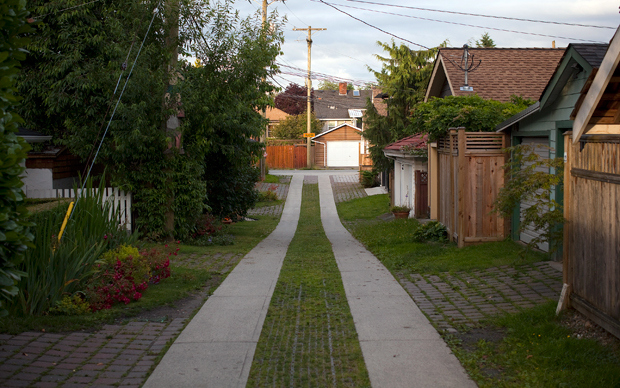
But at one time they did.  According to this story in the Vancouver Observer, at one time long ago (2002), the city wanted to countrify our city lanes.  As illustrated by the blog This City Life and the National Post article they quoted, laneways can look almost…bucolic.

laneWouldn’t that be lovely?  To step out of our front door into a grassy walkway?

Let’s hope this experiment succeeds, and block by block we reclaim our laneways. The city should be paying attention.  As the Vancouver Observer oberved:

How is that not awesome?

Day 46

DH and I were getting — not anxious — but a little thoughtful.  When we saw Laurel and Ang three weeks ago, Ang told us that framing on the laneway house would begin the following week, that is two weeks ago.  Yet, although there was clearly action at the site, there was no framing.

So we talked about it and wondered about it and finally contacted Laurel to ask why.  It turned out that the city wanted them to install a clean out function for the plumbing and it had to be completed and inspected before they could proceed.  That was done before they met with us on Thursday evening for our regular meeting.  So all was well, and there would be framing beginning toute suite.

Things we have to think about:  electrical plan, where we will put the TV, plumbing features in the bathroom (is it still a bathroom if there’s no bathtub, just a shower?), the predominant colours in the live roof (our roof is being grown just for us).

I’ve been watching decorating shows for many years now (remember when Debbie Travis did The Painted House?) and I realize now that they have been leading me down the garden path.  You don’t think about the floor and walls first, then the appliances and the fixtures.  In a bathroom the fixtures have to come first — so the plumber can install the necessaries.  The windows and doors have to be ordered before the foundation is poured so they will be ready when the framing is finished.  The cabinets are not something you fit into a finished kitchen — you build the room around them.

Things we will have to think about soon: the built-in vacuum and the security system, the appliances. Also the lights we will be installing.

We will be driving out to Port Moody tomorrow to check out a back-lit mirror for the bathroom.

Knowing that the framing would begin today, I rushed over after work today to see the progress.  And I saw this:

Day49This part of the framing is setting the plates — the horizontal boards that the studs will be connected to — very accurately and securely on the top of the foundation. See how the plates are a different colour?  That means they are pressure treated to resist moisture.

It will be a little while until we see the shape of the home but everyone is quite confident that the project will proceed according to the schedule.

Find out more about the framework of a home here.


What’s the skinny?

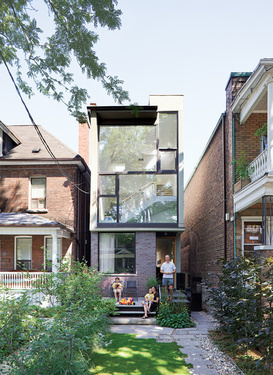
The small house movement is creating solutions to one problem of large cities — odd, skinny lots, sometimes between two existing buildings.

skinny homesThis article from Dwell features five such buildings, from all around the world.  Check it out, with the built-ins and niches that make skinny houses feel more like homes.


What I’m loving about our new neighbourhood

We were incredibly lucky to be able to move into the neighbourhood where the laneway is being built.  Thank goodness for basement suites, as there are very, very few apartment buildings available around here.  The ones that we could find are subsidized housing, and those are nearly impossible to get into, especially for short-term rentals.

watercolor_iCXHbhfkY7w

Our Town

But here we are and we are very happy with the area.  For one thing, transit is a breeze.  We are very close to the Skytrain, and will be even closer when we move to the laneway. We can get downtown, to our gym, to shopping in Burnaby, and to parks and recreation quickly and easily.  The Broadway corridor is right there, with the express buses running during rush hours to whisk me to and from work.  We use the car even less here than we did at our old residence.

Shopping is also great.  I miss my London Drugs right down the street, but there are plenty available a short  Skytrain ride away.  We have a Superstore within easy walking distance, as well as a small shopping centre with a Price Smart, a Pet Smart, Canadian Tire, Mark’s Work Wearhouse, and a Starbucks (*whew*).  There’s a WalMart right down the street, too.

On an exploratory walk around the neighbourhood last weekend, we found several small parks close by.  Plus a possible pizza place.  We also have walked over the Commercial Drive on the Central Valley Greenway, which DH has explored on his bike.

But all this was something we expected, because we thought quite a bit about the neighbourhood before we agreed to move here, checked out the Walk Score, etc. and so we knew what to expect…..or so we thought.

What were we not expecting?  Garbage collection.  I lived in a condo for about 30 years, the years of Garbage Collection Reformation.  In a condo, garbage was something you took out, put in the giant bin, and it magically disappeared. We had visited friends’ homes and seen coloured maps of Vancouver on the sides of their fridges, but we’d never really considered what they were for.  I don’t know if we suspected that all our friends had identical taste in fridge decor, but we just never thought about it.

But now we do!  Because my friend, you LIVE AND DIE by the date of your garbage collection.  Every two weeks that truck trundles down that lane and if you don’t have your garbage out where they can grab it, it’s like Santa, that truck is not going to come back until its appointed time.

Luckily every single week a truck comes by for recycling.  And if you don’t think that’s a motivation to recycle everything you possibly can, you have never tried to fit four week’s garbage into a two-week bin. Now there is something even newer than regular recycling, which is composting.  Vancouver now takes your table scraps and coffee grinds and composts them.  It’s a great idea!  And it makes that every-other-week garbage collection quite doable.

In fact it’s such a good idea that Mayor Bloomberg is doing it in New York City.

Another advantage that I never expected started out as an inconvenience.  I know I’ve mentioned that the laneway is being built into a slope.  I don’t think I’ve told you that the slope is actually a big, honking hill that runs from a couple of streets above ours right down to the Grandview Highway where all the stores are.  Just to get to the Skytrain from the laneway means climbing down, and of course back up, a significant grade.  I thought this would be a pain, but it has turned into a blessing.  The first few times I charged up that hill to catch the 7:38 99 bus, I swear I thought I would pass out.  There were little red dots dancing in front of my eyes.  But just a couple of weeks has given me much more stamina — it’s great exercise!  Who knew!

Oh, the people at Life Edited knew.  They point out in this article that cities where exercise is built right in have healthier citizens.

And I’m good with that.

Don’t store it — get rid of it

Now that we are in our little rental space, we are truly getting used to living with limited storage space.

And it’s pretty cool.

We are regarding our rented storage unit, not as the repository of our precious, precious belongings, but rather another place we have to clear out.  That is an onerous task, but one that will bring us more happiness in the long run.

Heck, it will make us happier in the short run, too.

When we first considered moving from 1100+ square feet to 500 square feet, I just assumed that we would always have to have a rented storage unit.

For our stuff.  For our Christmas decorations, extra dishes, linens.

Even after we moved to the rental suite, I wanted to use the storage unit as an extra closet.  I kept a few towels and sheets, and packed up the rest, planning that when the small amount of linen and dishes in the rental suite broke or wore out, we would replace them with items from the storage.  Planning that gradually the storage space would be emptied as we used up things.

Then, after putting one of our two sets of sheets on the bed, DH put his foot through the bottom sheet.

The idea of going up to our storage space and shifting a ton of boxes to find the right box with the extra linen in it was ridiculous.  I also knew that the “extra set” of sheets in that box wasn’t complete, either.  Stupidly, I had put away an incomplete set of sheets because …… never mind.  And so now I have a top sheet and two pillowcases and all I need is a bottom sheet.  Turns out that Walmart sells single sheets by themselves, and I’ll pick one up.  But the point is I will not be going in to that barrage of boxes, that cataract of cardboard, that mountainous morass of stuff just to get a single sheet.

Just like I won’t go in there to get a single wine glass when one breaks. Or one towel.  Or one saucepan (OK, likely won’t wear out or break, so why do I need those extras?).

And as far as Christmas decorations go, we will need more outdoor lights.  But for the rest, we will keep just a few of the most precious, and give the rest away.  We won’t need five big plastic tubs of Xmas cheer, one will do, and we can probably find a corner of the laneway (maybe under the stairs) to store it.

Everything “extra” will go, given away, donated, tossed.

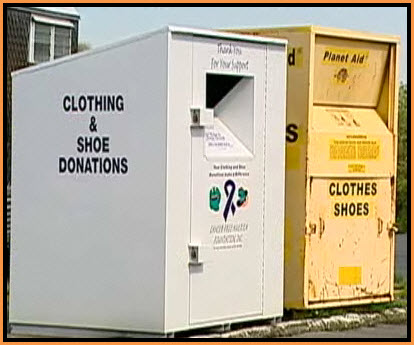
donations

These monsters have to be fed!

If we hadn’t started living this way, we would never have appreciated how nice it is to live with less stuff.  Now we love it, and will continue to do so.

Tetris housing? China says yes!

I bet the first house you designed was built of blocks.  And although it may have had tons of style, I bet it didn’t have a lot of structural integrity, nor did it have a lot of interior room.

But Studio Liu Lubin has designed a modular home plan that lets you fit pre-made blocks into each other to make a small, or a large home.

Studio-Liu-Lubin-Tetris-House-537x405According to this story at Inhabitat, the home can function as a single room, or

can also be stacked up to create a mini housing complex that meets China’s land use policies

Read more: Tetris-Like Micro House Can be Stacked to Form Expanded Housing Suites | Inhabitat – Sustainable Design Innovation, Eco Architecture, Green Building

I’d love to see the housing complex go up!  Especially when they start flipping the modules around to get them to fit perfectly.

A guaranty of quality

I was on the Home Discovery Show this morning for a chat with Ian and Steve.  Their other guest this morning was Mike Holmes.

Yes, that Mike Holmes.

Mike Holmes changes people’s lives by going into their homes after bad building practices or crappy renovating have ruined them, and he makes them right again. He’s a hero to these people.  He respects good work, and he is constantly frustrated when he sees shoddy construction.

But what is to say we’re not going to have a badly constructed laneway home?  Sure, we can see a building going up, but how do we know it’s being built to withstand the weather? To not leak or creak or (shudder) reek?  So we can look forward to years in a well-built home that will need minimal maintenance and will never have to call upon someone like Mike Holmes to fix catastrophic problems.

Well, first of all we trust our builder, Novell.  Angelito and Laurel had our confidence right from the start.  They are a part of the Renomark Renovator Program, a member of the Greater Vancouver HomeBuilders’ Association, and are rated A+ in the Better Business Bureau Business Review. And we’ve seen how they work — always keeping the worksite tidy, using good materials.  Plus we talk with them all the time, in addition to our every-other-week meetings, we can call or email them anytime if we have questions.

And we have another reason to feel confident that our home will be solidly built.

Like all BC residents, we have the Homeowner Protection Office, a branch of BC Housing.  And that means we have Home Warranty Insurance on our new home; we are

covered by mandatory, third-party home warranty insurance. As a minimum, this coverage includes 2 years on labour and materials (some limits apply), 5 years on the building envelope and 10 years on structure. It’s the strongest construction defect insurance in Canada.

The HPO’s Guide to Home Warranty Insurance in British Columbia is a 24-page comprehensive guide to what you can expect in the way of protection.

The 2 year labour and materials coverage includes

defects in materials and labour supplied for the electrical, plumbing, heating, ventilation and air conditioning delivery systems, as well as for the exterior cladding, caulking, windows and doors

The 5 year building envelope coverage includes

the components that separate the indoors from the outdoors, including the exterior walls, foundation, roof, windows and doors.

And the 10 year structural coverage includes

defects in materials and labour that result in the failure of a load-bearing part of the new home, and for any defect that causes structural damage that materially and adversely affects the use of the new home for residential occupancy.

Novell has purchased insurance through a company called Pacific Protected for our build.

I recommend that anyone who is building or renovating (or if you are interested in the process) go to the HPO site and explore.  They have guides for every stage of the build so you can see for yourself if each aspect is being built properly.

My Pain, My Life, My Struggles, My Fight

Come walk with me, Down My Dark & Stormy Journey BUSINESS INQUIRIES & CONTACT EMAIL : GODSCHILD4048@GMAIL.COM

ANNOTATED AUDREY BLOG

Artist and Desert Dweller with Big City Style.

Im ashamed to die until i have won some victory for humanity.

Domenic Garisto / LIFE IS NOT A REHERSAL,SO LIVE IT..if you can't be the poet, be the poem..havau22.com

The Lady Who Lives Down the Lane

Lane Way Housing for the Nervous Novice

Apartment Therapy| Saving the world, one room at a time

Lane Way Housing for the Nervous Novice

Slightly Snug House

building a home that's not too big and not too small

Vancouverandy

Funny thoughts from a nut like me.

Small House Bliss

Small house designs with big impact

WeeHavyn

Lane Way Housing for the Nervous Novice