RSS Feed

Category Archives: Laneway House

Learn more about building Laneway Houses from the experts!

If you are interested in building a laneway house on your property, or if you are just curious about the process, then you owe it to yourself to attend a presentation on Laneway Houses on Wednesday, March 12.

A panel of experts will be there to answer your questions and provide information:

Ralph Case, President of the Real Estate Action Group – Investment benefits of laneway housing
Jake Fry, President/Owner of Smallworks Laneway Housing Inc. – Designing and building small
Colin Lawrence, VanCity – Financing made easy
Richard Bell, LLC – How to share title

Date: Wednesday, March 12, 2014

Where: University Golf Course
5185 University Blvd (10th ave. west of Blanca)

Time: 7:00pm – 8:30 pm

BTW, that address is quite accessible by bus, if you would like to go but don’t have an automobile.  But there’s lots of parking there if you want to take the car.
If this is something you think would be of value to you, please attend.  It’s the best way to get expert advise I’ve seen so far (other than reading this blog, of course!)

Who wants to live the small life?

Have I convinced you to live in a small house yet?  Lots of people love living the small life — and bring great gusto to it. And not just on mountain tops and deep in forests.  These people found smaller is better even in the biggest cities.

Designer and architect Rohan Walters built an 1100 square foot “Driveway House” in Toronto in a space that was just 12 by 40 feet.  Read more about it here where Humble Homes drew our attention to it.

The use of glass walls and frosted panels allow lots of light to penetrate into the interior of the home.

SmallHumbleHomes

I particularly like how the electrical outlets are placed high on the walls along a silver-coloured strip.

SmallHumbleLiving

And it’s super efficient, too, using as small an environmental footprint as it does a physical one.

In the heart of Paris, clever use of design by Julie Nabucet and Marc Baillargeon allow comfort and style in just 130 square feet. Thanks to Tiny House Talk for the heads up.

SmallParis1

The bed pulls out from underneath the raised kitchen area.

SmallParisbed

And I love the bold touch of the red kitchen cabinets. This angle allows you to see how they’ve brought light into the kitchen through the clouded glass of the bathroom door.

SmallParisBath

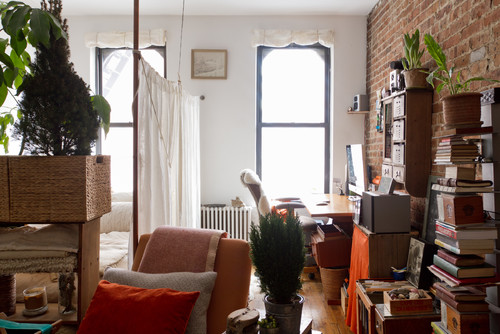
Of course, there are lots of opportunities to create a great small space in New York City.  This Houzz story shows a 300 square-foot studio in Manhattan.  Are you expecting more sleek finishes and mid-century modern lines?  Nope, this space has gone all Boho in Soho. (Actually in the Upper East Side, but who could resist…?)

Eclectic Bedroom by Brooklyn Photographers Rikki Snyder
In decorating her studio, she was inspired by both New York City and rural Chilean Patagonia. She wanted to create an urban refuge but was also drawn to rough woods, thick wools and warm colors, which were naturally suited to the apartment’s existing brick wall.
Even this tiny NYC apartment shows us warm wood and rich textures.
SmallNYCMain
This story from Life Edited shows how they’ve fit so much into the tiny area without looking cluttered or “stuffed”.
SmallNYCUpper
From Apartment Therapy we learn about another tiny home, right across the bridge in Brooklyn and just 460 square feet.  They have used light wood tones as well to make their house look warm and yet clean and elegant.
SmallBrooklynMain
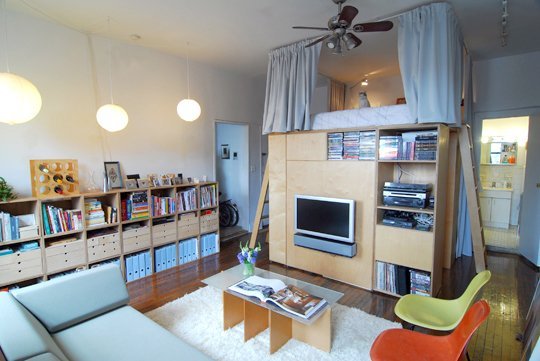
But the secret to living in such a small place is in building up.  Looking the other way in the suite we see how they have created a second story in their sleeping loft.
SmallBrooklynLoft
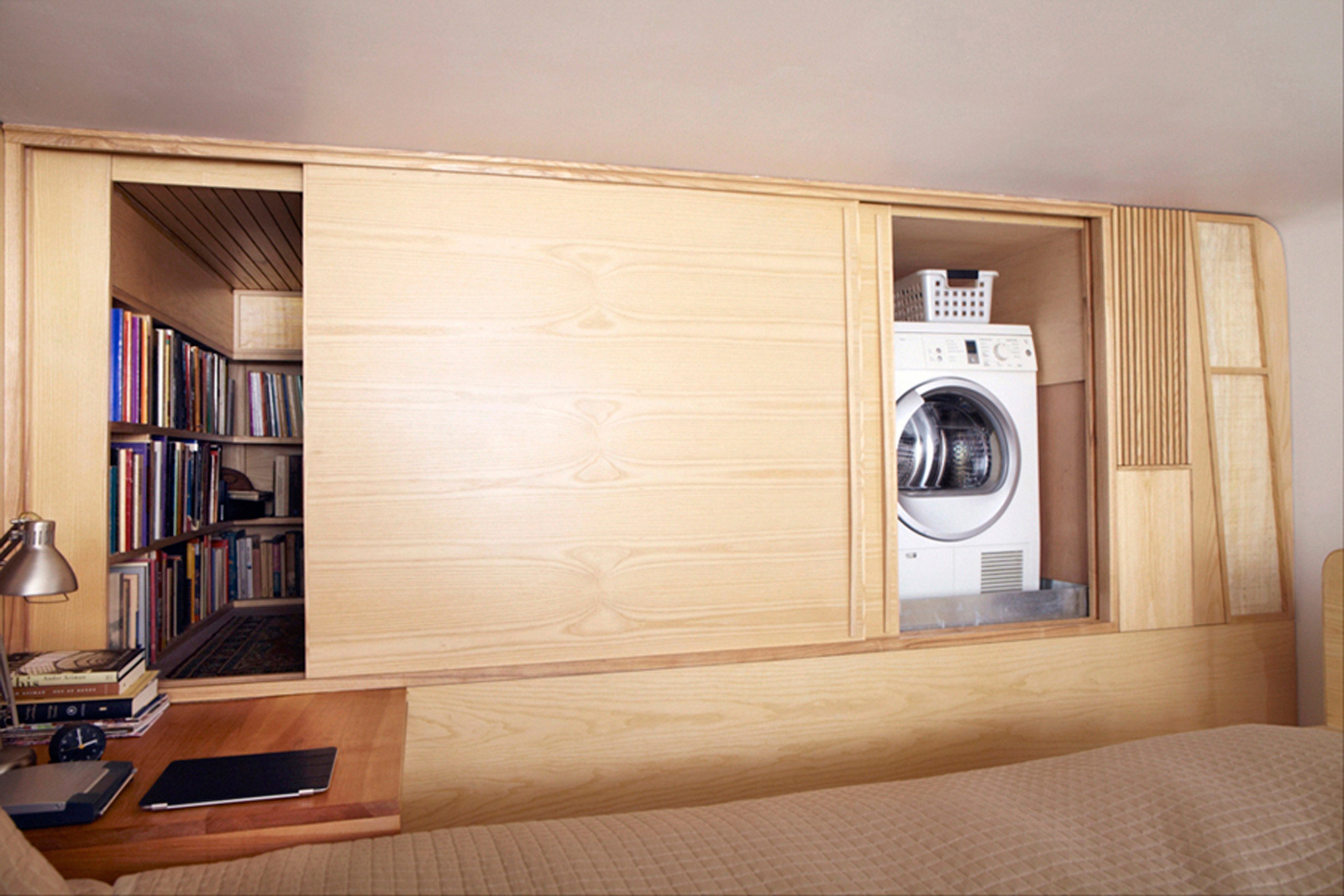
Lots of clever use of built-in storage, plus an office area tucked under the bed.
SmallBrooklynDesk
Big cities and small homes.  The perfect combination.

13 Reasons Why Smaller Is Better

Many years ago I was walking down a residential street here in Vancouver with a much younger friend of mine.  We were both looking at the houses, stating our preferences.  I was rather surprised to learn that she wanted a big house.  Not just big, not just huge, a monster house. The kind of house that takes up most of the lot, that overwhelms the space.

MonsterHouse

Know what I mean?

She said she wasn’t planning a large family, or to live in a multi-generation situation.  She just liked big houses.

I thought she was out of her mind.  I still do.  Smaller houses are best.

There, I’ve said it.  And I am prepared to back it up.

Northern Homesteader got me started with 12 Reasons to Live in a Smaller House – other than money.  Here’s her list, with my comments.

1. A small house is cozy

In a big house you have to find your cozy spots, create them with an overstuffed chair or a window seat.  But a small house is all cozy corners and intimate spaces.

2. A small house is warmer in the winter

It takes less than 10 minutes for our house to get warm on a cold morning.  The radiant heat works beautifully, and there are no cold corners.  In fact the laneway house is so energy-efficient that we turn down the heat to 16(C) in the afternoon so it doesn’t get uncomfortably hot.

3. A small house is easier to decorate

Even if you are going for a bohemian style with every flat surface covered in pictures and knick-knacks, decorating a small house takes less time and energy.  Even painting a room takes less time.  And you’ll need fewer cushions, fewer paintings, and fewer area rugs.  So if you want to completely change the look you can do it over a weekend.

4. A small house is faster to clean

Our former condo was only 1100 square feet, but it had two full baths and miles of carpeting.  To clean it up used to take us most of Saturday.  Now we can be out of here in less than an hour, with every surface sparkling and every floor damp-mopped.

5. A small house builds relationships

It’s funny, when you have a big home, how little time you spend in the same room as another person.  You might drift through the kitchen while your husband makes dinner to grab a glass of wine before you go back to watching the news in the front room, but you don’t actually have that much face time.  But in our laneway, I can be in the “sitting room” doing the crossword while DH is making dinner, and we are sharing and chatting, and sometimes watching the news together.  Yet when we want some private time there is always a little corner where we can be alone.

6. A small house inspires ideas and creativity

In our condo we had storage space galore.  Closets stuffed with clothes we didn’t need any more, an entire storage room just for stuff, 50% of which we didn’t use.  But now we have to find storage in every nook and cranny.  The space under the stairs.  the space in the stairs. And since more of our stuff is on display we have to find ways to make it attractive.  There’s a reason I keep watching those decorating shows.

7. A small house prevents clutter

We used to have a pile of papers in the kitchen.  Also one in the front hall.  And one in each bedroom.  No more!  I keep a (lovely) basket where I put all the papers that come into the house.  Once a week I go through it and toss what we don’t need and file what we do.  Bills and bank statements I get online so there’s less paper coming in. Clutter makes a small house look very messy.  It also makes a large house look very messy, but there’s more places to hide it.

8. A small house feels securer

When DH is out I know I just have to lock the two doors and this place is a fortress.  No dark corners or iffy locks.

9. A small house helps to live simple

Maybe that’s not your goal.  Maybe you look for ways to complicate your life.  But buying less, cleaning less, fussing less is what I want.

10. A small house is freeing

I thought it was funny when I read this — because that is exactly how I feel!  Less stuff makes you feel freer.  It’s part of 9., but it’s more than that, too.

11. A small house encourages more time outdoors

Last week I was feeling a bit closed-in.  You can feel that in a large space, too, but I knew what I needed, a brisk walk to the store.  Our small fridge means we buy less, and shop more often.  So we get out every day.

12. A small house takes up less space

The blogger at Northern Homestead loves her garden space.  And she’s not going to sacrifice it to gain more housing square footage.  We like the garden space we share with the main house — their back yard is actually bigger than it was before we built the laneway here because there was a big concrete slab where the house sits.

Twelve good reasons to have a small house, but I’ve thought of a 13th.

13. Smaller ecological footprint

Building the house took fewer resources than building a large house.  That’s a good enough reason to build small.  But running it takes fewer resources, too.  Heating, cooking, running the washer and dryer all take less energy than a larger house with large appliances uses.  If we want to be responsible energy consumers that is one more reason to live in a small house.

The Co-operative solution to affordable housing

We have spoken several times about the difficulties finding affordable housing in our fair city.  One idea I haven’t written about is Co-operative Housing.  That’s ironic, because I lived in a housing co-op for 14 years.

witsend

A housing co-op, whether for-profit or non-profit, differs from other multi-unit housing in that everyone who lives in it owns a share in the whole building — not just your unit.  So you own — and have responsibility for — the whole building.  The co-op board (made up of people who live in the building) determines who can or cannot move in and how the building will be managed including how much each share in the building will cost.

Lots of people find it hard to get their mind around the idea that co-ops are affordable.  That may be because they have only heard about exclusive, expensive co-ops such as the famous Dakota in New York City, where suites could cost millions of dollars.  But they are an excellent way to get affordable housing right here in Vancouver.

Let’s say you know several people who all have the same problem you do — they can’t afford to buy or build a home in Vancouver.  You may know several hundred people in that boat.

Well, you can all get together and form a housing co-op.  That’s the way I found myself in Wits End Housing Co-op.  The apartment complex where I lived in Kerrisdale was sold and razed to make a much larger, more expensive tower.  Most of us in the original complex could not afford to live in the new building, but we could afford to pool our resources and our time and talent to form a co-op.

It took a lot of time, and much energy, but many of the families from the original complex called Wits End home for years.  It was a good place to raise your children in a nice neighbourhood convenient to transit.

If you go to the Wit’s End web page you’ll see that the charges for housing are quite reasonable, from $782 for a one-bedroom to $1,215 for a four-bedroom unit.  Plus you must purchase shares in the building, costing from $1,600 to $2,400 depending on the size of the suite you want.  That’s very affordable for Vancouver.  But there’s a way to save even more.  In some co-ops you can receive a housing subsidy through the government that will allow you to live in a suite that you might not ordinarily be able to afford.  The subsidy is given to the co-op, and it is limited.  Extremely limited. Check the Wit’s End page and you’ll see that they do not currently have any subsidy available.  Plus all their suites are full and they are accepting names for a waiting list (you don’t have to come up with the share purchase money until you are accepted into the co-op).

If you want to form your own housing co-op, the first step is to contact the CMHC, the Canada Mortgage and Housing Corporation, and follow their guide to forming and running a co-op. There are also guides specific to the province where you live.

Is it cheap?  No.  There will be lawyers, architects, contractors, inspectors and many more people you will have to hire.  The CMHC can guide you through it. There are guidelines, rules and regulations you have to follow all the way.

Once you live in your co-op you will have responsibilities that condo dwellers do not.  You will have to serve on a committee, you should serve on the board at least once.  And if you choose not to hire cleaning people you will have to do your bit to keep the building clean and safe.

Co-operative housing gives you an instant neighbourhood, a safe neighbourhood for your kids, plus an affordable place to live.

I look back on my co-op years with great fondness.

Our visit to the BC Home and Garden Show

DH and I braved the snow yesterday to take in the BC Home and Garden Show. Thanks to Ian at the Home Discovery Show for the admission!

There were masses of people, lots to see, lots to do, in short, the usual Home and Garden Show.

And there were lots of individual items — and a few over arching trends.

Smaller is definitely in.  We saw a couple of laneway builders — one, My Lane Home, builds the structure off-site and then assembles it on the foundation they put on your property.  We had a nice chat with them. A lot of the regular design/build/renovate exhibitors were also displaying info on building laneways.

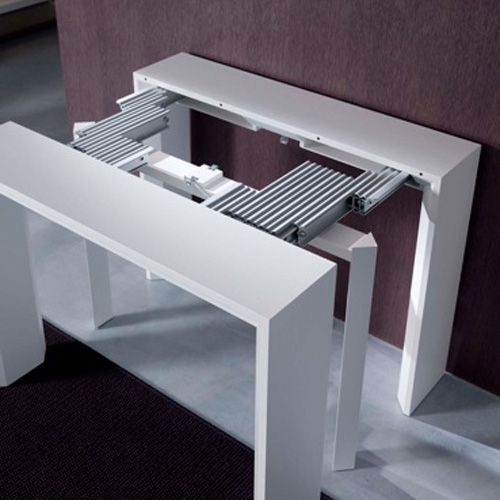
Small is also in with the furniture exhibitors.  We saw very few big pieces, and we saw two exhibitors with credenzas that made into full-size dining tables.  Like this:

Credenza1 Credenza2 Credenza3

Plus there were several booths showing beds that came out of cabinets or the more traditional Murphy-bed set-up for transforming spare spaces into guest rooms with the touch of a button. Plus closet systems that made use of every inch.

The furniture was also sleek and functional looking — nary a curve or a piece of extra ornamentation to be seen in upholstered or hard furnishings. And it really was about doing more with fewer pieces.

Window coverings were also more in the “blinds and shades” family than opulent draperies — and there were no prints except for a few geometrics. When I remember the meters and meters of cabbage roses we used on every upholstered surface in the 70s and 80s!  They are totally out of style now.

The finishes were the ones we’ve seen before — hardwood and engineered floors are still the most popular, there isn’t anything new there.  The counter tops were either quartz or what I came to think of as “novelty” stones, like marble with swaths of green running through; plus lighter granites than the blacks and dark greys we’ve seen in the past few shows.

There was a clean aesthetic when it came to all the decorating. The only place I saw texture was in the walls.  Bathroom and kitchen tiles often had designs incised into them — one booth had sheets of tempered glass with colours and textures embedded in it.  For myself, I would never put anything like that in my home.  How many homes have baths installed in the 1980s?  You can tell because of the florals in the tiles, something that is completely out of style now.  Tiling is something you only want to do once — don’t put anything up that is so very ….. dating.

Saving energy was a definite theme when it came to the doors and windows on display.  Plus there were lots of home security exhibitors, so it seems that putting in a security system is no longer an option but a necessity.

Taking it outside, I was surprised to see how much concrete was being used, often in interested ways.  And outdoor fire pits and fireplaces were everywhere.  “Outdoor rooms” are taking over from “yards and gardens”.

Of course, there were lots of booths selling things, mixers, knives, nozzles and ladders — I saw one man carrying a huge box containing a super-duper car seat cushion.  Luckily we were travelling by transit and had no way to get a lot of “things” home, and of course, no where to put them when we got there!  So we saved a fortune.

Itty bitty bedrooms

Our builder is back today, finishing up (we hope) the last bit of work before the room is absolutely complete (no pix till it’s perfect).  The bedroom is definitely the smallest one I’ve ever had in a home — just wide enough for our queen size bed plus one small chair.  But I think it’s the perfect size for us — we love it. And we’ve even included some kitschy 50s-style touches to make it completely our own.

I’ve always known that other people have small bedrooms, and I’ve wondered how they managed.  So off to Apartment Therapy to look at what others have done with their tiny sleeping rooms.

First, some parameters, I was interested in areas that could sleep two adults — I know you can tuck a child’s crib into any corner, but that wasn’t going to help me.  Plus, it had to be set off from the main living space in some way, not just part of a studio apartment.  And I found some real winners — and inspiration.

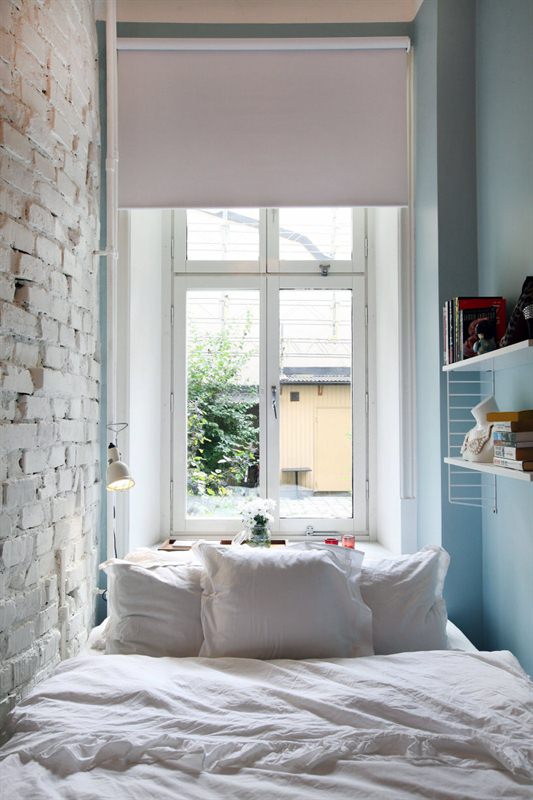
Bedroom-Swedish


This all-white room still manages to get that punch of colour with the wall-papered back wall.  And the kitchen cupboards set high bring in more storage while not intruding.

Bedroom-European


This all-white room grounds itself with the darker bedskirt — and brings texture in with that lovely heirloom coverlet.

Bedroom-French


This room is really tiny, but the high ceiling could make you think you’re sleeping in the bottom of a box!  It’s the light walls and minimal textures (just the brick wall) that make it a comfortable space.


Bedroom-tiny


By keeping the accessories in this room light and bright it manages to look cute but not cluttered.  And the shelf beside the bed means no need for a nightstand (spoiler alert–that’s what we did in our room).

But just because a bedroom is eensy doesn’t mean it can’t be dark and dramatic.

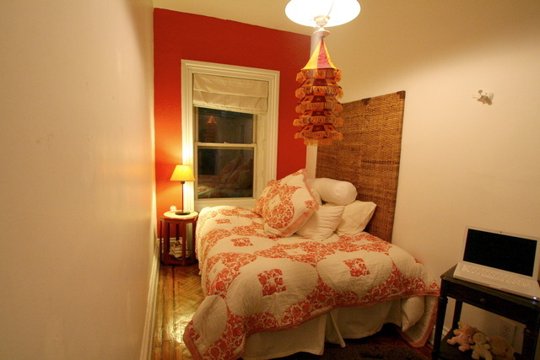
Bedroom-bright


This narrow room has the bed pushed against one wall as we’ve seen in some of the other rooms, and thus has gained space for an unobtrusive night table.  But it’s that bright pop of wall colour repeated in the coverlet and that dramatic light fixture that makes it special.

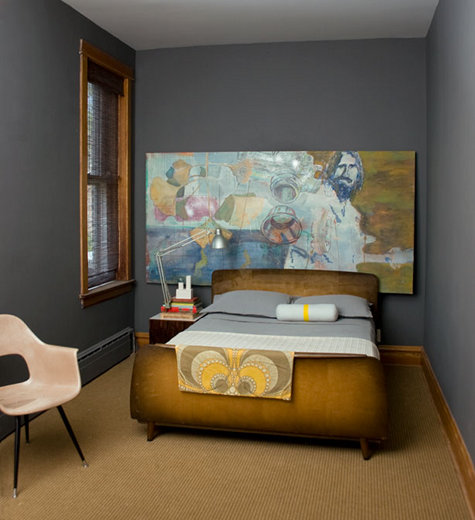
Bedroom-dark


The dark colours in the wall really bring the drama to this small bedroom.  Very clever use of colour, see how the ombre wood of the bed is picked up in the mustard tones of the wall-sized painting?  Plus the little punch around the white pillow also picked up in the quilt hanging over the foot of the bed.  Even the window trim is that same tone.  Very clever.

And as we have seen, even the smallest spaces can be dramatic.

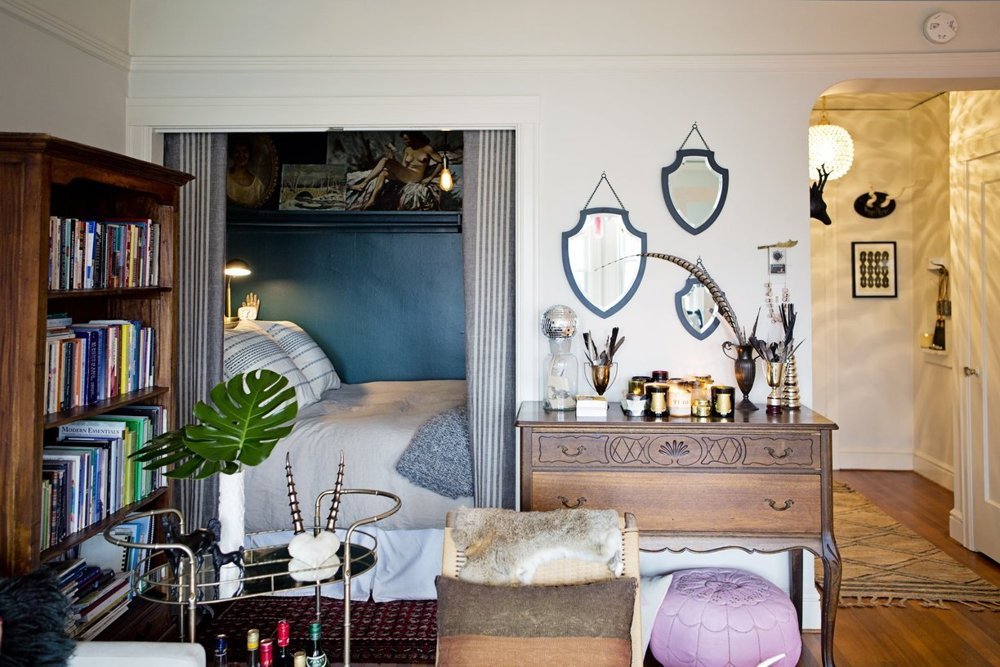
Bedroom-Niche1


This home is basically a studio apartment, but the owner has taken what might have been left as storage space and managed to fit a bed into it.  what makes it a bed ROOM is the dark blue wall colour, so different from the light tones of the rest of the space.  Here’s another look at it:

BedroomNiche2


Glossy wall paint reflects the overhead bulb and the wall-mounted bed lamp.

Lots of ideas that show that clever always trumps large when it comes to decorating — and small is beautiful.

Five Reasons Why Family Day Really Was “Family” Day

Monday, February 10, 2014 was the very first Family Day here in British Columbia.  I really wanted this day to be something I could plan and everyone could enjoy. With everyone so busy I didn’t want to add to their plates by saying “Entertain Me!”  I wanted everyone to just show up and have a good time. You may think that has nothing to do with laneway living, but actually it fit in perfectly with our new way of life.

1. It’s all about “Experience”

We won’t be buying much new stuff.  And for everything we bring into the laneway, we have to take something out .  Instead of stuff, we want to spend our time and energy on having new experiences.  And that means

2. Getting Out of the House

In the past I may have been tempted to just make a nice dinner and have our family (two kids, two kids-in-law, one grandchild) over and then we would sit around and eat and then everyone would get up and go.  But we don’t have room for that anymore, and though we will certainly be sharing lots of communal meals, the small size of our place means that if we are planning an event we will need to be outside of the laneway.  That could mean out in the back yard at a barbecue, but in the winter it usually means inside somewhere else (the weather is so iffy, it was supposed to snow but instead it rained buckets).

3. Finding Family Things to Do

The fact that it was Family Day gave me a bit of a kick in the pants.  I haven’t thought much about entertaining children (well, child) for a while.  Plus I wanted something everyone would enjoy, so it had to be more than visiting McDonald’s or dragging the little darling around Science World (she’s a bit young to take it all in).  I just poked around the internet and found Family Day activities at Burnaby Village Museum.  The museum would be closed, but the Carousel would still be open, and they would have fun things for little kids. It’s close to everyone, and not too expensive.  We started off with brunch at a restaurant, then went straight to the museum, and “Carousel, Carousel!” (Only not in that Logan’s Run way).

4. Unplugging

I admit that I like sitting and watching Disney movies with the little girl on the TV or computer.  But for this I wanted a more….analog experience.  Going out and doing real things in the real “meat world”.  Touching and holding hands and walking and playing with plastic frogs.  Riding a real carousel horse (twice).

Whee

5. Building memories

It doesn’t take too many family dinners until the memories all melt together.  Especially since we usually do the same dishes for special occasions.  And that’s good.  It’s so nice to look back on all those Christmas dinners at Grandma’s and the Angel Food cake your Mom always made for your birthdays.

For this Family Day I thought I would be building memories for the little girl — her first ride on a real carousel.  But of course, I was really building memories for myself.

This memory especially

Whee2

Nostalgia is not what it used to be.

As one gets older (and that’s the plan, remember?) one finds oneself with what you might call “obsolete skills”.  For instance, while I am in charge of de-jamming and refilling the multi-use colour photocopier at work, I also carry in my brain knowledge on how to run a Gestetner machine.

Gestetner

If you are about my age you will recall the sound of the drum whooshing around, the smell of the duplicating fluid and the sight of purple-printed pages heralding a class hand-out or exam.

I don’t need the ability to run one of these machines, just as I don’t need to know how to send a Telex, or operate an old-fashioned switchboard.  But the knowledge remains, crammed into a little corner of my brain.

Technology has made a huge difference in the way we disseminate information–we have to constantly learn new skills to keep up with it.

But in the home these changes are not as apparent.  The vacuum of my childhood might have been an ancient Kirby bought from a door-to-door salesman, but it worked the same way my new built-in does.  The fridge defrosts itself, but it still cools stuff like our old round-shouldered Kelvinator.

The only domestic chore that has completely changed is the way we wash our clothes.  I was pondering this fact the other day, as I loaded sheets into a machine that will weigh the load, adjust the water level, and deliver clean items painlessly and surprisingly noiselessly.

I want to pay homage to the home makers of the past, and to this very important talent that was once such a difficult and time consuming task: to keep the family’s clothes clean.

How to use a wringer washer:

Because everyone changed their sheets on their beds on the weekends, Monday was wash day in our home.  Yes, all day Monday. Set aside at least 6 hours, because you are doing a whole week’s worth of laundry.

Separate the laundry into whites (sheets and towels), brights, darks, and dirty (Dad was a blue-collar guy, his clothes got dirty).

First the washing machine would be rolled to the sink.

VintageWashingMachine

We had a basement, and big double concrete sinks, so that’s where the washer would be placed.  A hose attached to the faucet fills the machine with straight hot water.

Put in the detergent and let the agitator mix it into the water, then start the wash.

First load:  sheets.  Set the timer for 20 minutes or more (depending on how dirty the clothes are) and go and do some baking or cleaning or God forbid write a letter or have a cup of tea.  When the timer goes off, go back downstairs, swing the wringer over one of the concrete sinks that you have filled with rinse water, and then feed the sheets into the wringer so that the soapy water runs back into the washer.  While the sheets sit in the first rinse, put in the second load.

After swishing the first load around in the first rinse water, swing the wringer so that it sits between the two concrete sinks.  Feed the sheets through the wringer into the second rinse so that the soapy water runs back into the first sink.  Empty that sink.  Rinse it and refill with fresh water while you wring out the items for a second time and load them into the basket to hang up outside (if it’s sunny, even if it’s freezing out there) or in the basement on the clothes lines especially installed for the purpose.

When it’s time to wring out the second load, put them through the wringer into the second sink — thus the second rinse from the first load becomes the first rinse of the second load.  That way you conserve water because this method uses a lot of water.  And you rinse in cold water because hot water costs money, kiddo!

As the saying goes, lather, rinse, repeat.  All day.  Put in more water if it gets low in the washer, but it will get progressively more grotty — that’s the way it is.  Put in more detergent if you add more water. Do the dirtiest clothes last.

As each load is finished and wrung out, carry the heavy basket of wet things to the back yard and reach into the basket and lift and pin the item onto the clothesline so that it will catch the slightest breeze and dry.  It sounds like hard work because it is. It’s a lot of stooping and standing and carrying heavy loads.  In the winter your hands will get very, very cold.

Eventually the last load is finished and it’s time to empty the washer (we used a kind of siphon that Dad had hooked up to the washer so it could empty into the sink).  That lady in the picture above?  She had to open a spigot in the bottom of the tub to drain the water into a bucket which she would then empty into her sink.

And that button on the top of the wringer?  That’s to release the rollers when your child tries to help and the rollers grab her hand and pull it through the wringer up to her elbow.  Ask me how I know about that.  The pressure on the rollers was adjustable, too, so you could fix it according to the weight of the fabrics being wrung.

Now remember — the laundry must be whisked inside off the line at the first drop of rain.  And you must bring everything in before the dews of the evening make it all damp again.

Fold and put away the items that don’t need ironing, underwear, towels, dish cloths.  Put the items that need ironing into the clothes basket.  That’s for tomorrow.

Skip to my loo

I love our new bathroom.  Although it’s not really a bath-room, as we don’t have a tub, just a glorious, tiled shower with a rain head.

(Pictures?  Not yet.  Although the bathroom is nearly finished, we still have a couple of things that have to be fixed, and I won’t take pictures until it’s perfect.  Just take my word on this for now).

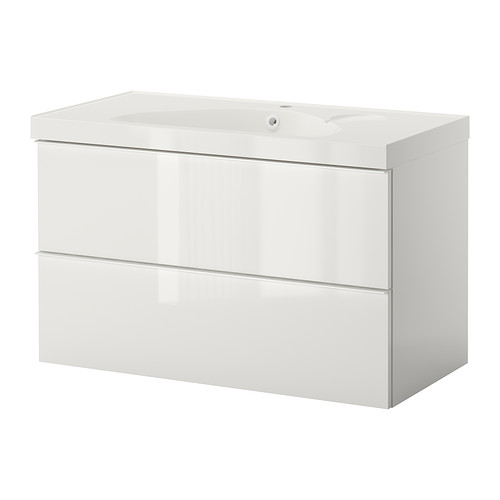
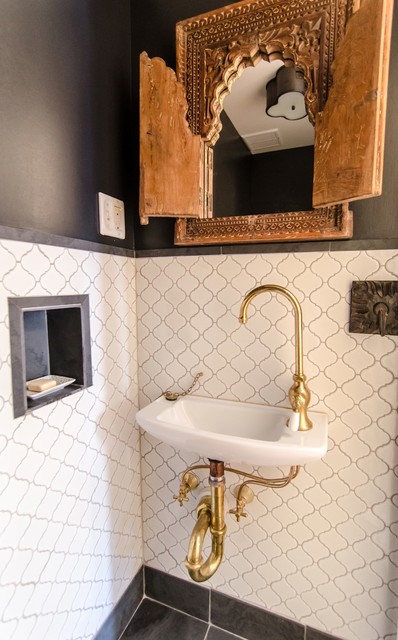
And we have surprising amounts of storage in the bathroom.  Our designer gave us, not only a Godmorgen sink and drawers

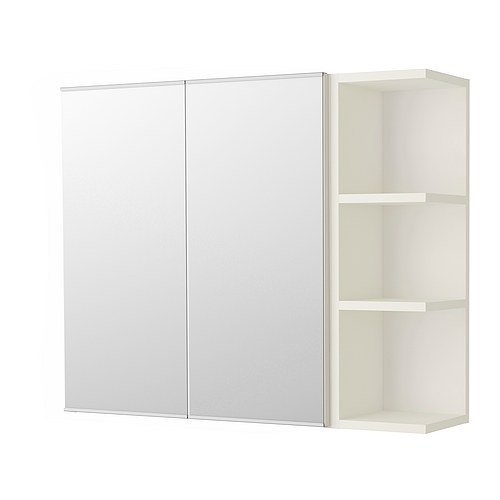
godmorgon-edeboviken-sink-cabinet-with--drawers__0172346_PE326412_S4which is super efficient, but she also carved a space for the Lilangen cabinet to sit inside a niche in the wall

lillangen-mirror-cabinet--doors--end-unit__0133086_PE288202_S4And she stacked two of them on one wall.  Giving us a full-length mirror and oodles of storage, with the mirrors flat against the rest of the wall.

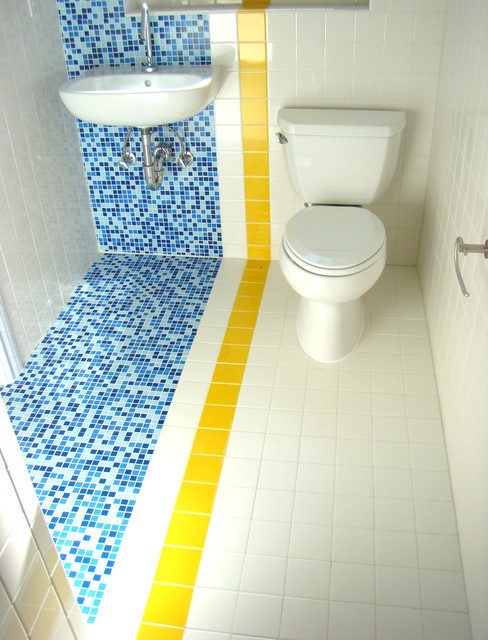
You don’t need to have a small house to have a need of a small bathroom.  Who amongst you has ever wondered if you could get a shower into the same footprint as a powder room?  Have you never thought “it would be so handy to have a full bath right there?”

Well, there are ways of doing this. Houzz has 9 tips for fitting more into less space in the bath/shower room.

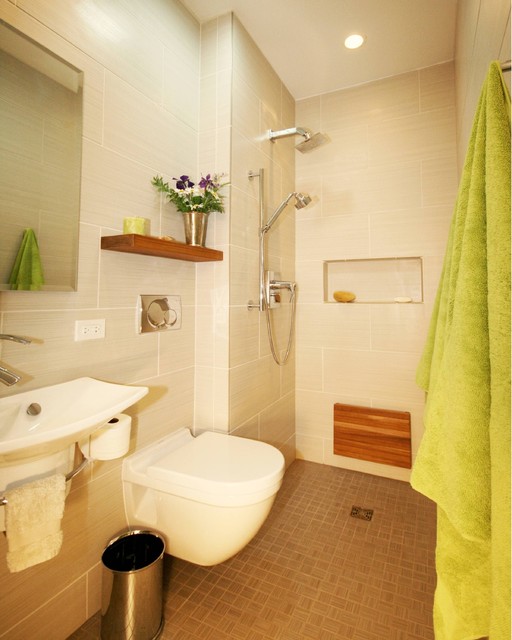
My favourite is the European style Wet Room.  The whole room is the shower.  All the surfaces will need to be wiped down after your shower, but if it’s a teeny room that’s not a big deal.

When inches count a wall-mounted toilet can really save space.

We couldn’t do it because our toilet is set against an outside wall (full of insulation, etc.) And we have a regular sink, not this eensy weensy one.

But that’s another way to save some space.  Apartment Therapy has some great little sinks — handsome, too!

ATBathroomSink1This one allows you to put a powder room under the stairs — great space saver.

ATBathroomSink2

No room for a toilet and a sink?  That’s what you think.

ATBathroomSink3Small space solutions.  Because small is the new black. (I just made that up but will be using it mercilessly in the future).

News from down the alley and around the town

DH and I took advantage of the unseasonably warm weather a couple of weekends ago to walk over to Commercial Drive and shop in some of the little stores that line that avenue.

We started off our stroll by walking down the alley for about five blocks — and we found a laneway home on every block.  All new, of course, all built under the former design rules with one-and-a-half stories and no outside parking pad, all looking very nice….and all looking very much the same.

I can’t blame people for wanting to avoid the extra cost of designing their own laneway homes.  And the Craftsman style that predominates is certainly handsome.  But I am glad that some of the local builders are including new and innovative designs in their catalogues.

Smallworks got lots of press this past week with their brand-new design for a glass-brick house.  The whole house is not built of glass brick, but the all four walls have a cheery glow:

GlassHouseThe design has got lots of attention.  I read about it in The Vancouver Sun, VanCity Buzz, Curbed, and Eater.  There was even a letter to the editor in the Sun that worried about the house contributing to light pollution. That’s more fuss about one laneway house than I’ve seen since the early days (oh, those pioneer days of laneway housing — two years ago).

I like the design, there are two versions of the plans, and I think it would be a welcome addition to any block.  And, as I said, I am happy to see a different and innovative look available without a custom design.

I don’t think I could live there (for one thing there is my proclivity to throw stones, and you know what they say….) it’s a little too bright — on a sunny day the light would pour in.  But it’s a handsome house, a good use of space, and a nice different design.

Congratulations, Smallworks.

On another note:

Laneway housing might be coming to the Queen City.  New Westminster Council is currently discussing

 the interest and feasibility of introducing laneway and coach houses similar to those allowed by the City of Vancouver.

Affordable housing is a problem throughout the entire Lower Mainland, not just in the city of Vancouver, so communities throughout the area are looking into a variety of solutions, and laneway housing is just one of them. New Westminster Council is discussing whether to go ahead with laneway housing or to wait and make it part of a much larger neighbourhood planning process currently planned for two years down the road.

The more the merrier, say I.  I believe fervently that laneway houses has a place in the mix of housing in any community.  It’s true that they don’t dramatically reduce the need for affordable housing but they do relieve the under-supply of homes in the area.

Fingers crossed the plan goes ahead.

My Pain, My Life, My Struggles, My Fight

Come walk with me, Down My Dark & Stormy Journey BUSINESS INQUIRIES & CONTACT EMAIL : GODSCHILD4048@GMAIL.COM

ANNOTATED AUDREY BLOG

Artist and Desert Dweller with Big City Style.

Im ashamed to die until i have won some victory for humanity.

Domenic Garisto / LIFE IS NOT A REHERSAL,SO LIVE IT..if you can't be the poet, be the poem..havau22.com

The Lady Who Lives Down the Lane

Lane Way Housing for the Nervous Novice

Apartment Therapy| Saving the world, one room at a time

Lane Way Housing for the Nervous Novice

Slightly Snug House

building a home that's not too big and not too small

Vancouverandy

Funny thoughts from a nut like me.

Small House Bliss

Small house designs with big impact

WeeHavyn

Lane Way Housing for the Nervous Novice